Inkyu-yama Ware – Thorough Explanation of Tottori Prefecture’s Traditional Ceramic Production Center, History and Characteristics
What is Inkyu-yama Ware – Traditional Ceramics Representing Tottori Prefecture
Inkyu-yama ware (因久山焼) is traditional pottery fired in Yazu Town, Yazu District, Tottori Prefecture (formerly Gunke Town). It boasts a history of over 250 years from the mid-Edo period to the present day and is known as a prestigious ceramic ware that developed as the official kiln of Tottori Domain.
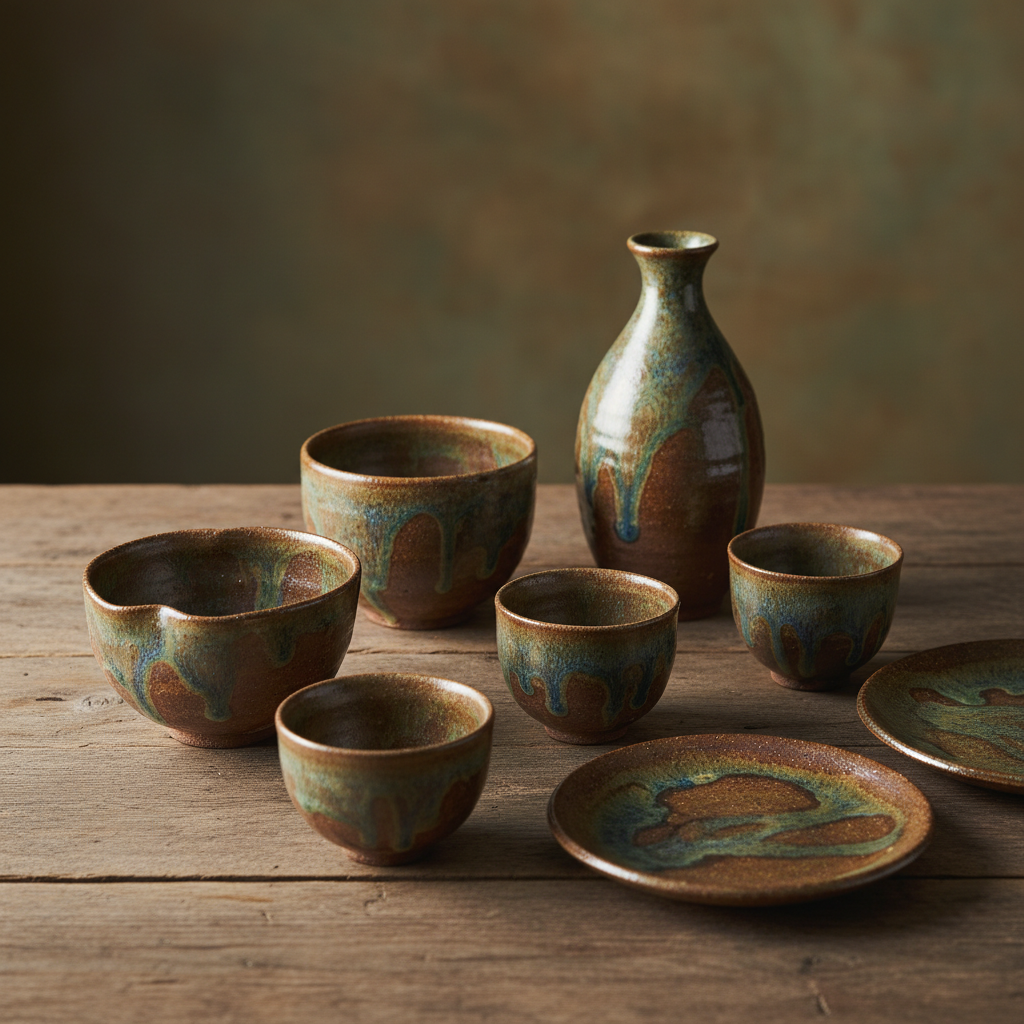
Works made with locally sourced clay rich in iron content and employing a variety of glazes such as straw-ash glaze (warabai-yu) are simple yet refined, and are widely cherished from tea ceremony utensils to everyday dishes. Today, seven-chambered climbing kilns that have continued since the Edo period still carry out firing, making it a precious production site where traditional techniques are being passed down.
The History of Inkyu-yama Ware – From the Edo Period Official Kiln to Modern Times
The Circumstances of Kiln Opening and Its Founder
The history of Inkyu-yama ware dates back to the Meiwa era (1764-1772). It is said to have begun when the Tottori Domain lord Ikeda invited potter Rokubei from Kyoto to open a kiln in this location. Rokubei transmitted his pottery techniques to Ozaki family’s first-generation Jirouemon and Serizawa family’s second-generation Kamegoro, establishing the foundation of Inkyu-yama ware.
The name “Inkyu-yama” was bestowed by the domain lord, derived from Inaba Province Kunoji Temple (因幡国久能寺), the location where the kiln was situated, reflecting the historical background of the region. In fact, pottery had been produced in this area even earlier under the name “Kuninomiyatsuko ware (国造焼)” in an era preceding Inkyu-yama ware, as recorded in the “Inaba Mindan-ki (因幡民談記)” published in 1688.
Development as the Tottori Domain Official Kiln
From its inception, Inkyu-yama ware received protection as the official kiln of Tottori Domain and produced tea utensils and daily items for successive domain lords and the samurai class. While basing itself on Kyoto ware techniques, it later incorporated techniques from Shigaraki ware, establishing a distinctive style that fused the elegance of Kyoto ware with the earthiness of Shigaraki ware.
The status as official kiln promoted technological improvement for producing high-quality works while providing economic stability, creating an environment where craftsmen could continue honing their skills. Through this protective system, Inkyu-yama ware grew to become Tottori Prefecture’s representative ceramic production center.
Transitions After the Meiji Period
Even after the abolishment of the domain system following the Meiji Restoration, the tradition of Inkyu-yama ware was not broken. In Meiji 23 (1890), kiln operations were reorganized, establishing the foundation of kiln workshops that continue to this day.
As the era progressed from the Showa period through the Heisei and Reiwa periods, Inkyu-yama ware has maintained traditional techniques while also engaging in pottery making suited to contemporary lifestyles. The seven-chambered climbing kiln that has been in continuous use since the Edo period remains operational today, serving as a living testament to traditional techniques.
Characteristics of Inkyu-yama Ware – The Unique Beauty Created by Clay and Glazes
Iron-Rich Local Clay
One of the greatest characteristics of Inkyu-yama ware is its use of locally sourced clay rich in iron content. This clay produces distinctive coloration and texture during firing, imparting a simple yet warm appearance to the works.
Clay with high iron content undergoes significant color changes depending on firing temperature, position within the kiln, and oxidation-reduction conditions. This unpredictable variation becomes the charm of Inkyu-yama ware where no two pieces are identical, and serves as the basis for creating what is called kiln changes (yohhen) – the beauty of serendipity.
Diverse Use of Glazes
Inkyu-yama ware traditionally employs various glazes. Each glaze creates a distinctive appearance, adding depth and individuality to the works.
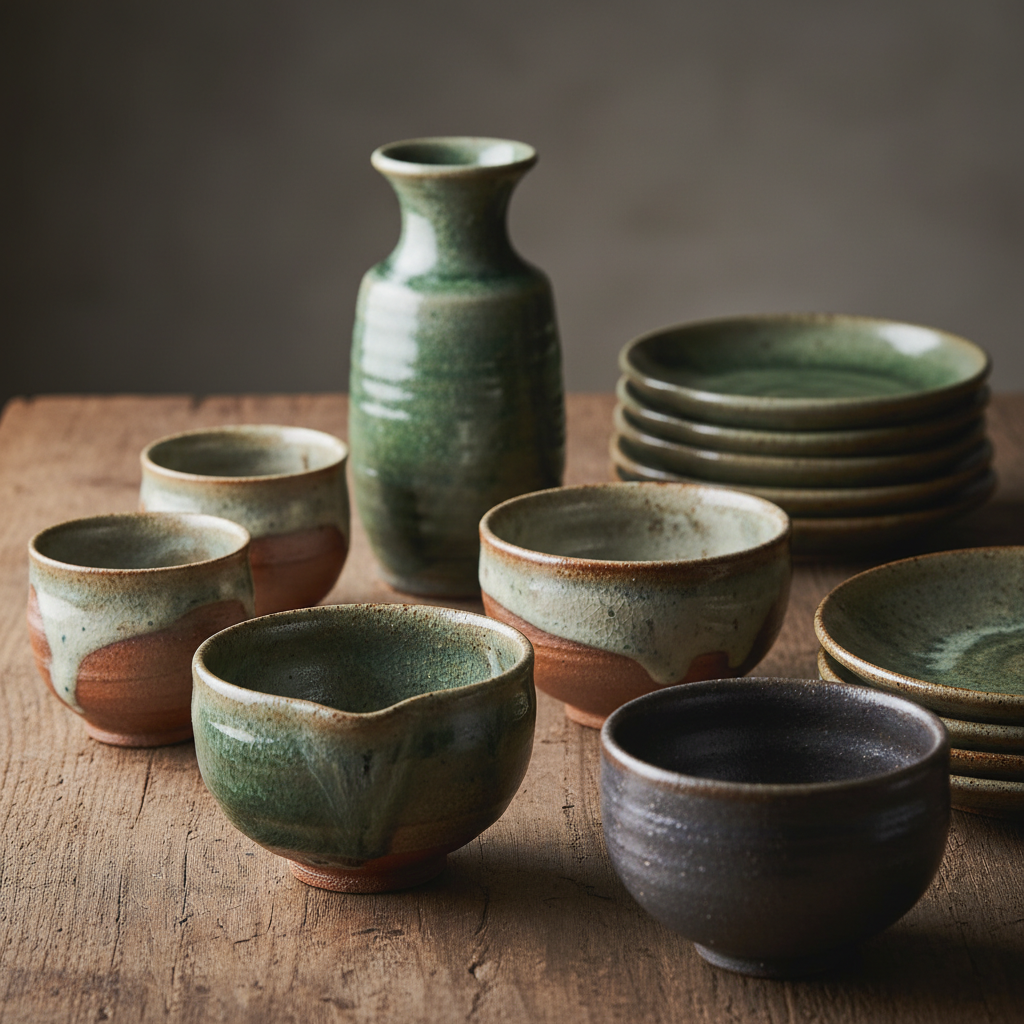
Straw-ash glaze (warabai-yu) is the representative glaze of Inkyu-yama ware, a traditional glaze made primarily from rice straw ash. It exhibits pale yellow to greenish hues and is characterized by a simple, warm finish.
Green glaze (ryoku-yu) is a copper-containing glaze characterized by beautiful green coloration. Depending on firing conditions, it displays various expressions from subdued deep green to vibrant jade green.
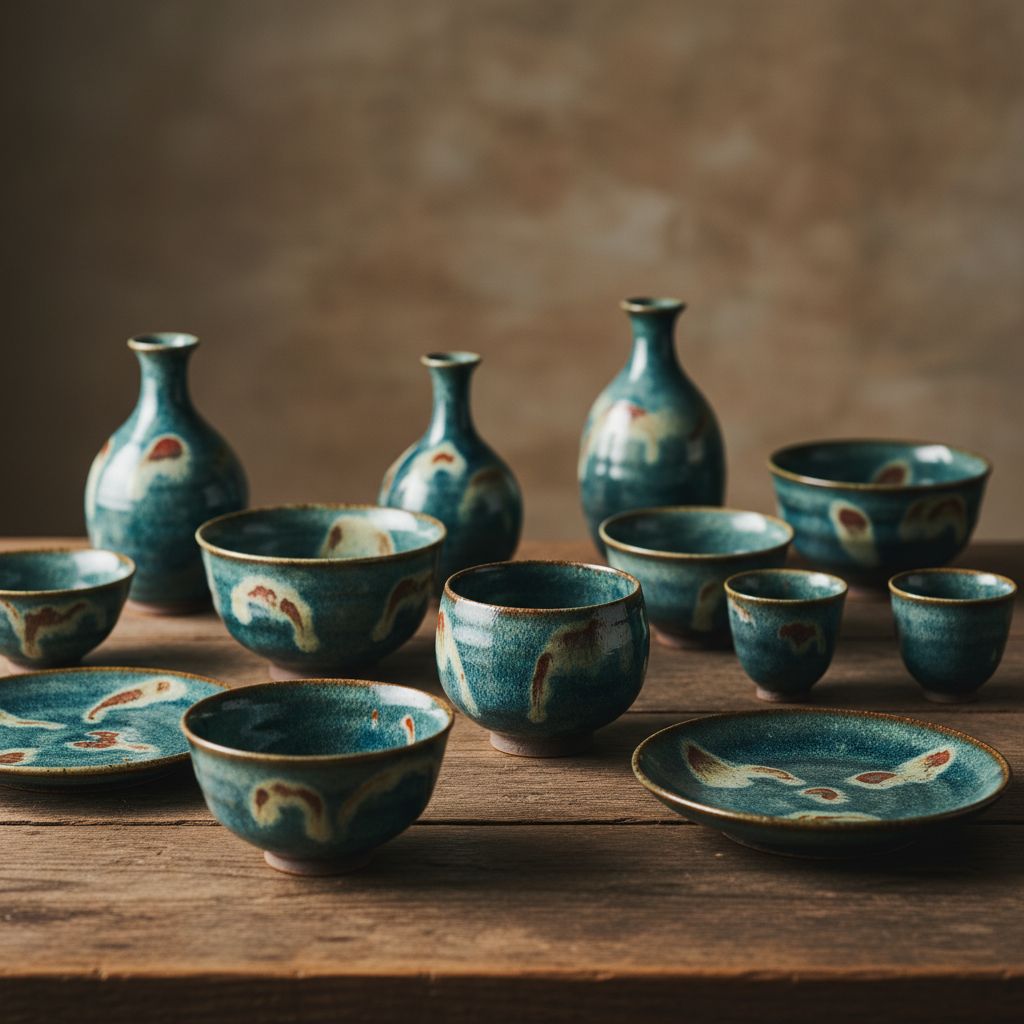
Sea cucumber glaze (namako-yu) is named after the unique pattern created by the blend of blue and white, which resembles the surface of a sea cucumber. Its mystical and profound color has gained popularity.
Copper red (shinsya) is a red glaze obtained through reduction firing of copper, capable of expressing a wide range of tones from vivid crimson to deep purplish-red. It is valued as precious due to its difficult firing process and low success rate.
Through differentiating and sometimes combining these glazes, Inkyu-yama ware achieves diverse expression.
Firing in the Seven-Chambered Climbing Kiln
The Inkyu-yama ware kiln workshop retains seven-chambered climbing kilns that have been in continuous use since the Edo period. The appearance of seven firing chambers connected by earthen walls arranged along a slope holds high historical value and has become a symbol of Inkyu-yama ware.
Climbing kilns utilize the slope’s incline to efficiently circulate heat, creating subtly different temperature environments in each chamber. By utilizing this temperature difference, works with different colorations and textures can be simultaneously fired in a single firing.
Kiln firing is a highly technical task in which experienced craftsmen adjust various elements – including the amount and timing of wood fuel input and air flow – through sensation and experience. The “differential firing” technique of discerning the temperature distribution and oxidation-reduction conditions within the kiln and creating optimal environments for each work is a master craft that can only be acquired through years of experience.
Works and Uses of Inkyu-yama Ware
Inkyu-yama Ware as Tea Ceremony Utensils
Inkyu-yama ware has been highly valued as tea ceremony equipment since the Edo period. Various implements used in tea ceremonies are produced, including tea bowls, water jars, flower vases, and waste-water receptacles.
Based on Kyoto ware techniques, it possesses both the formality and beauty appropriate for tea ceremony utensils, while its simple aesthetic taking advantage of the clay’s earthiness is cherished by tea practitioners. Tea bowls made with straw-ash glaze in particular possess a plain beauty aligned with the aesthetic sense of wabi and sabi, prized by many tea ceremony enthusiasts.
Everyday Tableware
Contemporary Inkyu-yama ware produces not only tea ceremony utensils but a wide range of tableware for everyday use. A complete selection is available including rice bowls, tea cups, plates, bowls, sake bottles, and sake cups.
Pottery emphasizing simple design and ease of use harmonizes with contemporary lifestyles and is beloved by many. The quality of feeling natural to the hand and the characteristic of increasing in charm with use make it ideal as everyday tableware.
Fine Art and Craft Works
Fine art and craft objects are also produced using traditional techniques, including jars, flower vessels, and objets d’art. Works pursuing the beauty of kiln changes through ash firing (yakishime) are artistically sophisticated and attract attention from collectors and art enthusiasts.
In large jars and flower vessels, the flow of glaze and color changes are expressed dynamically, allowing enjoyment of different appearances from different viewing angles. These works, representing the pinnacle of Inkyu-yama ware techniques, receive high evaluation at exhibitions and other venues.
The Inkyu-yama Ware Production Center – Yazu Town, Yazu District, Tottori Prefecture
Geography and Environment of the Production Area
Yazu Town in Yazu District, Tottori Prefecture, the production center of Inkyu-yama ware, is located south of Tottori City in a region rich in nature. It has long been known as an area where high-quality clay suitable for pottery production is obtained, with a history of ceramic production extending over 320 years ago.
Historical temples and shrines including Kunoji Temple are scattered throughout the surrounding area, with the region’s cultural background supporting the development of Inkyu-yama ware. With abundant natural environment, clear water, and resources necessary for pottery production, this location represents an ideal environment for cultivating traditional crafts.
Access to Kiln Workshops
Access methods for visiting Inkyu-yama ware kiln workshops are as follows.
By car: Approximately 10 minutes from Kawahara IC on the Tottori Expressway. The distance from Tottori City center is approximately 20 minutes by car.
By public transportation: Approximately 3 minutes’ walk from Yatsuoka High School Station on the Wakasashi Railway, making it very conveniently located near the station. From Tottori Station, the journey takes approximately 30 minutes by Wakasashi Railway.
At the kiln workshop, visitors can view and purchase works, and with prior notice, kiln workshop tours and climbing kiln viewing are sometimes possible, offering a valuable opportunity to see the traditional climbing kiln up close.
Relationship with Other Ceramic Production Centers in Tottori Prefecture
Kuninoiyatsuko Ware (国造焼)
In addition to Inkyu-yama ware, Tottori Prefecture is home to other traditional ceramic production centers. One of these is Kuninoiyatsuko ware, which has a history dating back to Meiji 23 (1890).
The name “Kuninoiyatsuko ware” derives from Taisho Mound, which enshrines Hoki Province Kuninoiyatsuko, affectionately called “Kokuzo-san” by locals near Irioka. While producing tableware with simple designs, it also engages in fine art works such as ash-fired, kiln-changed jars, possessing charms distinct from Inkyu-yama ware.
Tottori Prefecture’s Ceramic Culture
Tottori Prefecture belongs to the San’in region’s ceramic culture sphere and has historically exchanged culture with neighboring Shimane Prefecture’s Izumo ware and Fusina ware. However, each production center has developed its own distinctive characteristics and established an individual artistic style.
Inkyu-yama ware possesses a unique style fusing techniques of Kyoto and Shigaraki wares, and as Tottori Prefecture’s representative ceramic, plays an important role in supporting the region’s traditional craft culture.
Contemporary Development of Inkyu-yama Ware
Inheritance and Innovation of Traditional Techniques
Contemporary Inkyu-yama ware cherishes the traditional techniques continuing from the Edo period while also challenging the creation of new works suited to modern lifestyles.
While maintaining the traditional method of firing in seven-chambered climbing kilns, design and purpose reflect flexible responses to contemporary needs. Works balancing tradition and modernity are being created, including pottery with modern designs easy for younger generations to use and plates with shapes compatible with Western cuisine.
Technical Knowledge Transfer Among Craftspeople
Among traditional crafts facing insufficient successors, technical knowledge transfer is an important issue for Inkyu-yama ware as well. Transmitting to the next generation the knowledge and techniques cultivated through years of experience – such as kiln-firing techniques, glaze formulation, and clay composition – is essential for Inkyu-yama ware’s future.
Currently, technical knowledge transfer from veteran craftspeople to younger artisans is taking place, with pottery creation incorporating new sensibilities while maintaining tradition. Distinctive techniques unique to Inkyu-yama ware, such as the unique method of forming vessels with the left hand, are also being carefully passed down.
Utilization as Regional Promotion and Tourism Resources
Inkyu-yama ware contributes to regional and tourism promotion as an important traditional craft of Tottori Prefecture. Through kiln workshop tours and pottery experience activities, many tourists are offered opportunities to experience Inkyu-yama ware’s appeal.
Inkyu-yama ware, made using local clay and reflecting the region’s history and culture, serves as an important cultural resource expressing Yazu Town’s identity. As a local specialty product and representative craft of Tottori Prefecture, its value is expected to continue increasing in the future.
Methods for Purchasing and Experiencing Inkyu-yama Ware
Purchase at Kiln Workshops
The most reliable way to purchase Inkyu-yama ware is to directly visit kiln workshops in Yazu Town. The workshops offer a wide range of works – from tea ceremony utensils to everyday dishes to fine art objects – that can be seen and handled in person.
By speaking directly with craftspeople, visitors can learn in detail about the works’ backgrounds and production processes, enabling selection of pieces suited to their needs and preferences. Consultation regarding custom orders is sometimes possible as well.
Retailers in Tottori Prefecture
Various craft shops and department stores within Tottori City and throughout the prefecture carry Inkyu-yama ware. The works can also be viewed at facilities introducing Tottori Prefecture’s traditional crafts or prefecture specialty shops.
Online Purchase
Recently, it has become possible to purchase Inkyu-yama ware through kiln workshops’ official websites and online shops. Those living far away who find direct visits difficult can now obtain Inkyu-yama ware works through the internet.
Pottery Experience
Some kiln workshops accept pottery experience activities and workshop tours. The experience of touching clay and operating a pottery wheel firsthand is an excellent opportunity to more deeply understand Inkyu-yama ware’s appeal. As prior reservation is typically required, confirmation before visiting is recommended.
The Appeal and Value of Inkyu-yama Ware
Value as One-of-a-Kind Works
One major appeal of Inkyu-yama ware is that no two pieces are identical. Various factors combine – including hand-shaping, glaze application methods, position within the kiln, and temperature changes during firing – to produce works with different appearances.
Particularly in works fired in climbing kilns, the accidental beauty of kiln changes is added, sometimes resulting in beauty even the maker could not predict. This unpredictability and uniqueness form a major appeal of Inkyu-yama ware.
Vessels That Deepen in Charm With Use
Inkyu-yama ware possesses the characteristic of deepening in charm the more it is used. Through regular use, oil content soaks into the vessels, increasing their color luster. The ability to appreciate this progression of aging is another appeal of Inkyu-yama ware.
Particularly tea ceremony vessels such as tea bowls develop distinctive characteristics through years of use, bearing the history of their owners. The joy of developing vessels is a delight unique to handmade pottery that cannot be obtained from mass-produced items.
The Weight of History and Tradition
With its history of over 250 years, Inkyu-yama ware is not merely functional tableware but an embodiment of Tottori’s history and culture. The techniques and aesthetic sense beginning as an Edo-period official kiln and transmitted across eras live on in contemporary works.
Holding an Inkyu-yama ware vessel is also touching this long history and tradition. The joy of using traditional crafts in daily life brings depth and richness to everyday existence.
Conclusion – Toward the Future of Inkyu-yama Ware
Inkyu-yama ware is traditional ceramics continuing since the Edo period in Yazu Town, Yazu District, Tottori Prefecture. Developing as the official kiln of Tottori Domain, it has established a distinctive artistic style fusing Kyoto and Shigaraki ware techniques.
Works of simple refinement are produced through locally sourced clay rich in iron content, diverse glazes including straw-ash glaze, and firing in the seven-chambered climbing kiln continuing from the Edo period. A wide range of works – from tea ceremony utensils to everyday dishes to fine art objects – are produced and used by many people.
While maintaining traditional techniques and demonstrating flexibility in responding to contemporary needs, Inkyu-yama ware works on technical knowledge transfer. As Tottori Prefecture’s representative ceramic production center, it is expected to continue developing.
When visiting Yazu Town, be sure to visit the Inkyu-yama ware kiln workshop, view the traditional climbing kiln, and experience the beautiful vessels created by craftspeople’s skill. Their simple, warm appearance will surely add rich color to your everyday life.