Kutani Ware: A Complete Guide to Ishikawa Prefecture’s Ceramic Production Area
Kutani ware, a traditional craft representing Ishikawa Prefecture, is highly valued worldwide as the pinnacle of Japanese colored porcelain. With a history of approximately 360 years, this ceramic ware is known for its vivid five colors and bold painting techniques, and continues to preserve tradition while innovating across multiple production areas in southern Ishikawa Prefecture today.
This article provides a comprehensive explanation of Kutani ware as Ishikawa Prefecture’s ceramic production area, from its origins to the present day, including the characteristics of the production regions and tourist spots where you can actually experience Kutani ware.
What is Kutani Ware | Ishikawa Prefecture’s Representative Colored Porcelain
Kutani ware is a colored porcelain produced in the Kaga region of southern Ishikawa Prefecture. Its name derives from the place where it was first fired—Kutani Village in the Enuma District of Kaga Province, now Kutani Town in Yamashina Onsen, Kaga City, Ishikawa Prefecture.
The Greatest Characteristic of Kutani Ware
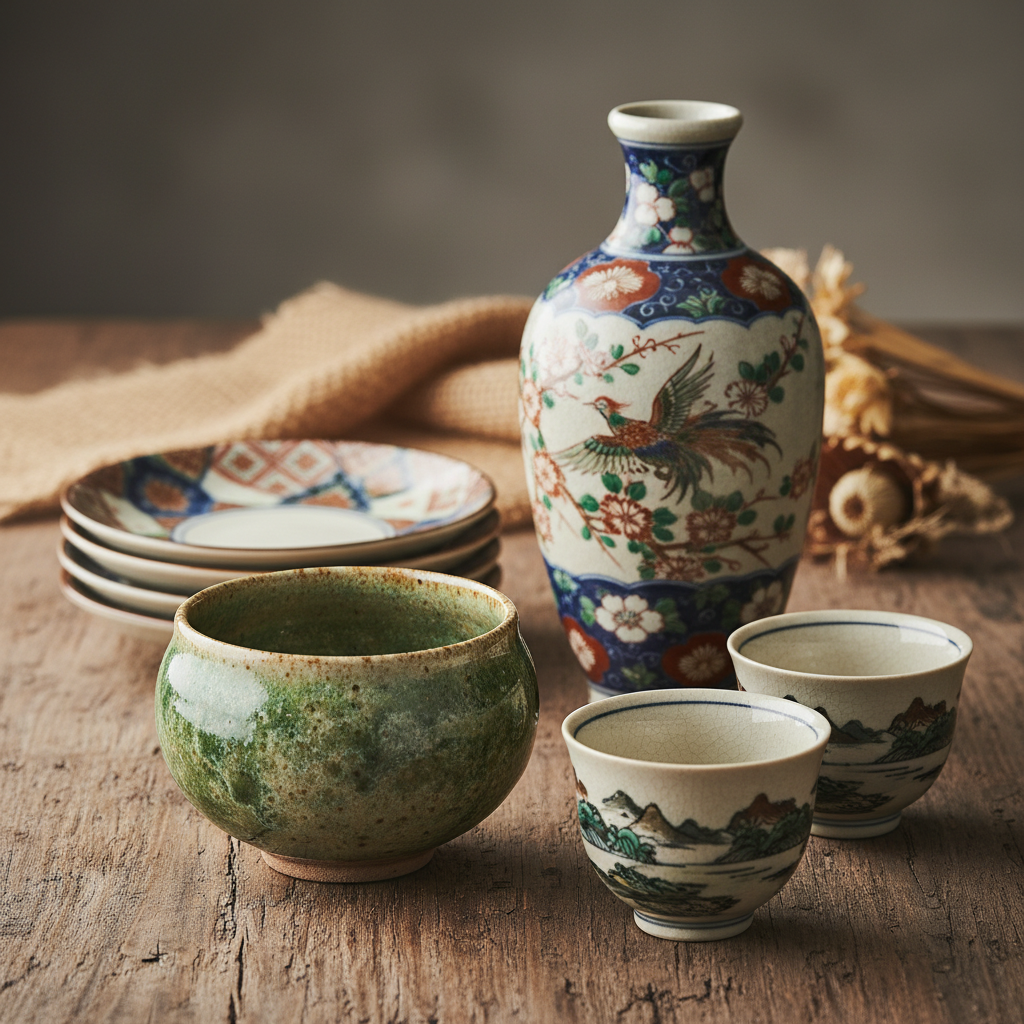
The most distinctive feature of Kutani ware is the five colors called green, yellow, red, purple, and cobalt blue. The overglaze painting using these Japanese pigments is combined with bold and fluid brushwork, creating a rich and elegant radiance.
The designs are both daring and delicate, ranging from flowers, birds, natural scenery, and the seasons to geometric patterns. This beautiful color palette and high degree of expressive freedom are the factors that elevated Kutani ware to become a representative ceramic of Japan.
Designation as a Traditional Craft
In 1975 (Showa 50), Kutani ware was designated as a traditional craft by the Minister of Economy, Trade and Industry (then the Minister of International Trade and Industry). This designation officially recognized Kutani ware’s traditional techniques and status as a production area, and it continues to be protected and promoted as an important cultural and economic resource for Ishikawa Prefecture.
History of Kutani Ware | A 360-Year Journey from Old Kutani to Modern Times
The Birth of Old Kutani (Early Edo Period)
The history of Kutani ware began approximately 360-370 years ago in the early Edo period. Around 1655 (Meireki 1), at the command of Toshiharu Maeda, the daimyo of the Daishoji domain, a subsidiary domain of the Kaga clan, Saijiro Goto is said to have begun firing porcelain in the mountains of Kutani Village.
Against the backdrop of a rich natural environment with the Sea of Japan to the northwest and the sacred peak of Mount Hakusan to the southeast, and the splendid Kaga culture of one million koku, Kutani ware was born. This early body of work is called “Old Kutani” and continues to be highly valued today as a masterpiece of colored porcelain.
The Mystery of Old Kutani
Interestingly, Old Kutani production ceased suddenly after just approximately 50 years. This “sudden closure of Old Kutani kilns” is considered one of the great mysteries in Japanese ceramic history, and while there are various theories about the reason, no definitive evidence has been found.
However, this mysterious history has enhanced the appeal of Kutani ware, and Old Kutani pieces are given special value.
The Era of Revived Kutani (Late Edo Period to Meiji)
About 100 years after Old Kutani ceased production, in 1807 (Bunka 4), the Kaga clan invited Aoki Mokubei from Kyoto and established a kiln on Mount Kasuga in Kanazawa, reviving Kutani ware. This is called “Revived Kutani.”
Subsequently, kilns were opened in various locations including Kaga, Nomi, and Komatsu, and numerous master craftsmen emerged:
- Yoshidaya Kiln (1824–): Opened by Toshiro Toyoda, recreating the style of Old Kutani
- Miyamoto Kiln (1832–): Created by Miyamoto Uyemon, characterized by fine red painting
- Eiraku Kiln (1865–): Inviting Eisen Eiraku from Kyoto and introducing the technique of gold brocade style
- Shoji-style (Meiji period): The colored gold brocade style by Saida Dōkai (Kutani Shoji) became highly popular
Through these kilns and craftsmen, Kutani ware developed diverse styles and solidified its foundation as a production area.
Kutani Ware in Modern Times
During the Meiji period, Kutani ware became an important export product and entered the world market, with the name “KUTANI” becoming internationally recognized. It received high evaluations at exhibitions such as the Paris Exposition Universelle, establishing its position as a representative ceramic of Japan.
In modern times, while preserving traditional techniques, new product development suited to contemporary designs and lifestyles is progressing. From collaboration products with popular characters such as Doraemon and Pokémon to modern illustrations appealing to younger generations, Kutani ware continues to evolve as a ceramic beloved by a wide range of ages.
Production Areas of Kutani Ware | Major Production Regions in Southern Ishikawa Prefecture
Kutani ware is currently produced in multiple cities in southern Ishikawa Prefecture. Each production area has its own characteristics, collectively forming the “Kutani ware production area.”
Nomi City | The Center of Contemporary Kutani Ware
Nomi City is currently the center of Kutani ware production and the region where the most kilns and craftsmen gather. In particular, the Terai district is known as the “Kutani Ware Village,” with numerous workshops and shops lined along the streets.
Nomi City has the “Kutani Ceramic Village,” which also houses the headquarters of the Ishikawa Prefecture Ceramic and Ceramic Products Commerce and Industry Cooperative. Wholesale dealers and trading companies handling Kutani ware gather here, serving the function of the production area.
Kutani ware from Nomi City inherits traditional painting techniques while actively developing products adapted to contemporary designs and uses. Products range from everyday tableware to works of art.
Kaga City | The Birthplace of Kutani Ware
Kaga City, particularly the Yamashina Onsen district, occupies a historically important position as the birthplace of Kutani ware. The Old Kutani kiln ruins remain in present-day Yamashina Onsen Kutani Town, where visitors can feel the roots of Kutani ware.
In Kaga City, taking advantage of its location as a hot spring resort, sales of Kutani ware to tourists and painting experience workshops are actively conducted. There is also “Iroha Cottage,” where the well-known gourmet and artist Rosanjin Kitaoji stayed, where visitors can learn about the relationship between Kutani ware and culture.
Komatsu City | A Fusion of Tradition and Innovation
Komatsu City is also an important production area for Kutani ware. Particularly centered around the Hachiman district, many craftsmen actively work while preserving traditional techniques and challenging new expressions.
Kutani ware from Komatsu City is characterized by delicate painting and luxurious works utilizing gold leaf, producing many products with high demand as gifts and works of art.
Kanazawa City | The Development of Urban Kutani Ware
Kanazawa City, as a castle town of the Kaga domain with one million koku, has served as the cultural and commercial center of Kutani ware. Even today, Kanazawa has many Kutani ware specialty shops and galleries, introducing Kutani ware to domestic and international visitors.
Kutani ware from Kanazawa is characterized by refined designs adapted to urban lifestyles and craftsmen pursuing contemporary artistic expression.
Manufacturing Techniques of Kutani Ware | Understanding Traditional Craftsmanship
From Molding to Firing
The production of Kutani ware is carried out in the following major steps:
- Molding: Creating the shape of the vessel through wheel throwing or mold forming
- Bisque firing: Firing once at approximately 800°C to harden the vessel
- Underglaze painting (when necessary): Painting underglaze designs on the bisque-fired vessel
- Glazing: Applying transparent or colored glaze
- Final firing: Firing at approximately 1300°C to complete the vessel as porcelain
- Overglaze painting: Painting the characteristic colored designs of Kutani ware
- Overglaze firing: Firing at approximately 800°C to set the pigments
The Secret of Kutani Five Colors
The five colors (green, yellow, red, purple, and cobalt blue) that characterize Kutani ware are expressed through Japanese pigments containing different metal oxides:
- Green: Color from copper oxide
- Yellow: Color from iron oxide
- Red: Color from iron oxide (different composition from yellow)
- Purple: Color from manganese compounds
- Cobalt Blue: Color from cobalt compounds
These pigments are layered multiple times by the hands of skilled craftsmen, creating unique depth and radiance.
Representative Painting Techniques
Kutani ware has various painting techniques, each with distinctive beauty:
- Blue style: A technique filling the entire vessel with four colors excluding cobalt blue
- Red painting and gold brocade style: Luxurious and ornate decoration primarily using red and gold
- Five-color style: Colorful painting using all five colors
- Underglaze blue: Indigo underglaze painting using cobalt
Visiting Kutani Ware Production Areas | Recommended Tourist Spots
The best way to deeply understand the appeal of Kutani ware is to visit the production areas in person. Ishikawa Prefecture has various facilities and tourist spots related to Kutani ware.
Ishikawa Kutani Ware Museum (Kaga City)
The Ishikawa Kutani Ware Museum in Kaga City is a facility where you can systematically learn the history of Kutani ware from Old Kutani to contemporary works. Permanent exhibitions allow you to see the transition of styles over different periods, and special exhibitions focus on contemporary artists’ works or specific themes.
The museum building itself is noteworthy, with beautiful design that harmonizes with the surrounding natural environment. The museum shop sells carefully selected Kutani ware pieces.
Kutani Ware Kiln Ruins Exhibition Hall (Kaga City)
The Kutani Ware Kiln Ruins Exhibition Hall in Yamashina Onsen, Kaga City, preserves and displays the actual Old Kutani kiln ruins. By viewing the excavated kiln remains and artifacts, you can reflect on the moment of Kutani ware’s birth.
The exhibition hall also provides detailed explanations of the manufacturing techniques and kiln structures of that era, making it an ideal facility for understanding the technical aspects of Kutani ware.
Old Kutani Kiln Ruins (Kaga City)
In the mountains of Kutani Town, Yamashina Onsen, Kaga City, the Old Kutani kiln ruins, the birthplace of Kutani ware, remain. Currently preserved as a historic site, it is surrounded by quiet nature.
Visiting this location, which can be called the homeland of Kutani ware, allows you to feel the romance of history knowing that pottery was made here over 360 years ago.
Rosanjin’s Former Residence Iroha Cottage (Kaga City)
The building where Rosanjin Kitaoji, known as a gourmet and artist, stayed for about half a year from 1915 (Taisho 4) is preserved and open to the public as “Iroha Cottage.” Rosanjin studied Kutani ware painting here, which had a major influence on his later artistic work.
The hall displays Rosanjin’s works and materials, offering a valuable facility to learn about the relationship between Kutani ware and artists.
Kutani Ceramic Village (Nomi City)
The Kutani Ceramic Village in Nomi City is a comprehensive Kutani ware facility. The Ishikawa Prefecture Ceramic and Ceramic Products Commerce and Industry Cooperative is located here, and numerous kilns and shops gather together.
At the ceramic village, you can enjoy not only purchasing Kutani ware but also participating in painting and wheel-throwing experiences. Creating your own original Kutani ware is an ideal travel memory.
The resource center allows you to learn about the history and manufacturing process of Kutani ware, and the restaurant serves local cuisine on Kutani ware tableware.
Nomi City Kutani Ware Museum
The Nomi City Kutani Ware Museum displays works primarily from the period after the revival of Kutani ware, featuring pieces by master craftsmen who were active in Nomi City. It is an ideal facility for understanding the development of Kutani ware from the Meiji period onward.
Special exhibitions are regularly held, allowing visitors to enjoy works by contemporary artists and exhibitions organized around specific themes.
People Supporting Kutani Ware | Craftsmen and Artists of the Production Area
The charm of the Kutani ware production area lies above all in the skills and passion of the craftspeople and artists who work there.
The Techniques of Traditional Craftsmen
In the Kutani ware production area, many traditional craftsmen recognized by the national and prefectural governments are active. Through long years of training, they possess refined techniques and play an important role in passing traditional techniques to the next generation.
Works by traditional craftsmen are guaranteed high quality backed by proven techniques and are highly valued as gifts and works of art.
The Challenge of Young Artists
In recent years, the number of young artists in the Kutani ware production area has increased, pursuing new expressions while respecting tradition. Works that fuse contemporary design sensibility with traditional techniques are attracting attention both domestically and internationally.
Through the activities of these young artists, Kutani ware continues to evolve and remains accepted by new generations as a ceramic that lives on.
Division of Labor and Cooperation
In the Kutani ware production area, a division of labor system has developed where specialist craftsmen handle different processes such as molding, painting, and firing. By having each specialist provide the highest level of technique, high-quality products are created.
At the same time, cooperation and information sharing within the production area are active, and through organizations such as the Ishikawa Prefecture Ceramic and Ceramic Products Commerce and Industry Cooperative, the production area maintains its competitive advantage.
Kutani Ware Today and Tomorrow | Inheritance and Innovation of Traditional Crafts
From Everyday Use to Works of Art
Contemporary Kutani ware responds to a wide range of uses, from everyday tableware to works of art. Products are produced to meet diverse needs, ranging from casual everyday-use vessels to high-end gifts and collectible pieces.
This diverse product lineup supports the sustainability of the Kutani ware production area.
Expansion into Overseas Markets
The “KUTANI” brand is recognized internationally and is popular in European, American, and Asian markets. Kutani ware, embodying Japanese aesthetics of tradition, is highly valued by overseas collectors and designers.
The production area actively pursues international market activities through participation in overseas exhibitions and online sales.
Challenges and Initiatives of the Production Area
The Kutani ware production area faces various challenges including successor development, securing raw materials, and adapting to market changes.
The production area is implementing the following initiatives to address these challenges:
- Talent development: Training successors at facilities such as the Ishikawa Prefecture Kutani Ware Technology Training Institute
- Technical innovation: Introducing new techniques while preserving traditional methods
- Design development: Product development suited to contemporary lifestyles
- Information dissemination: Active information sharing through SNS and websites
- Experience-based tourism: Expanding Kutani ware fans through painting experience workshops
Building a Sustainable Production Area
The Kutani ware production area is also working toward sustainable production area development through environmentally conscious manufacturing and cooperation with local communities.
Activities are being conducted in cooperation with local schools through traditional craft education, and use of Kutani ware at local events, creating integrated activities between the production area and local society.
Purchasing Kutani Ware | Encountering Authentic Pieces in the Production Area
The Appeal of Direct Kiln Sales
One of the greatest merits of visiting the Kutani ware production area is the ability to purchase works directly from the kilns. By speaking directly with artists and craftsmen and hearing about the background and manufacturing process of the works, you can select pieces with deeper attachment.
Many kilns also offer workshop tours, and seeing the actual production process deepens understanding of Kutani ware.
How to Choose at Specialty Shops
At specialty shops in the production area, you can compare and select works from multiple kilns and artists. By consulting with knowledgeable staff, you can find the perfect piece suited to your use and budget.
When selecting gifts, the strength of specialty shops is their ability to propose appropriate pieces according to the recipient’s preferences and intended use.
Price Ranges and Quality
The price of Kutani ware varies greatly depending on the artist’s reputation, the difficulty of the technique, the size, and other factors. Small everyday dishes start at several thousand yen, while pieces by living national treasures or renowned artists range from several hundred thousand to several million yen.
Regardless of price, Kutani ware purchased at the production area is guaranteed in quality and provides lasting value.
Conclusion | Experience the Charm of the Kutani Ware Production Area
The Kutani ware production area in Ishikawa Prefecture is a production center for a ceramic ware representing Japan with a history of over 360 years. Centered around Kaga City, Nomi City, Komatsu City, and Kanazawa City, craftspeople and artists continue to work while preserving tradition and constantly pursuing innovation.
Kutani ware, characterized by the vivid five-color palette and bold painting techniques, is both a work of art embodying Japanese aesthetics and a practical item enriching everyday life.
By visiting the production area, you can learn its history at museums and galleries, observe kiln operations at workshops, and encounter authentic pieces at specialty shops. You can also create your own original Kutani ware through a painting experience.
When visiting Ishikawa Prefecture, be sure to visit the Kutani ware production area and experience the world of ceramics where 360 years of tradition lives. By touching authentic Kutani ware, you will surely sense the depth of its appeal.
Kutani ware is a living traditional craft extending from the past through the present and into the future. Supported by the passion and techniques of the people of the production area, this beautiful ceramic will continue to captivate people around the world.