
Kokujiyaki – Everything About the Northernmost Folk Kiln Pottery of Kuji City, Iwate Prefecture, and Its 200-Year Tradition of Traditional Ceramics
What is Kokujiyaki – Iwate Prefecture’s Representative Ceramic Production Area
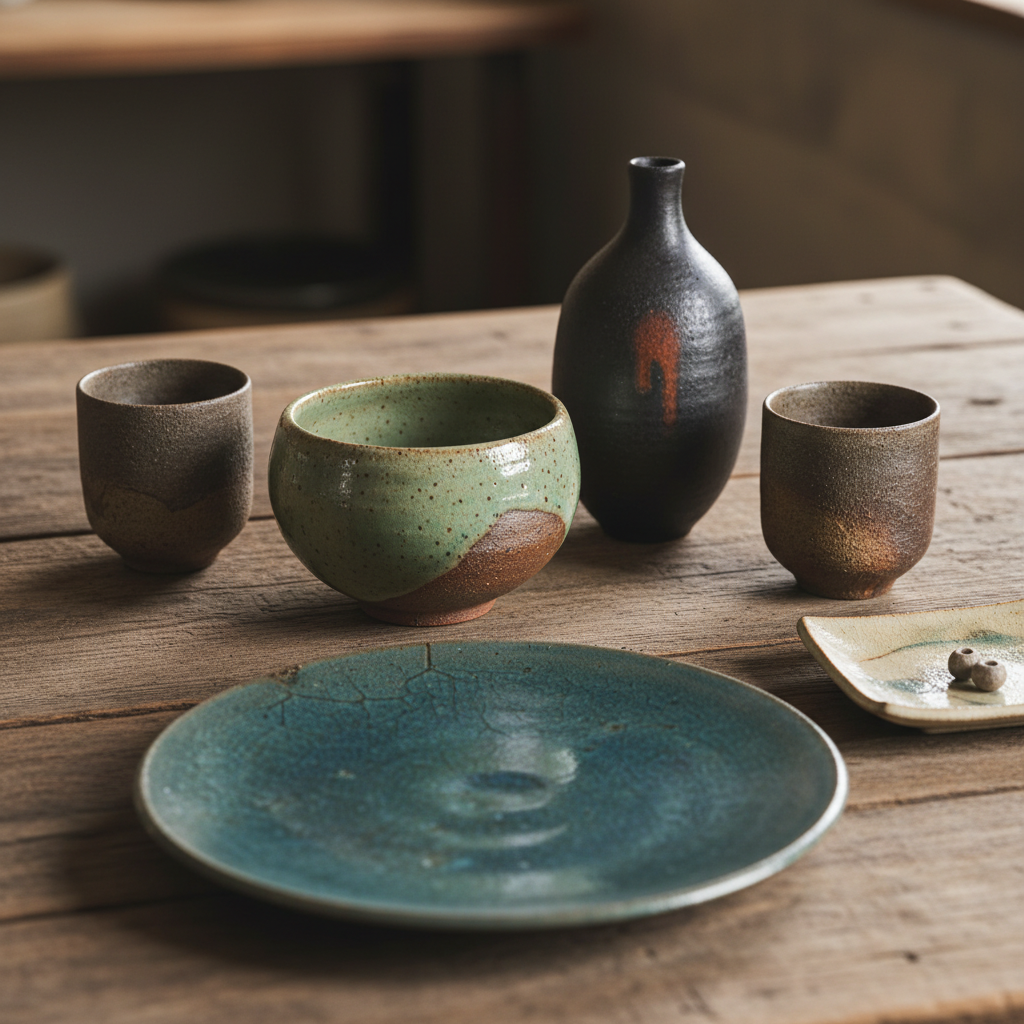
Kokujiyaki (小久慈焼) is pottery fired in Kokujimachi, Kuji City, Iwate Prefecture, with approximately 200 years of history as a traditional ceramic production area. Known as the “Northernmost Folk Kiln” because it is located at the northernmost position among Japan’s traditional kilns, it is characterized by its simple and warm style created through unique glazes made from locally sourced clay and iron sand found in Kuji.
What continues to be upheld unchanged to this day are two principles: continuing to use clay sourced from Kuji, and continuing to create vessels that local people can use in their everyday lives. Soetsu Yanagi, who initiated the Folk Crafts Movement, also highly evaluated the simplicity and beauty of Kokujiyaki, positioning it as one of the representative production areas of Japan’s folk kiln culture.
History of Kokujiyaki – The Development of a Ceramic Production Area Continuing from the Edo Period
Founding Period – Beginning in Bunka 10 (1813)
The history of Kokujiyaki dates back to Bunka 10 (1813). It is said to have begun when Jinyemon Kumagai, the first generation, invited Kazo, a pottery craftsman from Soma, Fukushima Prefecture, to learn pottery-making techniques. According to another account, the origin was established when Kazo, a pottery craftsman from Soma, with the assistance of Jinroku of Kokujitendanai (天田内), built a kiln in Mitsudaicho.
Subsequently, Jinyemon Kumagai, the son of Jinroku, studied pottery under Kazo, and this technique was passed down through successive generations of the Kumagai family. During that period, as an official kiln of the Hachinohe clan, flower bowls, plates, pots, and other items were fired and supplied to the clan, with records of these deliveries remaining.
Transmission of Tradition by the Kumagai Family
The technique of Kokujiyaki has been passed down through successive generations of the Kumagai family. From the first generation through the sixth generation Ryutaro and the fourth generation of the branch family, Shotaro, the Kumagai family continued to preserve the Kokujiyaki tradition. Based on clay sourced locally from Kuji, they created glazes unique to Kokujiyaki, and the astringent and simple qualities of these glazes have been traditionally inherited.
Revival and Transmission to the Present in the Postwar Period and Beyond
After the death of the sixth generation Ryutaro and the fourth generation of the branch family, Shotaro, Kokujiyaki faced a crisis of discontinuation. However, with the efforts of Tsuyoshi Shimotake (下嶽毅) and Matsuo Yotsuyaku (四役松男), who took on the expectation of promoting local industries, a new kiln was built in Kokujiyaki in Showa 32 (1957), and the tradition was revived.
Currently, the eighth generation Satomi Shimotake (下嶽智美) has inherited the kiln, and there is now only one Kokujiyaki kiln workshop. While possessing a history of over 200 years, it continues to preserve the local materials and techniques, unchanged from the past to the present.
Characteristics of Kokujiyaki – Unique Beauty Created by Local Materials
Use of Local Clay from Kuji
The greatest characteristic of Kokujiyaki is the use of local clay abundantly found along the coast of Kuji City. This clay possesses properties unique to Kuji and forms the foundation for creating the distinctive character of Kokujiyaki. The use of local soil has been an unchanging belief of Kokujiyaki since its founding over 200 years ago.
Unique Glaze from Iron Sand and Rice Husk Ash
Another characteristic of Kokujiyaki is its glaze made from iron sand and rice husk ash found locally. Representative glazes include the following:
- White Glaze – A beautiful white glaze with a clean finish
- Ame Tsumugi (飴紬) – A warm amber-colored glaze
- Other Glazes – Kokujiyaki-specific glazes based on local materials
The astringent quality and simplicity of these glazes constitute a major attraction of Kokujiyaki and have been traditionally inherited to this day.
Hand-Crafted Production Using the Potter’s Wheel
Kokujiyaki is currently produced by hand using the potter’s wheel. Vessels made somewhat thick are rich in simplicity and practicality, possessing durability suitable for everyday use. Rather than mass production, careful individual craftsmanship gives each vessel its own character.
Simple Design that Blends into Daily Life
As Kokujiyaki began as everyday household pottery for common people, simple design that blends into daily life is fundamental. The representative katakuchi (one-lipped pouring vessel) with its elongated mouth is particularly known for its simplicity and beauty. Each time it appears on the dining table, its calm presence is said to bring quiet joy to everyday life.
Main Products of Kokujiyaki – Vessels that Accompany Life
Representative Vessels
At Kokujiyaki, various vessels are produced with everyday use as the premise:
- Katakuchi – A simple form with an elongated mouth, representative of Kokujiyaki
- Free Cup – From ¥1,300, ideal for everyday use
- Flower Bowl – A traditional shaped bowl
- Plates – Various sizes of tableware
- Pots – For storage containers or flower vases
- Other Everyday Pottery – Teacups, bowls, sake bottles, and more
All serve as vessels that accompany “ke” (everyday), supporting people’s lives for 200 years since its founding.
Why Kokujiyaki is Perfect for Everyday Use
The reasons Kokujiyaki is suited for everyday use are as follows:
- Appropriate Thickness – Made somewhat thick, durable and easy to handle
- Practicality – Designed with everyday use in mind
- Simple Beauty – Unpretentious beauty blends naturally into daily life
- Tactile Warmth – The warmth inherent in hand-crafted work
- Reasonable Pricing – Appropriately priced as pottery for common people
Kokujiyaki’s Position as a Ceramic Production Area in Iwate Prefecture
Ceramic Production Areas in Iwate Prefecture
Several ceramic production areas existed in Iwate Prefecture besides Kokujiyaki:
- Kokujiyaki (Kuji City) – The northernmost folk kiln continuing to this day
- Kajiteyaki (Morioka City) – Prospered as an official kiln of the Morioka clan
- Daiyaki – A historic production area
- Fujisawayaki – A production area in the southern prefecture
- Tsutsumiyaki (Sendai City, now Miyagi Prefecture) – A folk kiln representing the Tohoku region
- Kirikomi-yaki – A historic production area
- Daigamori-yaki – A production area in the Hanamaki region
Among these, Kokujiyaki is a precious production area that continues to be produced, positioned as a traditional craft representing Iwate Prefecture.
Japan’s Northernmost Traditional Kiln
Kokujiyaki is called the “Northernmost Folk Kiln” because it is located at the northernmost position among Japan’s traditional kilns. This geographical characteristic has become an important element of Kokujiyaki’s identity and is recognized as a representative presence of Tohoku region’s ceramic culture.
Kokujiyaki and the Folk Crafts Movement – Evaluation by Soetsu Yanagi
Soetsu Yanagi, founder of the Folk Crafts Movement, highly evaluated the simplicity and beauty of Kokujiyaki. The “beauty of utility” that Yanagi advocated—the beauty residing in everyday craft items used by common people—was precisely what Kokujiyaki embodied.
In particular, Kokujiyaki’s katakuchi was evaluated for its simple form devoid of decoration and the natural beauty born from local materials. This aligned perfectly with the principles emphasized by the Folk Crafts Movement: “healthy beauty created by unnamed craftsmen” and “beauty of everyday vessels.”
Through Yanagi’s evaluation, Kokujiyaki became widely recognized as one of the important production areas representing Japanese folk crafts, transcending its status as merely a regional folk kiln.
Kokujiyaki’s Production Area – About Kokujimachi, Kuji City
Geography and Characteristics of Kuji City
Kuji City, the production area of Kokujiyaki, is located in the northeastern part of Iwate Prefecture, facing the Pacific Ocean. The geographical characteristic of being on the coast provided the background for Kokujiyaki’s birth, as clay suitable for pottery production was abundantly available.
Kuji City is also known as the setting for the NHK serial television novel “Amachan” and is famous as a region of female diver culture and amber production. Kokujiyaki constitutes an important part of Kuji’s regional culture.
Kilns in Kokujimachi
Currently, there is only one Kokujiyaki kiln workshop in Kokujimachi, Kuji City. The eighth generation Satomi Shimotake continues the tradition, creating vessels suited to modern living while preserving 200 years of history.
The kiln also offers tours and pottery experience classes (from ¥1,000 per person, reservations required), where visitors can experience the actual Kokujiyaki production process.
The Manufacturing Process of Kokujiyaki – Inheritance of Traditional Techniques
Clay Extraction and Refinement
The production of Kokujiyaki begins with the extraction of clay sourced from Kuji. Clay extracted from the coast is refined to remove impurities and brought to a state suitable for pottery production. The continued use of this local clay is fundamental to the Kokujiyaki tradition.
Forming – Hand-Crafting with the Potter’s Wheel
The refined clay is individually hand-formed using the potter’s wheel. Through skilled technique, well-balanced forms are created despite being somewhat thick. Rather than mass production, careful manual work by craftsmen supports the quality of Kokujiyaki.
Glaze Preparation and Application
Based on iron sand and rice husk ash sourced locally, traditional glazes are compounded. Kokujiyaki-specific glazes such as white glaze and ame tsumugi are applied to the vessels. The technique of glaze compounding and application is a secret craft passed down through generations.
Firing
Vessels with applied glaze are fired in the kiln. Through temperature control and firing duration based on long years of experience, the distinctive character of Kokujiyaki is created.
The Value and Challenges of Kokujiyaki in the Contemporary Period
Value as a Traditional Craft
Kokujiyaki is an important traditional craft of Iwate Prefecture with over 200 years of history. By using local materials and preserving traditional techniques, it maintains the cultural identity of the region. Its value in the context of the Folk Crafts Movement is also highly evaluated, and its significance in the history of Japanese craft culture is substantial.
Appeal as Everyday Use Pottery
Even in contemporary times, Kokujiyaki possesses high practicality as everyday tableware. With its simple, unforgettable design, appropriate thickness for easy handling, and simple beauty, it naturally blends into modern living.
The warmth inherent in hand-craftsmanship is a charm that mass-produced items cannot offer, and it continues to be supported by contemporary consumers who seek “intentional living.”
Challenges in Successor Development and Maintenance of Production Area
Currently, Kokujiyaki has only one kiln workshop, making the succession of tradition an important issue. While the eighth generation Satomi Shimotake preserves the tradition, efforts are necessary to continue transmitting the technique and culture to the next generation.
Efforts to nurture the local industry, secure successors, and develop products suited to contemporary needs continue as the tradition is preserved while adapting to the times.
How to Obtain Kokujiyaki and Experience It
Purchase at the Kiln Workshop
Kokujiyaki can be purchased directly at the kiln workshop in Kokujimachi, Kuji City. You can hold the vessels in your hands and confirm their texture and weight while selecting. The workshop stocks various types of vessels that can be chosen according to use and preference.
Pottery Experience Classes
The kiln also offers pottery experience classes (from ¥1,000 per person, reservations required). You can experience actually forming a vessel using the potter’s wheel and feel the Kokujiyaki production process firsthand. It is recommended for creating travel memories and those interested in pottery.
Online Purchase
Those from distant areas can purchase Kokujiyaki through some online shops and Iwate prefecture product exhibitions. However, if you wish to see items in person and select them, visiting Kuji City is recommended.
Kokujiyaki and Kuji City Tourism
Visiting the Kokujiyaki kiln workshop is one of the important elements of Kuji City tourism. Kuji City has other tourism resources as well:
- Kuji Amber Museum – Japan’s only amber-specialized museum
- Kosode Kaigan – The setting for “Amachan” and a region of female divers
- Kuji Underground Water Aquarium Mogurampea – A rare underground aquarium
- Kuji Gorge – Beautiful gorge scenery to enjoy
By visiting the Kokujiyaki kiln workshop along with these tourism spots, you can comprehensively experience Kuji’s culture and nature.
Conclusion – What Kokujiyaki Conveys About Iwate
Kokujiyaki is a traditional ceramic production area in Kuji City, Iwate Prefecture, that has continued for over 200 years. Since the first generation Jinyemon Kumagai learned techniques from Soma pottery craftsman Kazo in Bunka 10 (1813), it has developed as a unique pottery using local clay and iron sand.
Known as the “Northernmost Folk Kiln,” Kokujiyaki is Japan’s northernmost traditional kiln and is characterized by simple beauty highly evaluated by Soetsu Yanagi of the Folk Crafts Movement. Currently, the tradition is preserved by the eighth generation Satomi Shimotake, and the founding principle of using local materials and continuing to create everyday pottery for common people is inherited.
With simple design that blends into daily life, warmth inherent in hand-craftsmanship, and high practicality, Kokujiyaki possesses an appeal that naturally fits into contemporary living. As a traditional craft representing Iwate Prefecture and as excellent everyday tableware, Kokujiyaki will continue to be cherished by many people.
When visiting Kuji City, be sure to visit the Kokujiyaki kiln workshop and touch the beauty of vessels created by 200 years of tradition and the “spirit of craftsmanship” that Iwate’s people have cherished.