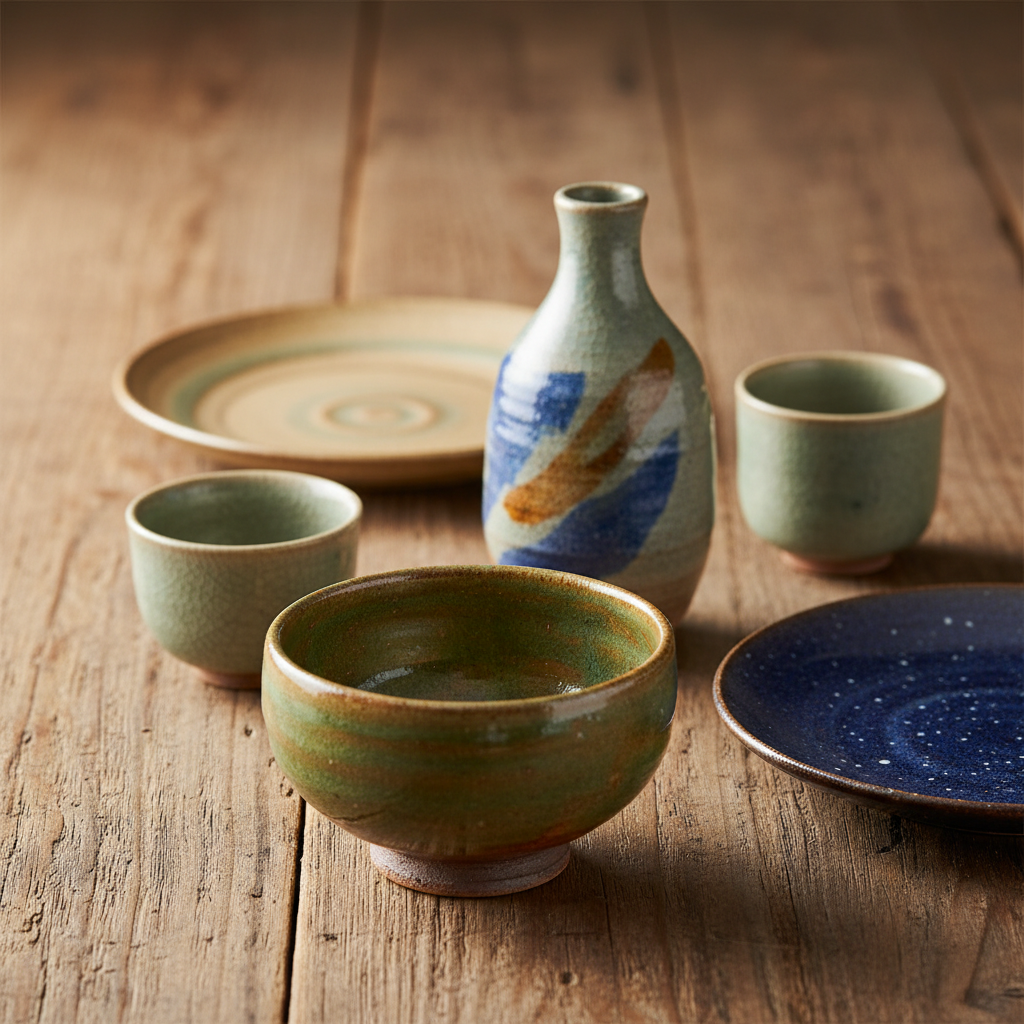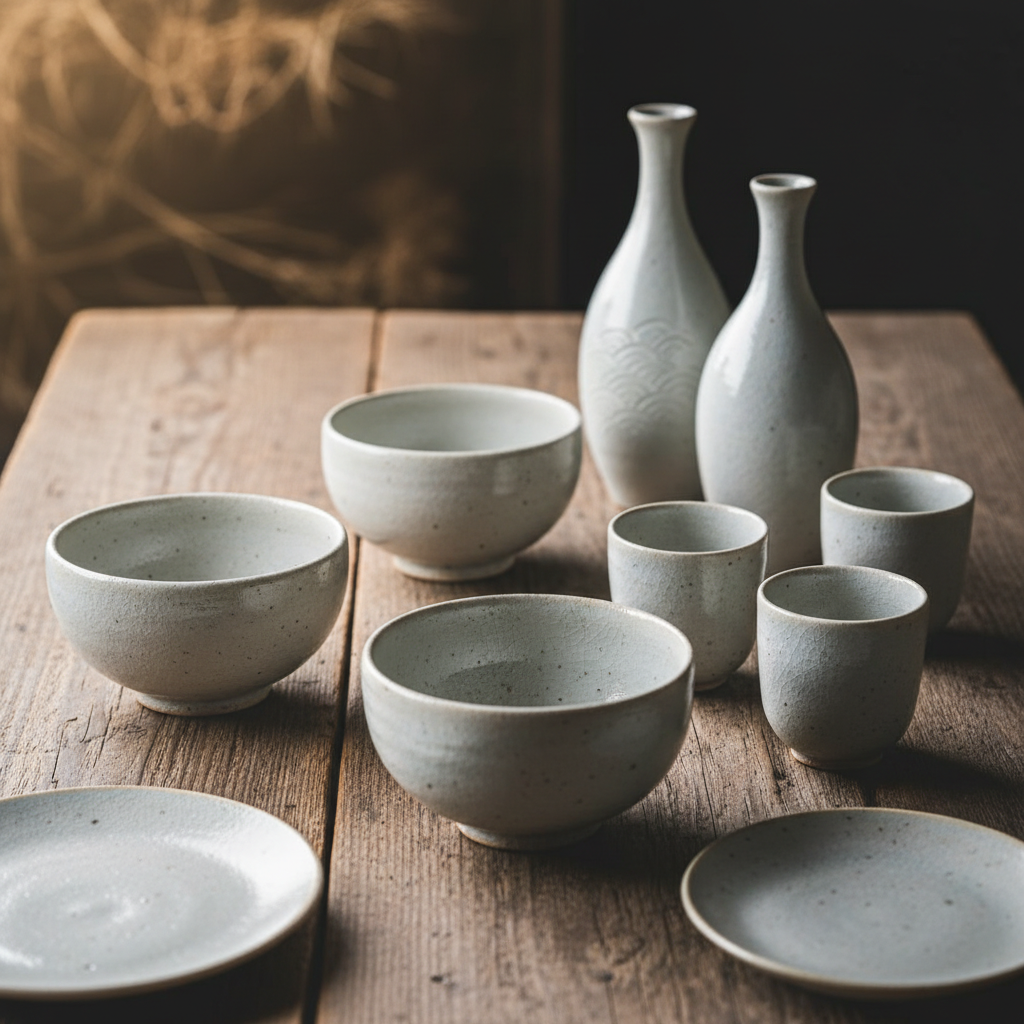
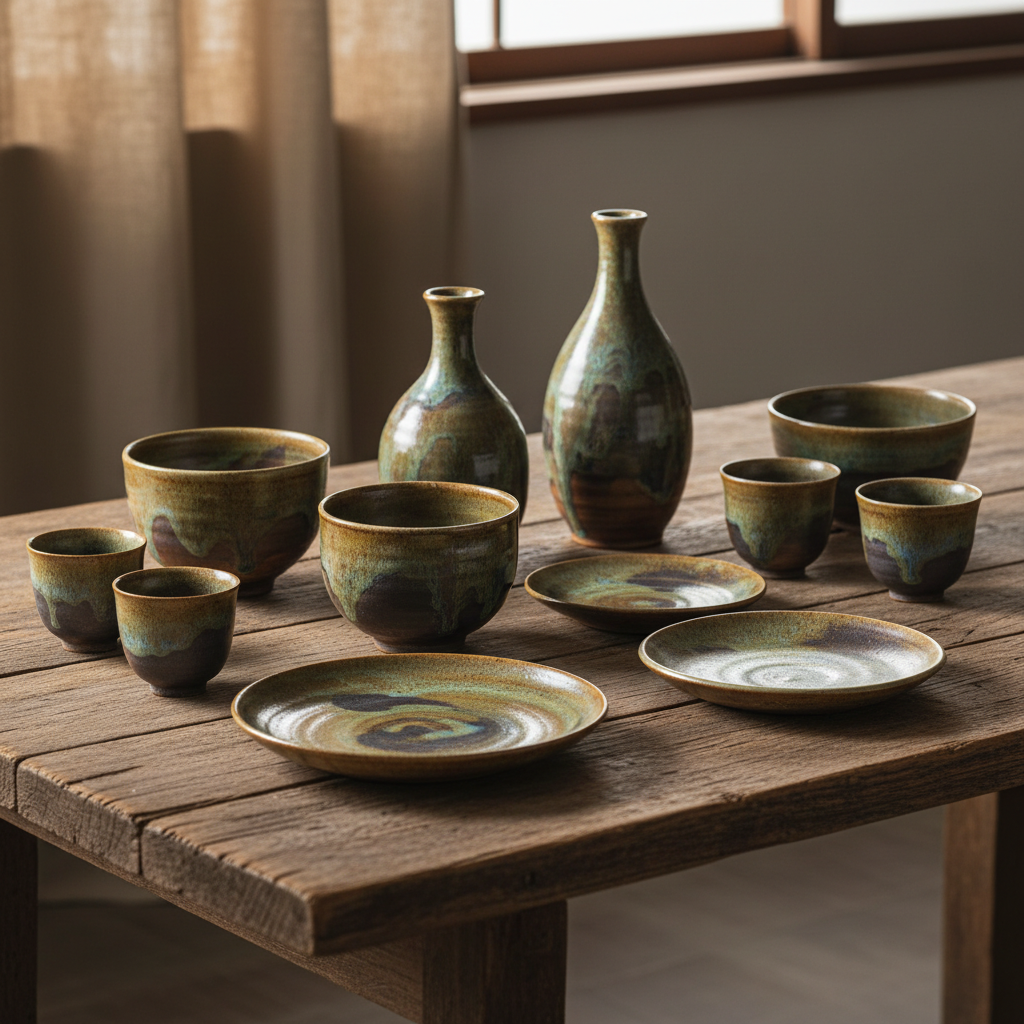
Ojiyama Ware: The Phantom Ceramics of Sasayama, Hyogo Prefecture | Comprehensive Explanation of History, Characteristics, and Current Efforts
Ojiyama ware, transmitted in Tamba Sasayama City, Hyogo Prefecture, is a prestigious ceramic that originated from a domain kiln opened by the Sasayama clan lord at the end of the Edo period. Once discontinued and called “phantom ceramics,” it was revived in 1988 and continues to preserve traditional techniques today.
This article provides a detailed explanation of Ojiyama ware, from its historical background and manufacturing techniques to its characteristics and contemporary initiatives, covering this ceramic production center that represents Hyogo Prefecture.
History and Origins of Ojiyama Ware
Establishment in the Late Edo Period
The origins of Ojiyama ware trace back to Bunsei 1 (1818) in the late Edo period. It is said to have originated from a domain kiln built by the Sasayama clan lord at the time, Aoyama Tadahiro, at Ojiyama (present-day Kawara-cho, Tamba Sasayama City, Hyogo Prefecture).
Aoyama Tadahiro was known as a clan lord with high cultural refinement. Against the backdrop of the popular sencha tea ceremony aesthetic at the time, he aimed to produce dignified porcelain. For this purpose, he invited Kinkodo Kameyuke, a master craftsman from Kyoto who had succeeded in celadon firing at the Mita domain, to provide technical instruction.
The Technique of Kinkodo Kameyuke
Kinkodo Kameyuke was a renowned potter known for his mastery of celadon ware, and his advanced techniques determined the quality of Ojiyama ware. Under Kameyuke’s instruction, Ojiyama ware developed as a porcelain kiln primarily producing Chinese-style celadon, underglaze blue, and overglaze red painted wares, creating refined works befitting a domain kiln.
Products were formed using hand-carved clay molds for press-molding blanks and other delicate and highly skilled techniques, testament to the high technological standards of the time.
Peak Period and Closure
Ojiyama ware reached its peak during the Kaei era (1848–54). During this period, numerous high-quality porcelain pieces were produced for the clan lord and upper-ranking samurai, and their techniques and beauty received high praise.
However, as it was the clan lord’s domain kiln, products rarely reached the general market, and the number of pieces was originally limited. With the Meiji Restoration and the abolition of the han system, the kiln was closed in Meiji 2 (1869), and the history of Ojiyama ware temporarily ceased.
Revival in the Showa Period
Approximately 120 years after closure, a revival project by local volunteers began in 1988 (Showa 63). Through research of remaining old works and documents, and by recreating Edo period techniques, Ojiyama ware was revived from “phantom ceramics” to the present day.
Since the Heisei period, work continues to create pieces suited to modern living while preserving traditional techniques, and it has been certified as a Hyogo Prefecture-designated traditional craft.
Characteristics and Manufacturing Techniques of Ojiyama Ware
Raw Materials and Basic Structure
The primary raw materials for Ojiyama ware are porcelain stones such as quartz and feldspar. These minerals are crushed and refined to create porcelain clay, which is then fired at high temperatures to achieve beautiful white porcelain with a translucent quality.
The fact that it is primarily porcelain rather than pottery is a major distinction from Tamba ware (pottery) within the same Hyogo Prefecture.
Types and Colors of Glazes
Ojiyama ware can be classified by glaze into the following types:
Celadon (Seiji)
Celadon, characterized by its translucent greenish-blue color, is the most highly evaluated group of works among Ojiyama ware. Because Kinkodo Kameyuke was a master of celadon, this technique is particularly excellent, creating a unique beauty combined with semi-relief patterns.
Underglaze Blue (Sometsuke)
Underglaze blue, with indigo (goshusai) designs painted on white porcelain, is also a representative technique of Ojiyama ware. It is characterized by delicate brushwork imitating Chinese Jingdezhen porcelain.
White Porcelain (Hakuji)
White porcelain, pursuing pure white beauty, results in a simple yet dignified finish.
Overglaze Red (Akae)
Overglaze red, with red and gold overglaze pigments applied on white porcelain, possesses a vibrant and celebratory atmosphere.
Lapis Lazuli Glaze (Ruriyu)
Works using deep blue lapis lazuli glaze are another expression of the diverse possibilities of Ojiyama ware.
Characteristics of Molding Techniques
One major characteristic of Ojiyama ware is press-molding using hand-carved clay molds. This technique allows for delicate relief patterns and semi-relief decorative elements.
Combined with wheel-throwing, complex-shaped vessels can also be produced, conveying highly advanced techniques to the present day.
Influence of Chinese Ceramics
Ojiyama ware was strongly influenced by Chinese ceramics, particularly Jingdezhen porcelain from the Ming and Qing dynasties. Against the backdrop of sencha tea ceremony aesthetics, dignified Chinese-style designs suited to literati taste were preferred.
However, rather than mere imitation, the pursuit of unique expression fused with Japanese aesthetics heightens the artistic value of Ojiyama ware.
Positioning as a Ceramic Production Center in Hyogo Prefecture
Differences from Tamba Ware
A representative Japanese ceramic in Hyogo Prefecture is Tamba ware, which boasts approximately 800 years of history and is recognized as one of Japan’s Six Ancient Kilns, designated as a Japanese Heritage site. Tamba ware, which emerged in the late Heian period, developed primarily around practical pottery such as storage jars, large vessels, and grinding mortars.
In contrast, Ojiyama ware was established at the end of the Edo period, differing greatly from Tamba ware in its focus on porcelain rather than pottery and its production of dignified works as a domain kiln.
Relationship with Mita Ware
Mita ware (Mita City), which also began in the late Edo period within Hyogo Prefecture, produced a wide range from porcelain to pottery, primarily celadon with underglaze blue and overglaze enamels. Mita ware, which opened its kiln at the foot of Myojinyama in Miwara Village, began activity at nearly the same time as Ojiyama ware, and may have influenced each other.
In particular, the fact that Kinkodo Kameyuke succeeded in celadon firing at the Mita domain before instructing at Ojiyama ware suggests deep technical connections.
Hyogo Prefecture-Designated Traditional Craft
Presently, Ojiyama ware is certified as a Hyogo Prefecture-designated traditional craft, protected and transmitted as a valuable cultural property of the region. Together with Tamba ware and Mita ware, it has become representative of Hyogo’s ceramic culture.
Present-Day Ojiyama Ceramics Workshop
Transmission of Traditional Techniques
Since its 1988 revival, the Ojiyama Ceramics Workshop continues to faithfully recreate Edo period traditional techniques while creating works that harmonize with modern life.
Continued research of old works, with efforts to revive the glaze formulations, firing temperatures, and molding techniques of the period, has made it a precious place where visitors can experience the beauty of the “phantom ceramics” of that time.
Exhibition and Sales Facilities
The Ojiyama Ceramics Workshop features permanent exhibitions of celadon, underglaze blue, white porcelain, and overglaze red works, which can also be purchased. A wide range of pieces is available, from tea wares and flower vases to tableware, suitable for everyday use or tea ceremony utensils.
Visitors can actually handle pieces such as celadon works with translucent greenish-blue color or underglaze blue works with delicate brushwork, inheriting the dignity of the domain kiln era.
Pottery Experience Classes
The Ojiyama Ceramics Workshop also offers pottery experience classes for the general public. Through experiences with wheel-throwing and overglaze painting techniques, visitors have a rare opportunity to experience Ojiyama ware techniques.
Even beginners can create original works under careful instruction, and the finished pieces are sent home after firing. As an experience to feel traditional crafts up close, it is popular with tourists.
Introduction of Potters
Currently, potters who have inherited traditional techniques at the Ojiyama Ceramics Workshop dedicate themselves daily to creating works. While researching Edo period techniques, they also challenge contemporary expressions incorporating modern sensibility, aiming for both tradition and innovation.
Each potter, utilizing their specialized techniques and expressions, creates diverse works, continuing to expand the possibilities of Ojiyama ware.
Enjoying Ojiyama Ware
Ojiyama Ware Meal and Takasago with Ojiyama Ware
At some restaurants in Tamba Sasayama City, cuisine is served using Ojiyama ware tableware. Particularly with plans such as “Ojiyama Ware Meal” and “Takasago with Ojiyama Ware,” dishes made with local ingredients can be savored in beautiful Ojiyama ware vessels.
The translucence of celadon and delicate patterns of underglaze blue further enhance the beauty of the dishes, creating a luxurious experience where visitors can enjoy Tamba Sasayama’s culture through both visual and taste senses.
Exhibitions at the Hyogo Ceramic Art Museum
In Tamba Sasayama City, Hyogo Prefecture, stands the Hyogo Ceramic Art Museum, one of Japan’s foremost ceramic art museums. Here, special exhibitions such as “Ancient Ceramics Related to Hyogo – Tamba Ware, Mita Ware, and Ojiyama Ware” are occasionally held, where valuable Ojiyama ware pieces from the Edo period can be appreciated.
By comparing old works with contemporary pieces, visitors can understand the state of technical transmission and development, deepening their understanding of Ojiyama ware.
Value as Collectors’ Items
Because Ojiyama ware was a domain kiln, Edo period pieces are limited in number and highly valued in the antique market. Particularly, celadon works by Kinkodo Kameyuke’s hand and pieces from the peak Kaei era are treasured by collectors.
Contemporary revival works are also evaluated as high-quality pieces faithfully recreating traditional techniques, with future value appreciation anticipated.
Access to Ojiyama Ware and Tourist Information
Basic Information
Ojiyama Ceramics Workshop
- Location: Kawara-cho, Tamba Sasayama City, Hyogo Prefecture
- Business Hours: Typically 10:00–17:00 (confirmation recommended)
- Closed: Irregular (confirmation by phone before visiting is recommended)
- Telephone: Please confirm official information in advance
- Exhibition and Sales: Available
- Pottery Experience: Available (reservation required)
Transportation and Access
By Train
From JR Fukuchiyama Line “Sasayamaguchu Station,” approximately 20 minutes by Shinki Green Bus, get off at “Kawara-cho” bus stop, approximately 5 minutes on foot
By Car
Approximately 15 minutes from “Nannan Sasayamaguchu IC” on the Maizuru-Wakasa Expressway
Parking available (limited spaces)
Nearby Tourist Attractions
When visiting the Ojiyama Ceramics Workshop, it is recommended to tour together with other tourist attractions in Tamba Sasayama City:
- Sasayama Castle Ruins: A yamashiro (mountain castle) built in the early Edo period, with a restored lecture hall
- Sasayama Castle Town: A historic town with remaining samurai residences and merchant houses
- Hyogo Ceramic Art Museum: A ceramic art museum with exhibitions of Tamba ware and Ojiyama ware
- Tamba Sasayama City Museum of History and Art: A facility to learn about regional history and culture
- Tamba Ware Village: An area where kilns producing Tamba ware, one of Japan’s Six Ancient Kilns, are gathered
Future and Challenges for Ojiyama Ware
Transmission of Traditional Techniques
The greatest challenge for Ojiyama ware is transmitting highly advanced traditional techniques to the next generation. Efforts continue to pass on techniques requiring mastery, such as hand-carved clay mold production and celadon glaze formulation.
Through pottery experience classes and collaboration with school education, activities to communicate the appeal of Ojiyama ware to local children play an important role.
Adaptation to Modern Living
While preserving Edo period techniques, the creation of pieces suited to modern lifestyles is required. Development of practical vessels compatible with microwave ovens and dishwashers, and exploration of contemporary designs enjoyable as interior decoration, make the balance between tradition and innovation important.
Utilization as a Tourist Resource
Tamba Sasayama City is known as a tourist destination for the “Dekanshobushi” song, black soybeans, and wild boar meat (botan nabe), and Ojiyama ware is also an important tourist resource. There is potential for further utilization through experience programs combined with regional food culture and information distribution for inbound tourists.
Domestic and International Promotion
The recognition of Ojiyama ware is not yet high nationally. Efforts continue through SNS and online shop information distribution, exhibition at domestic and international craft exhibitions, and more, to make the appeal of Ojiyama ware known to more people.
The rarity described as “phantom ceramics” and the distinguished nature of domain kiln production hold potential for international appreciation.
Conclusion
Ojiyama ware from Tamba Sasayama City, Hyogo Prefecture, is dignified porcelain originating from a domain kiln opened by clan lord Aoyama Tadahiro at the end of the Edo period. Under the instruction of Kyoto master craftsman Kinkodo Kameyuke, it produced Chinese-style porcelain including celadon, underglaze blue, and overglaze red, reaching its peak during the Kaei era.
After closure in Meiji 2, it was revived in 1988 following approximately 120 years, and continues today as a Hyogo Prefecture-designated traditional craft, creating works suited to modern times while preserving traditional techniques.
Through exhibition, sales, and pottery experience classes at the Ojiyama Ceramics Workshop, the appeal of this “phantom ceramics” is shared with many people. When visiting Tamba Sasayama, be sure to experience firsthand the beauty of Ojiyama ware’s translucent celadon and delicate underglaze blue.
As a ceramic production center in Hyogo Prefecture, alongside Tamba ware and Mita ware, Ojiyama ware is a valuable cultural heritage of the region, and its transmission and development remain important tasks going forward. Please pay attention to the future development of Ojiyama ware, which continues to preserve tradition while pursuing innovation.