Koishiwara Ware: A Comprehensive Guide to Fukuoka’s Ceramic Production Area | History, Characteristics, Techniques, and Kilns
Koishiwara ware (koishiwarayaki), produced in Toho Village, Asakura County, Fukuoka Prefecture, is a traditional craft that stands out distinctively among Japanese ceramics. The geometric patterns created through techniques such as flying plane shavings (tobikanna) and brushstroke marks (hakeme) possess a beauty that is simple yet refined, earning high nationwide recognition as the ultimate expression of “beauty in utility.”
This article provides a comprehensive explanation of Koishiwara ware, Fukuoka Prefecture’s representative ceramic production area, covering everything from its historical background and technical details to current kiln information and tourist attractions.
Koishiwara Ware’s Production Area: Toho Village, Fukuoka Prefecture
Geography and Environment of Toho Village
Toho Village in Asakura County, Fukuoka Prefecture, the production area for Koishiwara ware, was born in 2005 (Heisei 17) through the merger of Koishiwara Village and Hojusan Village. Located in the southeastern part of Fukuoka Prefecture, on the border with Oita Prefecture, it is a naturally rich land surrounded by mountains with elevations of 1,000 meters and above.
Approximately 80% of the village’s land area is covered with forest, and the original Japanese landscape of gorge beauty created by the clear stream of the Oobie River and rice terraces remains to this day. This abundant natural environment has provided high-quality clay suitable for ceramics and abundant timber that serves as fuel for climbing kilns.
Geographical Advantages as a Ceramic Production Area
The development of the Koishiwara district as a ceramic production area has several geographical advantages.
Existence of High-Quality Ceramic Clay
The Koishiwara area is abundant in iron-rich red clay suitable for pottery production. This clay has the plasticity suited for ceramic production and the strength after firing, and has been used as the base material for Koishiwara ware for over 350 years.
Abundant Fuel Resources
The abundant timber obtained from the surrounding mountains is essential as fuel for climbing kilns. Under sustainable forest management, many kilns continue traditional firing using firewood to this day.
Abundant Water Resources
Ceramic production requires large quantities of water. Clear streams including the Oobie River supply the high-quality water essential for pottery wheel work and glaze preparation.
History of Koishiwara Ware
Origins in the Early Edo Period
The history of Koishiwara ware began in Tenwa 2 (1682). It is said that Kuroda Mitsuyuki, the third feudal lord of the Fukuoka Domain, invited ceramic artisans from Imari in Hizen Province (present-day Saga Prefecture) and transmitted Chinese-style porcelain production techniques.
During this period, the Koishiwara region already had a tradition of Takatori ware (takatoriyaki), a tea ceramic. The porcelain techniques introduced from Imari merged with the existing ceramic techniques of Takatori ware, forming Koishiwara ware’s unique style.
Development as Household Tableware
Although Koishiwara ware initially aimed at porcelain production, constraints in raw materials and technology gradually led to a shift toward ceramic-centered production. Particularly from the mid-Edo period onward, production of daily household items such as water jars (mizugame), pots, mortars, and sake bottles became the mainstream.
As vessels for daily use by farmers and common people, practicality and durability were emphasized. An efficient production method called “raw glazing” (namagake), where glaze is applied immediately after forming without initial firing, was established, making mass production possible.
Encounter with the Folk Craft Movement
Koishiwara ware became nationally known through its encounter with the folk craft movement during the Showa period. In 1954 (Showa 29), Soetsu Yanagi (yanagimuneyoshi), founder of the folk craft movement, along with ceramic artist Shoji Hamada (hamadashouji), Bernard Leach, and others visited Koishiwara.
They found the ideal of “beauty in utility” in the simple beauty of Koishiwara ware and its decorative techniques such as flying plane shavings and brushstroke marks. Yanagi evaluated Koishiwara ware as a “model of folk craft,” and this encounter became a turning point that brought Koishiwara ware to national attention.
Designation as a Traditional Craft
Against the backdrop of recognition by the folk craft movement, Koishiwara ware was designated in 1975 (Showa 50) by the Minister of Economy, Trade and Industry (then the Minister of International Trade and Industry) as a traditional craft—the first ceramic ware in Japan to receive this designation. This designation officially recognized Koishiwara ware’s traditional techniques and quality, establishing its position as a production area.
Currently, approximately 50 kilns are scattered throughout the Koishiwara district of Toho Village, continuing to create vessels that preserve tradition while adapting to modern living.
Characteristics of Koishiwara Ware
Unique Geometric Patterns
The greatest characteristic of Koishiwara ware is the unique geometric patterns created using tools and fingers on the surface of the pottery as the pottery wheel rotates. The warmth of handwork—regular yet with no two patterns exactly alike—captivates many people.
These patterns serve not merely as decoration but also practical functions. The surface irregularities make the vessel less slippery and easier to hold. Additionally, the changes in color created by the flow and accumulation of glaze give the vessel depth and expression.
Rustic Texture and Warmth
Koishiwara ware uses red clay rich in iron as its base material, with white slip applied over it for decoration. Since it is fired with raw glaze without initial firing, the rustic texture inherent to the clay remains intact.
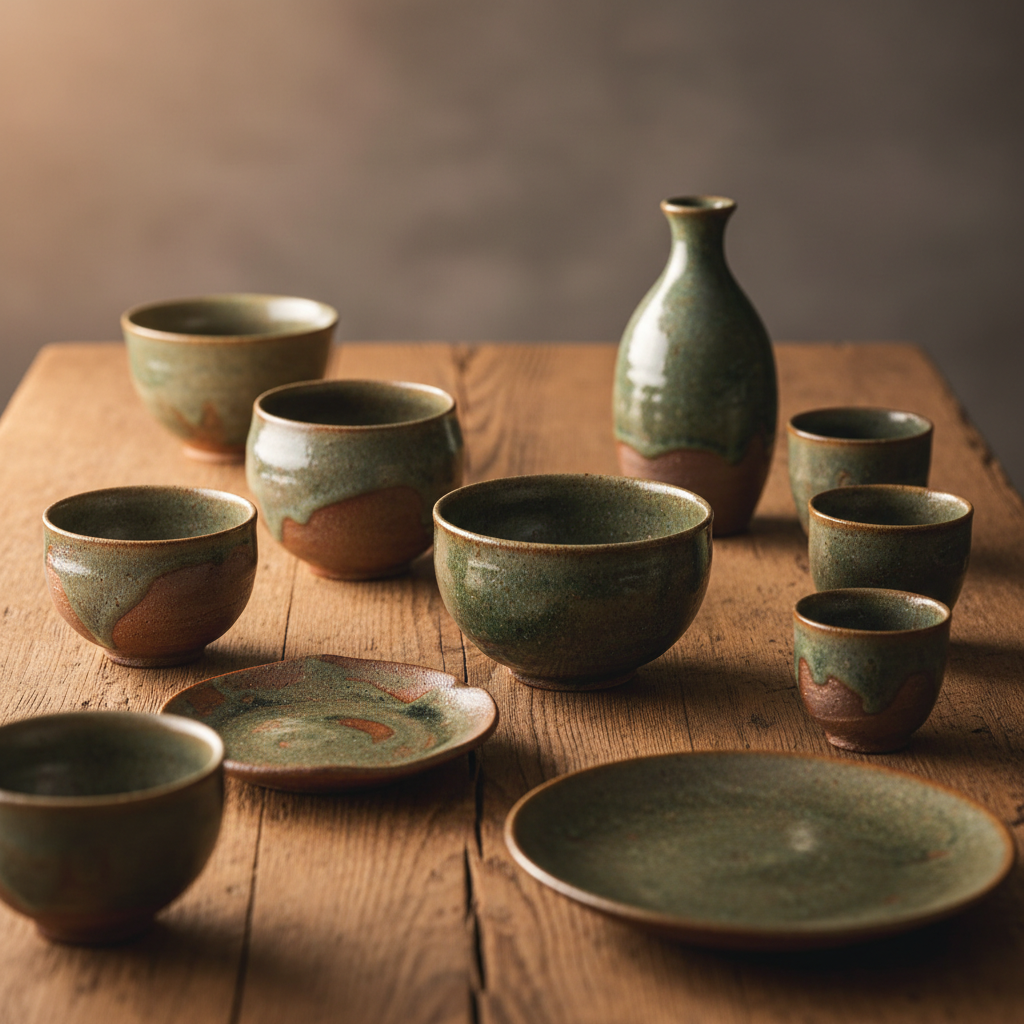
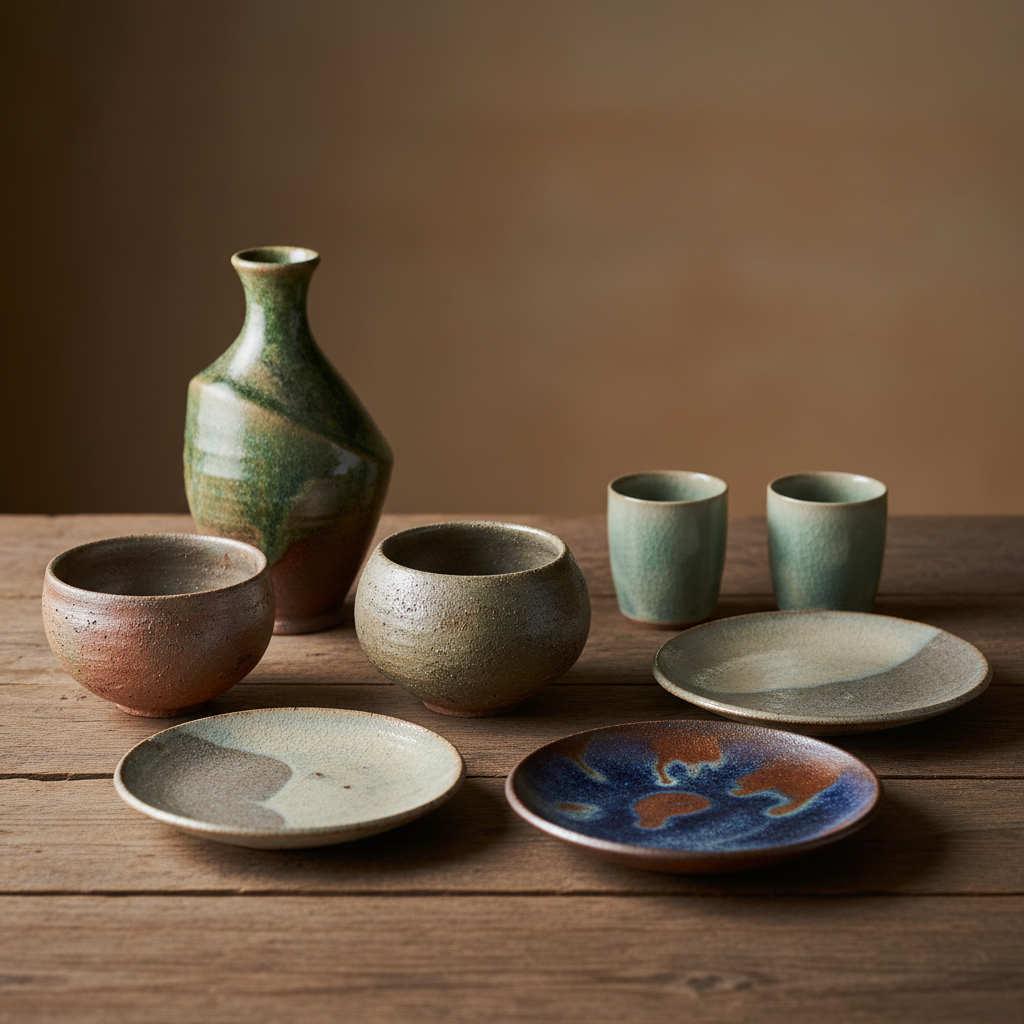
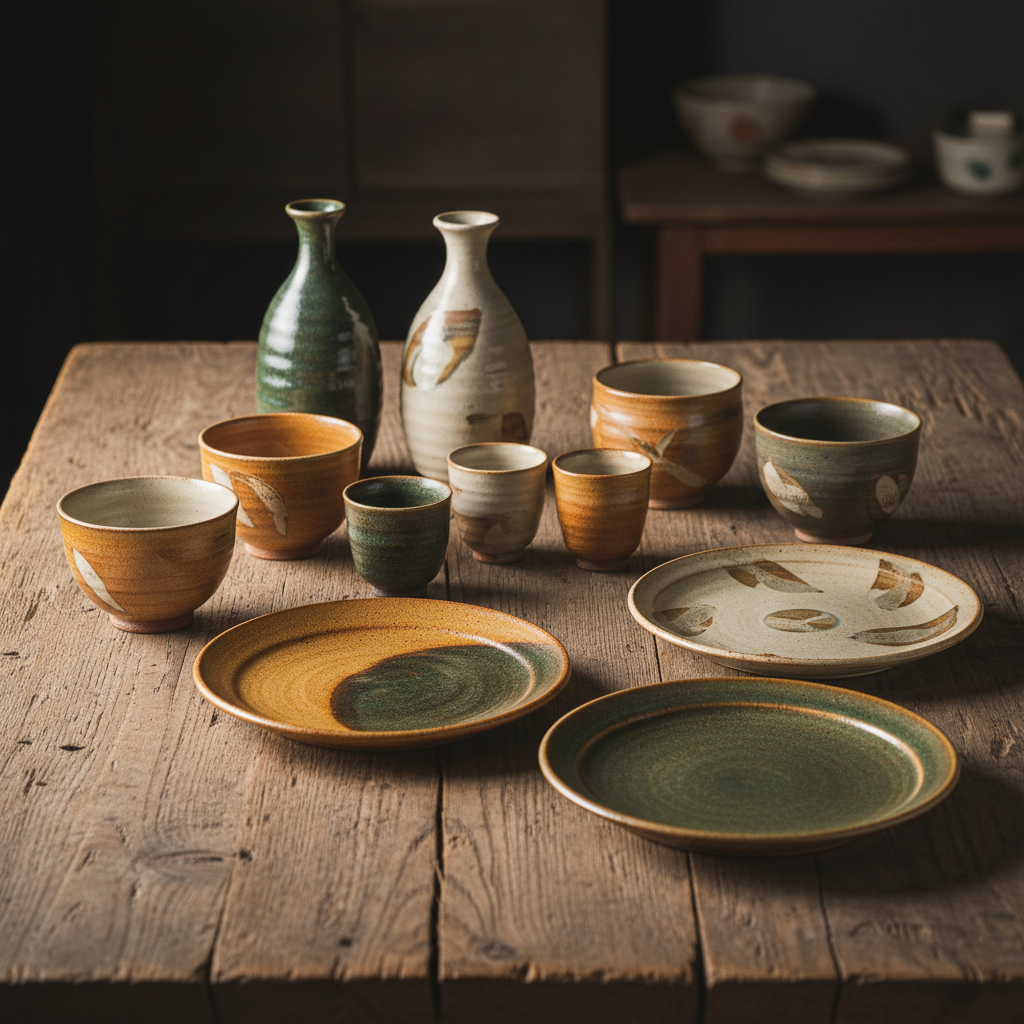
The glazes primarily used include transparent glaze, white glaze, and amber glaze. The interplay of the clay’s color, white slip, and glaze color creates a warm, unique color tone. This simplicity and warmth is one reason why the ware is long cherished as everyday tableware.
Commitment to Practicality
Koishiwara ware embodies “beauty in utility” as a vessel in which practicality is thoroughly pursued. Function as everyday tableware is prioritized—hand-fitting shape, appropriate weight, ease of handling, and ease of pouring.
Particularly food items such as rice bowls, tea cups, plates, and bowls are cherished in many homes for their simple design that never tires even with daily use and their excellent usability. They also excel in durability and, with careful handling, can be used for decades.
Representative Techniques of Koishiwara Ware
Koishiwara ware features unique decorative techniques applied while rotating the pottery wheel. Here, the representative techniques are detailed.
Flying Plane Shavings (Tobikanna)
The representative technique of Koishiwara ware is “flying plane shavings.” When a plane (kanna) with a blade edge worked to undulate is applied to the surface of a rotating vessel, regular successive scraping marks are engraved.
The wavelike patterns created by this technique possess a beautiful rhythm like water ripples. The way the plane is applied, its angle, and pressure change the pattern’s expression, clearly revealing the craftsperson’s skill. This is a highly advanced technique.
Flying plane shavings is a traditional technique passed down since the Edo period and continues to be inherited by many kilns today. Vessels decorated with this technique change in shadow and light as the angle shifts, allowing enjoyment of different expressions depending on the viewing angle.
Brushstroke Marks (Hakeme)
Brushstroke marks is a technique of applying slip with a brush. As the brush is applied to a rotating pottery wheel, regular brushstroke marks remain, creating unique striped patterns.
Various expressions of patterns are created depending on the type of brush, the stiffness of the bristles, and the method of application. From delicate brushstroke marks with continuous fine lines to bold strokes with thick lines, variations are abundant.
The brushstroke marks technique is beautiful in its contrast between white slip and red clay. When fired with glaze, a unique color tone appears where the clay’s color shows through.
Comb Marks (Kushime)
Comb marks is a decorative technique using a comb-like tool. As the comb is applied to a rotating pottery wheel, parallel fine lines are continuously engraved.
The spacing and number of comb teeth change the pattern’s density and expression. Fine comb marks give a delicate and refined impression, while coarse comb marks give a bold and rustic impression.
Comb marks may be used independently or combined with other techniques to create complex patterns.
Finger Painting (Yubigaki)
Finger painting is a technique where the craftsperson directly draws patterns using their own fingers. The surface of a slip-coated vessel is traced with fingers on a rotating pottery wheel, creating free-flowing curved or wavelike patterns.
Since patterns are drawn using only finger sensation without tools, more natural and organic patterns emerge. It is a technique in which the craftsperson’s individuality and sensibility are most directly expressed.
Slip Pouring and Splash Coating
Slip pouring is a technique of pouring slips or glazes of different colors onto the vessel’s surface. When poured while rotating the wheel, spiral or concentric circular patterns form.
Splash coating is a technique of dipping a brush in slip or glaze and striking it against the vessel, characterized by irregular splatter patterns. As this technique includes an element of chance, no two patterns are ever the same—the appeal of this technique.
Pom Painting
Pom painting is a technique of lightly tapping a sponge or cloth containing slip against the vessel’s surface to create patterns. Regular dot patterns or organic patterns that vary depending on the tapping method emerge.
This technique gives a simple and charming impression and is particularly used on small plates and miniature dishes.
Koishiwara Ware Production Process
Clay Preparation
Production of Koishiwara ware begins with preparing high-quality ceramic clay. Red clay extracted from the Koishiwara area is mixed with clay and sand to adjust plasticity.
The extracted clay is first sun-dried and then crushed to remove impurities. It is then mixed with water and adjusted to appropriate hardness. After a clay maturation period, it finally becomes ready for forming.
Forming
Koishiwara ware forming is primarily done using the “pottery wheel forming” technique. Skilled craftsmen pull up clay on a rotating wheel, creating beautiful shapes in minutes.
For large pieces such as large plates and large bowls, the “slab forming” technique is also used. This method involves shaping clay spread into a plate by fitting it to a mold.
Decoration
After forming, when the clay reaches an appropriate “half-dry” state, decoration is applied. At this stage, slip is applied, and patterns are created using techniques such as flying plane shavings, brushstroke marks, and comb marks.
The timing of decoration is extremely important—if clay is too soft, the shape collapses, and if too hard, patterns don’t set properly. Long years of experience develop the sensibility necessary for this process.
Drying
Decorated vessels are air-dried. Rapid drying causes cracks, so drying occurs slowly in a well-ventilated, shaded location.
Drying time varies by season and weather, but typically takes several days to about a week for complete drying.
Glazing
Glaze is applied to completely dried vessels. In Koishiwara ware’s characteristic “raw glazing,” glaze is applied directly to dried vessels without initial firing.
The glazes primarily used include transparent, white, and amber glazes. Glazing methods such as dip coating, pouring, and spraying are selected according to vessel shape and intended expression.
Firing
Glazed vessels are loaded into a kiln for firing. In traditional climbing kilns, wood is used as fuel and vessels are fired at high temperatures of 1,200–1,300 degrees Celsius. Firing takes 2–3 days, followed by several days of slow cooling.
Today, many kilns use gas or electric kilns for easier temperature control, but many kilns remain committed to traditional climbing kiln firing. The “kiln change”—color variation created by changes in fire unique to climbing kilns—possesses the appeal of never creating the same piece twice.
Major Kilns of Koishiwara Ware
Approximately 50 kilns are scattered throughout the Koishiwara district of Toho Village. Each kiln maintains its own individuality while preserving traditional techniques.
Traditional Established Kilns
Established kilns continuing from the Edo period preserve techniques and forms passed down through generations while producing traditional Koishiwara ware. Vessels using standard techniques such as flying plane shavings and brushstroke marks are supported by many fans for their unchanging beauty.
Kilns Incorporating Contemporary Sensibility
Young ceramic artisans, using traditional techniques as foundation, challenge new designs and colors suited to contemporary living styles. Vessels using colorful glazes and designs usable for Western-style dining represent the fusion of tradition and innovation.
Kilns with Gallery Facilities
Many kilns operate galleries in their workshops for displaying and selling works. Some allow direct conversation with artisans while selecting vessels, and some kilns allow viewing of the production process.
Koishiwara Ware Tourism Information
Koishiwara Ware Traditional Craft Hall
The Koishiwara Ware Traditional Craft Hall is a facility where visitors can learn about Koishiwara ware’s history and techniques. The permanent exhibition introduces Koishiwara ware’s changes from the Edo period to the present with actual materials.
Facility Information
- Location: 730-9 Koishiwara, Toho Village, Asakura County, Fukuoka Prefecture
- Phone: 0946-74-2266
- Hours: 9:00–17:00
- Closed: Tuesdays (following day if Tuesday is a holiday)
The hall also has a corner for displaying and selling works by each kiln, allowing visitors to compare vessels from various kilns at once.
Kiln Tour
Touring the kilns scattered throughout the Koishiwara district is another highlight of Koishiwara ware tourism. Kilns are scattered along narrow mountain roads, allowing visitors to enjoy strolls amid pastoral scenery.
Many kilns open their galleries, and in many cases viewing is possible without advance notice. However, as craftspeople may be working, advance notice is recommended.
Ceramic Experience
Several kilns and facilities offer ceramic experience programs. From pottery wheel forming experiences to painting experiences, even beginners can easily experience Koishiwara ware creation.
Vessels created can be fired later and shipped, a service popular as a memory of the trip.
Koishiwara Ware Pottery Market
The “Koishiwara Spring Folk Craft Village Festival” held during the Golden Week holiday period each May and the “Autumn Folk Craft Village Festival” in October are major events attracting many pottery enthusiasts from across the country.
During these periods, each kiln sells works at special prices. Kilns open their interiors normally closed to the public, hold demonstrations, announce new works, and sell limited editions. These are chances to find bargains.
Relationship Between Koishiwara Ware and Takatori Ware
Toho Village is home to both Koishiwara ware and Takatori ware (takatoriyaki), another traditional ceramic, which maintain a close relationship.
History of Takatori Ware
Takatori ware began in 1602 (Keichō 7) when Tadaoki Hosokawa brought back a ceramic artisan named Hachizan from Korea. It developed as tea ware, particularly recognized as one of the seven Enshu kilns, a highly prestigious ceramic ware.
Technical Exchange and Influence
When ceramic artisans were invited from Imari in 1682 to begin Koishiwara ware production, the existing Takatori ware and new techniques exchanged influences. This technical exchange became an important element in forming Koishiwara ware’s unique style.
Today, Takatori ware continues production, maintaining traditions as tea ware while produced by some kilns in the Koishiwara district.
Contemporary Development of Koishiwara Ware
Adaptation to Changes in Living Styles
While traditional Koishiwara ware focused on household items such as water jars and pots, the types of vessels produced have changed to match contemporary living styles.
Coffee cups, wine glasses, and pasta plates—vessels usable as Western tableware—are increasing, appealing to younger generations. While using traditional techniques, vessel shapes and sizes evolve to suit contemporary lifestyles.
Market Expansion Overseas
Koishiwara ware’s geometric and refined designs receive high evaluation overseas. In recent years, exports to Europe, America, and Asian countries have increased, with active participation in international ceramic markets.
Under the brand name “KOISHIWARA,” pieces are now handled by famous select shops overseas, being promoted internationally as Japanese traditional craft.
Young Artisan Development
Efforts support young ceramic artisan development for inheritance of traditional techniques and revitalization of the production area. Toho Village accepts residents and provides support to those wishing to study ceramics.
Ceramic artisans studying in other production areas or art universities move to Koishiwara, introducing new sensibilities and creating an active production area where tradition and innovation coexist.
How to Purchase Koishiwara Ware
Purchase at the Production Area
The most certain method is directly visiting kilns in Toho Village. Gallery spaces at each kiln offer abundant selection from which to choose, and conversation with artisans while purchasing is possible.
The Koishiwara Ware Traditional Craft Hall also allows viewing and purchasing works from multiple kilns at once.
Online Shops
Many kilns operate independent online shops, allowing purchase from anywhere nationwide. Traditional craft select shops also handle Koishiwara ware on their websites.
Since purchasing without seeing actual pieces is involved, confirming size and color, and checking return and exchange policies before purchase is recommended.
Department Stores and Select Shops
Department stores in Fukuoka City and nationwide select shops handling crafts carry Koishiwara ware. Regular Koishiwara ware fairs and exhibitions occur, sometimes with opportunities to receive explanations from artisans visiting the store.
Koishiwara Ware Care and Use
Initial Preparation Before First Use
Before using new Koishiwara ware vessels, “seasoning” treatment is recommended. This treatment seals fine pores in the pottery, preventing stains and soiling.
Boiling vessels in rice washing water or flour-dissolved water seals pores with starch, extending vessel life.
Daily Care
After use, wash gently with neutral detergent and thoroughly dry before storage. As pottery is water-absorbent, prolonged wet storage causes mold and odors.
Regarding dishwasher and microwave use, recommendations vary by kiln, so checking when purchasing is advised.
Tips for Long Use
Pottery is weak against rapid temperature changes. Avoid placing hot vessels in cold water or pouring boiling water into cold vessels.
When stacking vessels for storage, placing cloth or paper between them prevents scratches and chips.
The appeal of pottery is increasing in character through use. With careful handling, vessels become lifetime possessions lasting decades.
Other Ceramic Production Areas in Fukuoka Prefecture
Agano Ware (Aganoyaki)
Agano ware, produced in Fukuchi Town, Tagawa County, Fukuoka Prefecture, alongside Koishiwara ware is another major Fukuoka ceramic representative. It is said to have begun in 1602 (Keichō 7) when Tadaoki Hosokawa brought back a ceramic artisan from Korea.
Developing as tea ware, it is particularly famous for “warped pepper vessels,” a unique vessel shape. Characterized by thin, light, and delicate construction, it has been cherished by tea enthusiasts.
Genkawa Ware (Genkawawaki)
Genkawa ware, flourishing in eastern Fukuoka City during the Edo period, once declined but was revived in modern times. Characterized by white porcelain with indigo underglaze painting, it possesses refined and sophisticated beauty.
Conclusion
Koishiwara ware is a traditional ceramic production area in Toho Village, Fukuoka Prefecture, with over 350 years of history. The geometric patterns created through unique techniques such as flying plane shavings, brushstroke marks, and comb marks possess beauty that is simple yet refined, earning nationwide recognition as the ultimate expression of “beauty in utility.”
Born from the fusion of technology transmitted from Imari in the early Edo period and existing Takatori ware techniques, Koishiwara ware developed as household tableware and, through encounter with the folk craft movement, was designated in 1975 as Japan’s first traditional ceramic craft.
Currently, approximately 50 kilns scattered throughout the Koishiwara district of Toho Village preserve tradition while undertaking new vessel creation suited to contemporary living.
The production area, Toho Village, is naturally rich land surrounded by mountains over 1,000 meters in elevation, blessed with high-quality clay suited for ceramics and abundant timber.
As a tourism destination offering the Koishiwara Ware Traditional Craft Hall, kiln tours, and ceramic experiences, the twice-yearly pottery markets attract pottery enthusiasts from throughout the country.
Koishiwara ware, continuing to receive traditional techniques while incorporating contemporary sensibility, will further develop as a vessel adorning Japan’s dining tables and as traditional Japanese craft to present to the world.
When visiting Fukuoka Prefecture, be sure to visit Toho Village and experience Koishiwara ware’s appeal firsthand. An encounter with beautiful vessels created by artisans’ skill will surely add new color to your daily life.