The Complete Guide to Hagi Ware: A Thorough Explanation of Yamaguchi Prefecture’s Traditional Ceramics, History, and Characteristics
Hagi ware, boasting a history of over 400 years centered in Hagi City, Yamaguchi Prefecture, is one of Japan’s representative traditional ceramics. With its simple and warm aesthetic and its unique characteristic of “Hagi’s Seven Transformations” (hagi no nana-bake), where the flavor increases with use, it has been beloved by tea practitioners and many others. This article comprehensively introduces the charm of Hagi ware, from its history and the characteristics of its production region to its techniques and purchasing methods.
What is Hagi Ware: Basic Knowledge of Yamaguchi Prefecture’s Representative Ceramics
Hagi ware (hagiyaki) is pottery produced primarily in Hagi City, Yamaguchi Prefecture. It is said to have begun when ceramic artisans Li Shaoguang (Ri Shakkō) and Li Jing (Ri Kei), brothers invited from the Korean Peninsula, opened a kiln in 1604 (Keichō 9).
Definition and Characteristics of Hagi Ware
Hagi ware is defined as ceramics with the following characteristics:
- Raw Materials: Uses ceramic clay such as daidō clay (daidōtsuchi) and Mishima clay (mishimatsuchi) quarried near Hagi
- Firing Temperature: Fired at relatively low temperatures of approximately 1200–1250 degrees Celsius
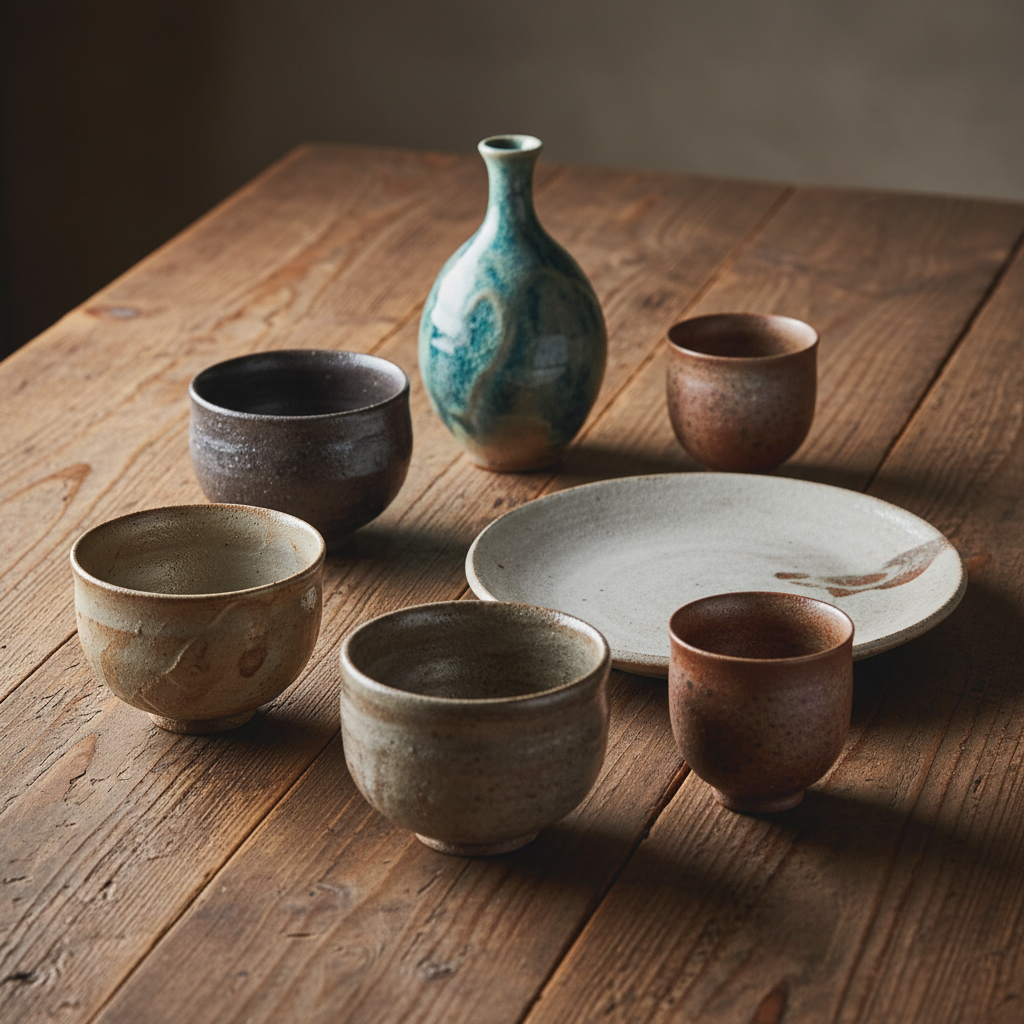
- Texture: Possesses a soft, water-absorbent earthen quality
- Color: Features gentle hues such as pale white, light yellow, and pale red
- Glaze: Primarily uses natural glazes such as rice-straw ash glaze (warabaiyū) and wood ash glaze
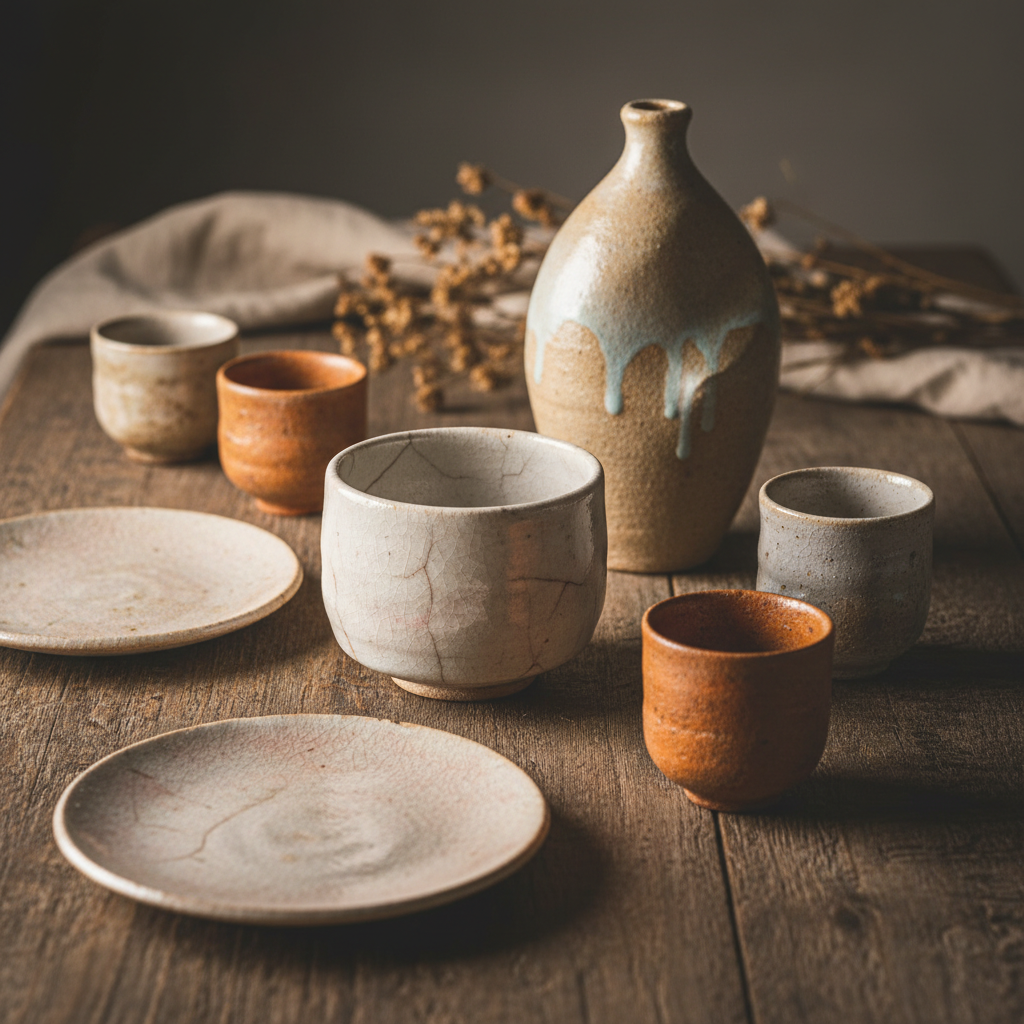
The greatest characteristic of Hagi ware lies in its water absorbency. Because the soil particles are coarse and fine cracks (crackle or kan’nyū) appear in the base, as the ware is used, tea or sake gradually seeps through, changing the color of the vessel. This phenomenon is called “Hagi’s Seven Transformations” and is a major attraction of Hagi ware.
The Hagi Ware Production Region: History and Geography of Hagi City, Yamaguchi Prefecture
Geographic Characteristics of Hagi City
Hagi City is a castle town in the northern part of Yamaguchi Prefecture, facing the Sea of Japan. During the Edo period, it prospered as the base of the Chōshū Domain (Mōri clan), and today retains much of the atmosphere of a castle town. The Hagi production region as a source of Hagi ware had the following geographic advantages:
- Abundant High-Quality Ceramic Clay: The Hagi vicinity was rich in clay suitable for pottery production, such as daidō clay and Mishima clay
- Abundant Fuel: Firewood necessary for pottery firing could be stably supplied from the surrounding mountains
- Convenient Maritime Transport: Facing the Sea of Japan, it was advantageous for shipping products and procuring raw materials
- Domain Protection: As an official kiln of the Mōri Domain, it received generous protection from the domain
Distribution of Major Kilns
Many kilns are still scattered throughout Hagi City, with the principal production areas as follows:
- Matsumoto District: Said to be the birthplace of Hagi ware, with the oldest kiln remains
- Tsubakihigashi District: An area where many kilns are concentrated
- Mikami District: Traditional kilns scattered throughout
- Central Hagi City: Many galleries and sales shops for tourists
Hagi City has approximately 100 kilns, where ceramics are created while preserving tradition yet incorporating contemporary sensibility.
A 400-Year History of Hagi Ware: From Korean Ceramic Artisans to the Present Day
The Edo Period: Birth and Development of Hagi Ware (1604–1868)
The history of Hagi ware began in 1604 (Keichō 9). During the Toyotomi Hideyoshi’s campaigns in Korea (Bunroku and Keichō Wars), Mōri Terumoto invited Korean ceramic artisans Li Shaoguang and Li Jing to open a kiln in Matsumoto, Hagi. This is considered the origin.
Li Shaoguang took the Japanese name Sakakōraizaemon (坂高麗左衛門), and Li Jing took the name Sakakura Shinbei (坂倉新兵衛), each opening a kiln. The Sakakōraizaemon family in particular continued the name “Kōraizaemon” through successive generations and became a prestigious kiln that continues to the present day.
During the Edo period, Hagi ware developed primarily for the following uses:
- Tea Ceramics: Became highly prized as tea utensils such as tea bowls and tea containers as tea ceremony flourished
- Official Domain Kiln: As an official kiln of the Mōri Domain, produced luxury items for domain lords and the samurai class
- Everyday Wares: Also produced daily dishes for common people
Hagi ware as tea ceramics, in particular, was loved by tea practitioners as, according to the saying “first Raku, second Hagi, third Arita,” a superior tea bowl following Raku ware.
The Meiji Period Onward: Modernization and Preservation of Tradition (1868–Present)
Following the Meiji Restoration, Hagi ware, having lost the domain’s patronage, faced a temporary crisis of decline. However, from the late Meiji period through the Taishō period, it was reassessed under the influence of the folk art movement.
Development in the Showa Period:
- 1957 (Showa 32): Miwa Kyūsetsu (10th generation) designated as a Holder of Important Intangible Cultural Property (Living National Treasure)
- 1983 (Showa 58): Hagi ware designated as Traditional Craftsmanship by the Minister of International Trade and Industry (now Minister of Economy, Trade and Industry)
- 2003 (Heisei 15): Miwa Kyūsetsu (12th generation) designated as a Holder of Important Intangible Cultural Property
Contemporary Hagi Ware:
In the contemporary era, while preserving traditional techniques, younger artists create vessels with contemporary design. Beyond tea utensils, a wide range of works are created, including daily-use tableware, flower containers, and objects.
Hagi Ware Manufacturing Techniques and Characteristics
Clay and Glaze Used
Types of Ceramic Clay:
- Daidō Clay (daidōtsuchi): Quarried in the Daio district of Hagi, it is white-toned clay. Low in iron content, it has a whitish finish after firing
- Mishima Clay (mishimatsuchi): Quarried on Mishima Island off the coast of Hagi, it is reddish-brown clay. High in iron content, it has a reddish tint after firing
- Mitake Clay (mitaketsuchi): Clay quarried near Mount Mitake within Yamaguchi Prefecture
These clays are used singly or in combination. Hagi ware clay has coarse particles and is rich in plasticity, making it suitable for wheel throwing.
Types of Glaze:
- Rice-Straw Ash Glaze (warabaiyū): Glaze with straw ash as its main ingredient. Produces a pale milky-white finish
- Wood Ash Glaze (mokubaiyū): Glaze made from mixed-wood ash. Has a slightly yellowish tone
- Soil Ash Glaze (dobaiyū): Glaze made from a mixture of soil and ash
- White Glaze (shiroyū): A transparent white glaze
Hagi ware glazes are centered on ash glazes from natural materials rather than chemical glazes. This results in natural and warm colors.
Forming Techniques
Hagi ware forming employs primarily the following techniques:
- Wheel Throwing (rokuro seikei): The most common technique. The clay is drawn upward on a rotating wheel to form the shape
- Hand Pinching (tebineri): Forming the clay while pinching it by hand. Allows more individual shapes
- Slab Forming (tatara seikei): Clay stretched into a sheet is formed against a mold
- Carving (sakuri dashi): After wheel throwing, the piece is carved when still leather-hard to refine the shape
In particular, Hagi ware tea bowls are roughly formed on the wheel and then refined by carving the foot (kōdai), with overall balance adjusted. This carving technique is an important element expressing the artist’s individuality.
Firing Method
Types of Kiln:
Traditionally, climbing kilns (noborrigama) have been used, but in the contemporary era the following kilns are employed:
- Climbing Kiln (noborrigama): A traditional kiln built on a slope. Uses firewood as fuel and produces distinctive firing colors
- Pit Kiln (anagama): A kiln created by digging into the ground. Primitive but produces powerful fired results
- Gas Kiln: Allows easy temperature control and stable firing
- Electric Kiln: Offers the easiest temperature control and is usable even by small-scale kilns
Firing Temperature and Time:
Hagi ware is fired at relatively low temperatures of approximately 1200–1250 degrees Celsius. This temperature is lower than porcelain (1300 degrees or higher), and as the soil particles do not become completely vitrified, a soft, water-absorbent texture is created.
Firing time varies depending on the kiln type and work size, but in climbing kilns, it typically takes 2–3 days of slow firing.
“Hagi’s Seven Transformations”: The Charm of Change with Use
The greatest characteristic of Hagi ware, “Hagi’s Seven Transformations” (hagi no nana-bake), is explained in detail.
The Mechanism of the Seven Transformations
Because Hagi ware is fired at relatively low temperatures, fine gaps remain between soil particles. Additionally, due to the different shrinkage rates of glaze and base, fine cracks called “crackle” (kan’nyū) appear on the surface.
Through these cracks and soil gaps, liquids such as tea or sake gradually seep in during use. As a result:
- Color Change: The originally whitish vessel gradually changes to brown, beige, or sometimes greenish tones
- Appearance of Patterns: Tea stains seep along the cracks, creating unique patterns
- Change in Texture: With use, the surface becomes smoother and develops a sheen
These changes are called “scenery” (keshiki) and display different appearances depending on the user. Even vessels fired in the same kiln show completely different transformations depending on how they are used and what beverage is consumed in them.
How to Enjoy the Seven Transformations
Points for maximizing enjoyment of the seven transformations:
- Pre-Use Preparation: Before use, new Hagi ware can be soaked overnight in rice-rinsing water or water to prevent dirt from seeping in
- Regular Use: Frequent use creates uniform and beautiful transformations
- Post-Use Care: It is important to wash immediately after use and allow it to dry thoroughly
- Storage Method: Store in a location with low humidity to prevent mold growth
In the case of tea bowls, drinking the same type of tea daily creates beautiful scenery over 5–10 years. This “joy of cultivation” is a major attraction of Hagi ware.
Types and Uses of Hagi Ware
Tea Utensils
As Hagi ware developed as tea ceramics, tea utensils are its most representative products:
- Tea Bowl (chawan): A representative masterpiece of Hagi ware. Called a superior work as “first Raku, second Hagi, third Arita”
- Tea Container (chaire): A container for holding matcha
- Water Jar (mizusashi): A vessel for holding water at the tea ceremony
- Flower Container (hanaaire): A flower vessel displayed in the tea room
- Water Basin (kensui): A vessel for discarding water used to rinse tea bowls
In particular, Hagi ware tea bowls are favored by tea practitioners for their heat retention and the way they gently fit the hand.
Daily Tableware
In the contemporary era, many everyday dishes are produced:
- Teacups and Mugs: Vessels for enjoying tea or coffee
- Rice Bowls and Soup Bowls: For daily meals
- Plates and Bowls: For serving food
- Sake Bottles and Sake Cups: For enjoying Japanese sake
The soft texture and warm colors of Hagi ware complement not only Japanese cuisine but also Western dishes.
Flower Containers and Objects
Many highly artistic works are also created:
- Flower Containers (kaki): For ikebana arrangements
- Jars (tsubo): For appreciation
- Objects: Contemporary art pieces
Works by Living National Treasures and renowned artists in particular have high value as fine art and are popular with collectors.
Renowned Hagi Ware Artists and Kilns
Living National Treasures (Holders of Important Intangible Cultural Properties)
Several Living National Treasures have been produced from Hagi ware:
- Miwa Kyūsetsu (10th generation): Designated in 1957. Elevated artistic quality while preserving Hagi ware tradition
- Miwa Kyūsetsu (11th generation, birth name: Miwa Toshiyuki): Known for distinctive white works called “Kyūsetsu white”
- Miwa Kyūsetsu (12th generation): Designated in 2003. Creates works incorporating contemporary sensibility
- Yoshika Taibi (吉賀大眉): Designated in 2018. Established a unique style while inheriting traditional techniques
Representative Kilns
Sakakōraizaemon Kiln: The most historically significant kiln, continuing the lineage of Hagi ware founder Li Shaoguang. Currently managed by the 14th generation successor.
Sakakura Shinbei Kiln: A kiln continuing the lineage of co-founder Li Jing.
Miwa Kiln: A prestigious kiln known by the name Miwa Kyūsetsu. Continues to actively present contemporary works.
Tenryū Kiln: A kiln that preserves traditional techniques while incorporating contemporary design.
Senryū Yamakiyi Kiln: A kiln attracting attention for innovative works by younger artists.
These kilns often accept workshop tours and ceramics experiences, allowing direct observation of the Hagi ware manufacturing process.
Purchasing Hagi Ware: Methods and Selection
Places to Purchase
Main locations where Hagi ware can be purchased:
- Kilns in Hagi City: Visit kilns directly to purchase. Allows conversation with the artist and deeper understanding of the work
- Hagi Ware Hall: A comprehensive Hagi ware facility in Hagi City. Can view works from numerous kilns at once
- Galleries and Sales Shops in Hagi City: Many shops cater to tourists
- Department Stores: Available in ceramics sections nationwide
- Online Shops: Purchase available through individual kiln and specialty shop websites
- Hagi Ware Festival: A major sale event held every May. Can purchase at 30–50% off regular prices
How to Select Good Hagi Ware
Tips for beginners selecting Hagi ware:
1. Clarify the Purpose:
- Is it for tea ceremony use or daily use?
- What beverages or dishes will it hold?
2. Examine by Hand:
- Weight: Check if it is comfortable to hold
- Touch: Check the glaze application and texture
- Balance: Confirm there are no distortions or tilts
3. Color and Texture:
- Does the color match your preference?
- Examine the crackle pattern and soil texture
4. Base Finish:
- Is the foot carefully carved?
- Check for wobbling
5. Price Range:
- Daily-use vessels: Approximately 3,000–20,000 yen
- Tea utensils: 10,000 yen to over 100,000 yen
- Living National Treasure works: Several hundred thousand to several million yen
Care and Storage of Hagi Ware
Pre-Use Treatment (Sealing the Pores):
It is recommended to “seal the pores” of new Hagi ware before use due to its high water absorbency:
- Wash the vessel thoroughly with water
- Place the vessel in a pot of rice-rinsing water
- Heat over low heat for 15–20 minutes
- Remove from heat and allow to cool naturally
- Wash thoroughly with water and allow to dry completely
This treatment causes the soil gaps to be filled with rice starch, preventing dirt and mold infiltration.
Regular Care:
- Wash Immediately After Use: Clean before dirt seeps in
- Use Neutral Detergent: Avoid strong cleaners or abrasive materials
- Dry Thoroughly: After use, invert and completely remove moisture
- Avoid Direct Sunlight: Prolonged sun exposure causes discoloration
- Avoid Dishwashers: Sudden temperature changes may cause breakage
Storage Method:
- Store in a location with low humidity
- If not used for extended periods, ensure it is completely dry before storing
- If stacking, place soft cloth between pieces
- If mold appears, soak in a diluted bleach solution
Hagi Ware-Related Tourist Attractions in Hagi City
Tourist attractions to visit for deeper understanding of Hagi ware:
Hagi Ware Hall
A comprehensive Hagi ware facility in Hagi City where you can view, purchase, and experience approximately 400 years of Hagi ware history.
- Exhibition Room: Displays from historical masterpieces to contemporary artists’ works
- Sales Section: A sales space collecting works from kilns throughout the city
- Ceramics Experience: Wheel-throwing and painting experiences available (reservation required)
Kiln Tour
Approximately 100 kilns in Hagi City accept workshop tours and purchases, with many allowing direct conversation with artists with advance notice.
Main kiln areas:
- Tsubakihigashi District: Kilns concentrated here allow touring multiple kilns on foot
- Mikami District: Traditional kilns scattered throughout
- Matsumoto District: The birthplace of Hagi ware
Hagi Museum
A comprehensive museum displaying the history and culture of Hagi. Features permanent exhibitions on the history and techniques of Hagi ware.
Hagi Ware Festival
Held annually May 1–5, this is the largest Hagi ware event. Kilns gather to sell works at 30–50% off regular prices. An opportunity to find bargains.
Comparison of Hagi Ware with Other Ceramic Production Regions
Differences Between Hagi Ware and Arita Ware
Arita ware (Saga Prefecture) was also begun by Korean ceramic artisans like Hagi ware, but has these differences:
- Clay: Arita ware contains more iron, resulting in dark brown or black tones after firing
- Texture: Arita ware is more densely fired and harder than Hagi ware
- Water Absorbency: Hagi ware has higher water absorbency
- Decoration: Arita ware features diverse decorative techniques such as e-Arita and Korean Arita
Differences Between Hagi Ware and Raku Ware
Raku ware (Kyoto) is considered the supreme tea bowl but differs from Hagi ware in these respects:
- Forming Method: Raku ware centers on hand pinching; Hagi ware primarily uses wheel throwing
- Firing Method: Raku ware is fired at low temperatures for a short time and removed from the kiln in a red-hot state
- Texture: Raku ware is softer and more water-absorbent than Hagi ware
- Color: Black Raku and Red Raku are representative of Raku ware; Hagi ware is characterized by pale tones
Differences Between Hagi Ware and Bizen Ware
Bizen ware (Okayama Prefecture) is one of Japan’s six ancient kilns and has these differences:
- Firing Method: Bizen ware does not use glaze and is fired at high temperatures for extended periods
- Texture: Bizen ware is extremely densely fired, in sharp contrast to Hagi ware
- Water Absorbency: Bizen ware is virtually non-water-absorbent
- Color Change with Use: Bizen ware shows virtually no color change from use
Contemporary Development and Future of Hagi Ware
Innovation by Younger Artists
While preserving tradition, innovative works by younger artists are emerging:
- Contemporary Design: Works featuring Scandinavian-style simplicity or colorful glazes
- New Uses: Coffee drippers, aroma pots, interior accessories
- Cross-Industry Collaboration: Collaborations with fashion brands and restaurants
Overseas Expansion
Hagi ware’s reputation is growing internationally:
- Exhibitions: Exhibitions held in Europe and America
- Exports: Particularly popular in France, America, and Taiwan
- Foreign Artists: Growing numbers of foreign ceramic artists training in Hagi
Sustainability Initiatives
Environmental consideration is advancing:
- Energy Efficiency: Adoption of gas and electric kilns for improved fuel efficiency
- Sustainable Raw Materials: Planned clay extraction and reuse
- Waste Reduction: Reuse of defective pieces and effective use of carving debris
Successor Development
Succession of traditional techniques is an issue being addressed through:
- Ceramics Classes: Community ceramics classes to broaden the base
- Apprenticeship System: Traditional apprenticeships for technique transmission
- University Partnerships: Collaborations with art universities for developing younger talent
- Hagi Ware Academy: A training program for those wishing to seriously study Hagi ware
Conclusion: Incorporating Hagi Ware’s Charm into Your Life
Hagi ware, boasting a history of over 400 years, is a traditional ceramic representing Yamaguchi Prefecture. Its greatest charm lies in the characteristic “Hagi’s Seven Transformations,” where color changes with use.
The simple and warm aesthetic, the tactile quality that gently fits the hand, and the “joy of cultivation” as the vessel takes on a different appearance depending on its user are unique attractions of Hagi ware. While developing as tea utensils, contemporary Hagi ware encompasses a wide range of works from daily-use dishes to artistic pieces.
Incorporating Hagi ware into your life enriches mealtimes and tea ceremonies. Why not begin with daily-use teacups or rice bowls and enjoy the gradual transformation?
If you have the opportunity to visit Hagi City, be sure to tour the kilns and speak with artists as you search for your own unique piece. A encounter with Hagi ware will surely add new color to your life.