Hoshoji Ware: A Thorough Explanation of the History and Charm of a Traditional Ceramic Product Produced in Nanbu Town, Tottori Prefecture
What is Hoshoji Ware: A Ceramic Production Center Representative of Tottori Prefecture
Hoshoji ware (ほっしょうじやき) is a traditional ceramic product manufactured in Nanbu Town, Saihaku District, Tottori Prefecture. At the base of Daisen, a national park, approximately 12 kilometers south of Yonago City, in a mountainous area facing the clear stream of the Hoshoji River, the kiln sites that emit smoke form the center of Hoshoji ware production.
Hoshoji ware, as a ceramic production center in Tottori Prefecture, has a history continuing from the Meiji era, and the tradition is still being passed down centered on Shokaogama (松花窯). In lists of Japanese ceramic production centers, it is positioned as an important kiln site in the Sanin region, and exists as something discussed alongside other well-known ceramics of the Chugoku region such as Bizen ware and Hagi ware.
Geographical Characteristics of Hoshoji Ware
Nanbu Town, where Hoshoji ware is produced, is blessed with a rich natural environment. The clear stream of the Hoshoji River provides high-quality water, ceramic clay obtained from the surrounding mountains, and the majestic scenery of Daisen have supported the creative activities of potters. This geographical condition has become an important element in creating the unique characteristics of Hoshoji ware.
As a ceramic production center in western Tottori Prefecture, Hoshoji ware forms part of the region’s cultural identity and is drawing attention as a tourist resource.
The History of Hoshoji Ware: From the Edo Period to Modern Times
The Origins of Hoshoji Ware: Ceramic Production in the Edo Period
The origins of Hoshoji ware date back approximately 250 years to the Edo period. It is said that ceramic production was begun by a potter named Josuke who came from Eiu (present-day Shiga Prefecture). During this era, in Tottori Prefecture, ceramic production was flourishing in the eastern and western regions blessed with high-quality soil and stone, and many kiln sites developed under the protection policies of the Tottori domain.
From the mid-18th century, daily utensils were fired at Hoshoji-yama ware, Uratomi ware, Ushino-to ware, and others, but as times changed, many of these kilns closed operations. However, in Hoshoji, the tradition of ceramic production was thinly maintained and led to revival in the Meiji era.
Revival in the Meiji Era: The Kiln Built by First-Generation Ando Hidetaro
The full-scale development of Hoshoji ware began with first-generation Ando Hidetaro building a kiln in its current location in 1903 (Meiji 36). Some sources note Meiji 38, but it is certain that a kiln was opened in this location in the late Meiji period.
First-generation Ando Hidetaro affixed the mark “Hoshoji” based on the name of Hoshoji Village (former name), and produced and presented tea bowls, flower vases, and other works. His works were simple yet refined, receiving high evaluation among tea masters and refined patrons, and became widely known.
Hoshoji Ware and the Mingei Movement of the Showa Period
In the early Showa period, through the efforts of Shoji Yoshida, a leader of Japan’s mingei (folk art) movement, ceramic production centers in Tottori Prefecture showed new development. While many kilns were closing operations, kilns such as Nakaii and Uratomi were revived as contemporary folk kilns, and Hoshoji ware also continued its tradition while being influenced by this mingei movement.
The mingei movement was a philosophy of finding beauty in everyday utensils, and the simple and warm characteristics of Hoshoji ware harmonized perfectly with this philosophy.
Contemporary Hoshoji Ware: Succession to the Fifth Generation
Currently, Hoshoji ware Shokaogama is operated by fifth-generation Ando Yuri. While maintaining tradition, Ando Yuri challenges new ceramic creation that adds change to tradition, such as publishing collaborative works with dotto. design office.
The technology and spirit passed down for over 120 years since its founding in Meiji 36 continue to evolve in forms suited to contemporary lifestyles, and Hoshoji ware is entering a new era as a ceramic production center in Tottori Prefecture.
Characteristics and Charm of Hoshoji Ware
Softness in the Finished Firing
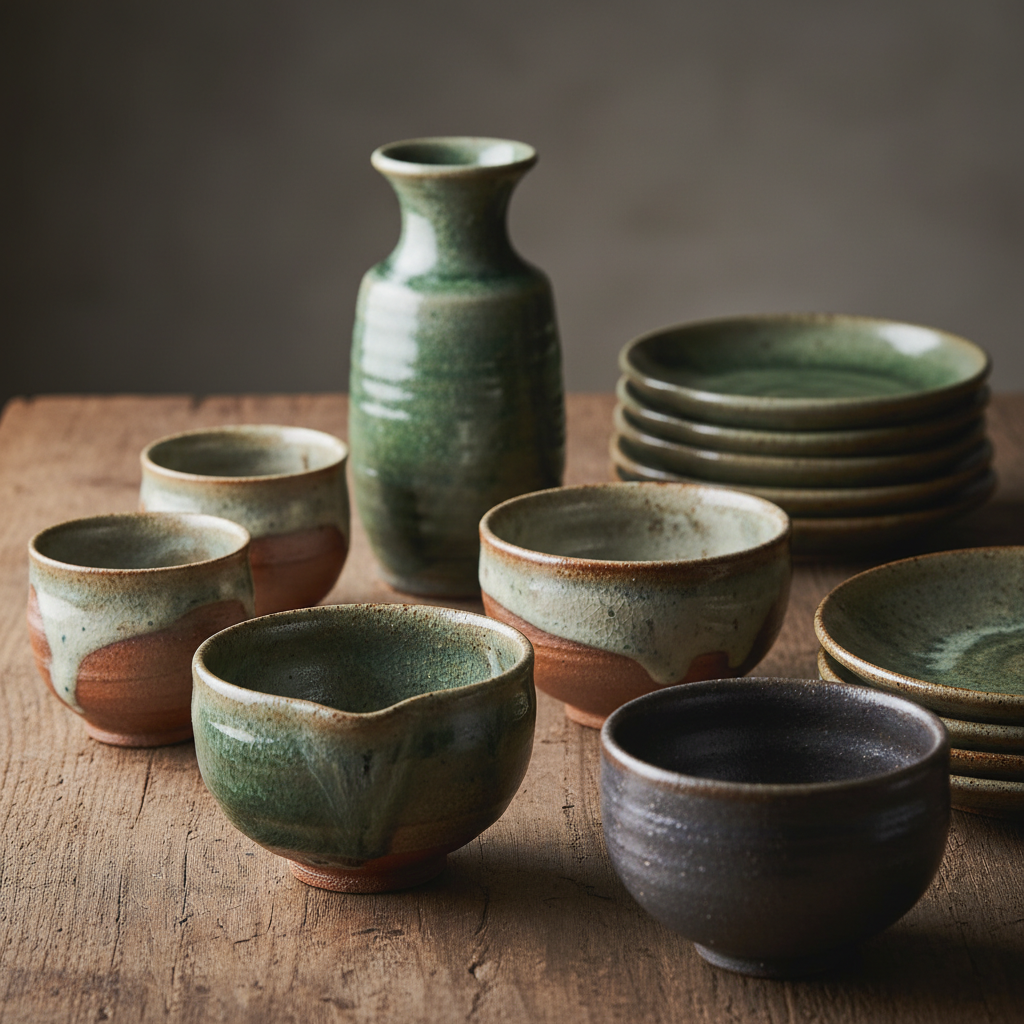
The greatest characteristic of Hoshoji ware is the softness in its finished firing. This soft texture, particularly evident in teapots, is produced by the combination of the properties of the ceramic clay used and firing techniques.
This softness is felt not only as a visual impression but also as tactile sensation when held in hand and as warmth during use, becoming a reason it is loved as an everyday utensil.
Simple and Refined Appearance
Works of Hoshoji ware are characterized by simple yet refined design. The style of avoiding excessive decoration and bringing out the natural beauty of materials has been treasured by tea masters and refined patrons.
Simple yet refined in appearance, it naturally blends into contemporary living and possesses versatility to be used on various dining tables, whether Japanese or Western.
Production Using Local Materials
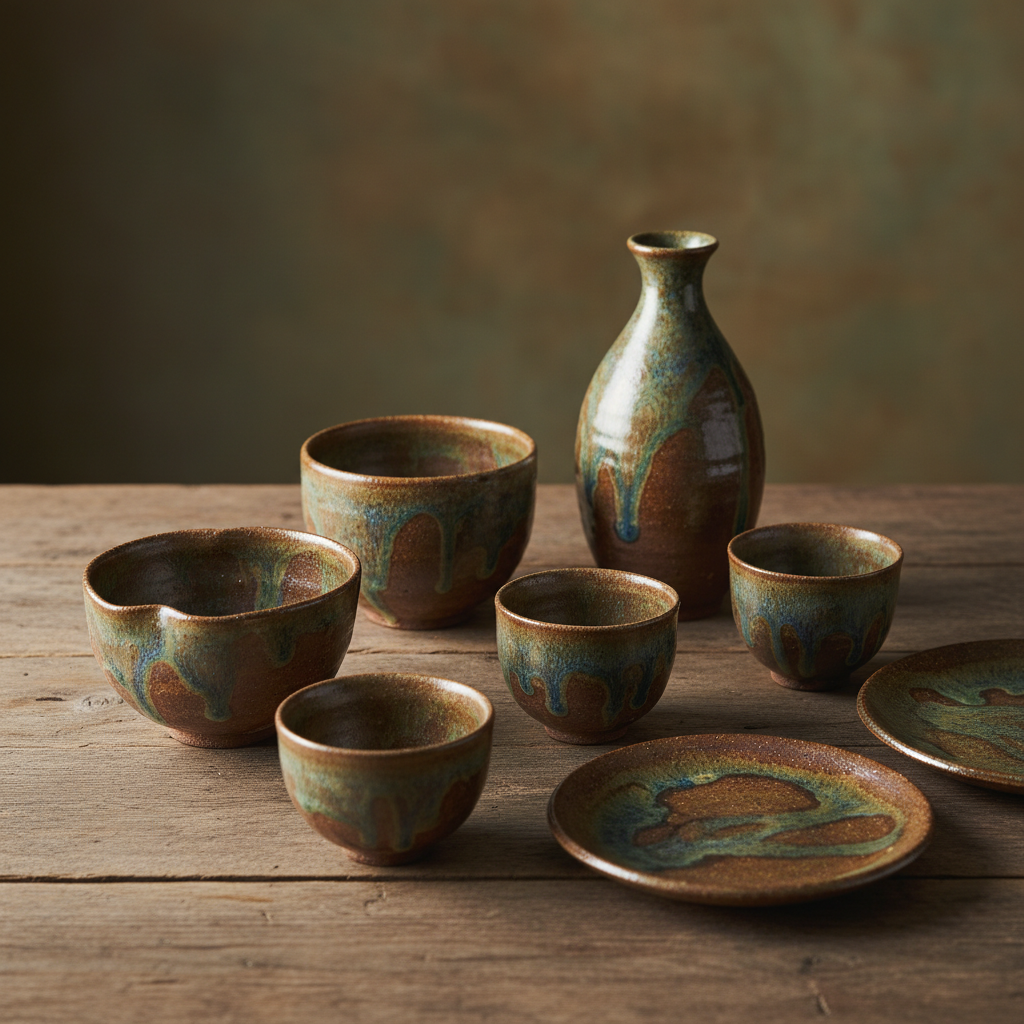
Some kilns of Hoshoji ware actively utilize local materials. For example, Kaikegama uses white sand from Kaike Beach, iron sand from the Hino River, and red soil from Yonago, gifts from western Tottori Prefecture, mixed into clay and glaze before firing.
This regionality heightens the value of Hoshoji ware not merely as a craft but as a cultural property embodying the earth and history of Tottori.
Diverse Glazes and Techniques
Various glazes and techniques are employed in Hoshoji ware. Representative examples include the following:
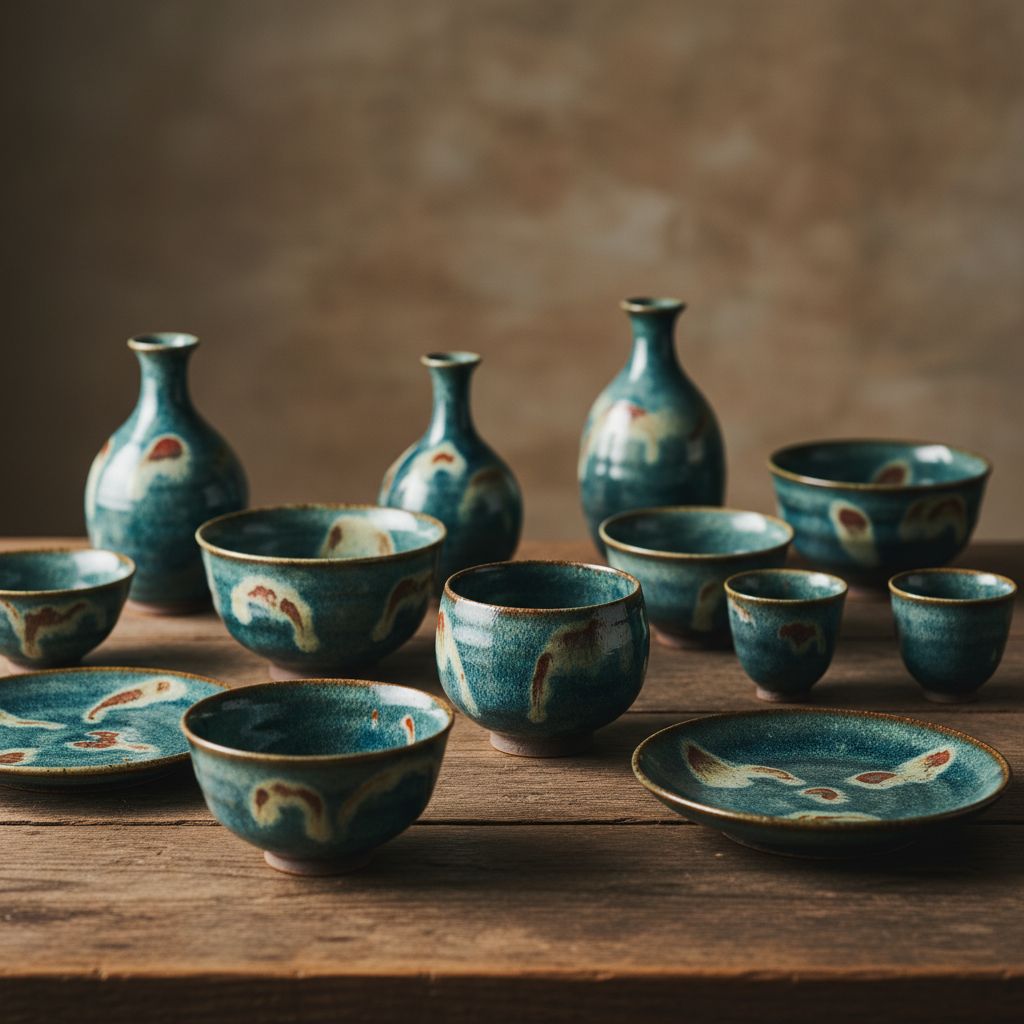
Lapis lazuli glaze dripping: A technique of dripping deep blue glaze that gives beautiful expression to flat plates and medium bowls.
Blue glaze dripping: A brighter blue than lapis lazuli glaze, creating a refreshing impression.
Black slip white glaze: White glaze applied over black slip creates beautiful contrast. Frequently used on rice bowls.
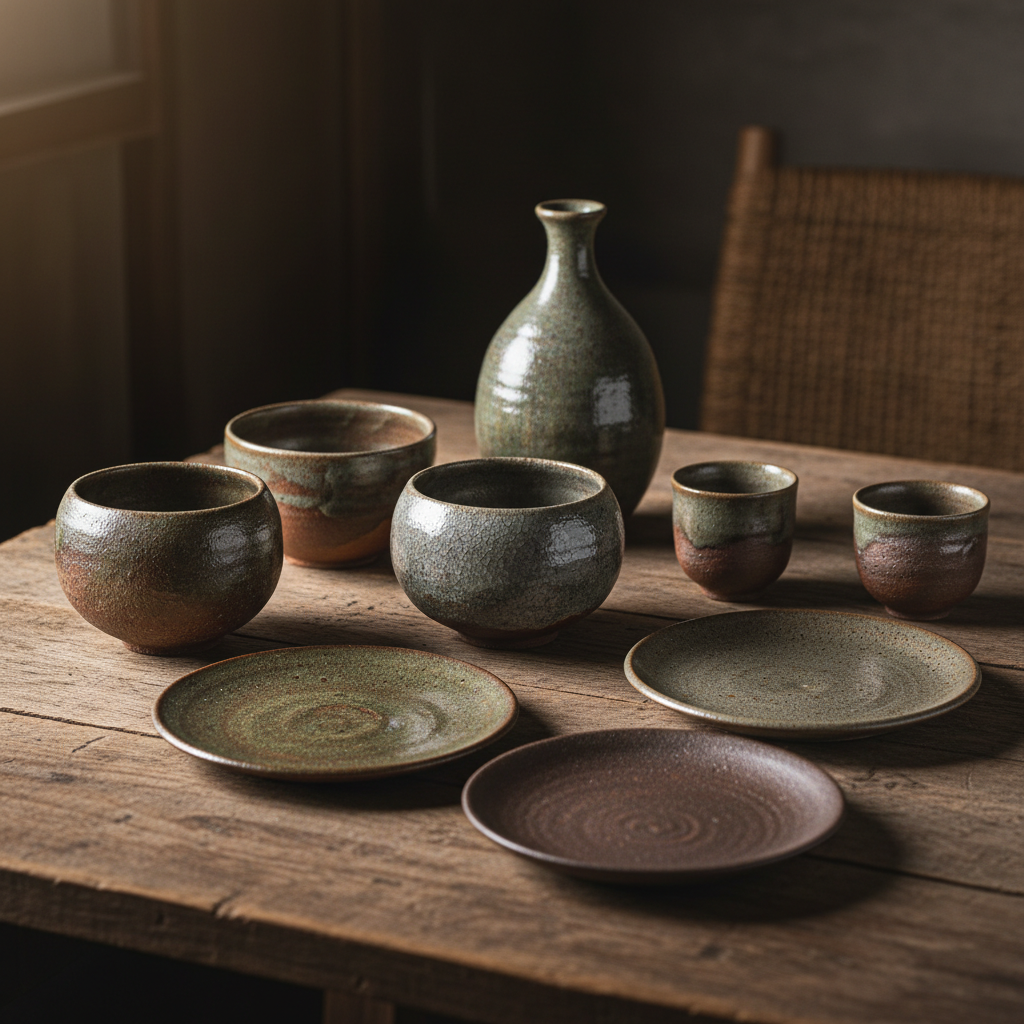
Fired finish kiln transformation: A technique of high-temperature firing without glaze, used in pottery and art craft works such as jars, with the beauty of unpredictable kiln transformation as its appeal.
Hoshoji Ware Shokaogama: The Central Kiln Site Inheriting Tradition
History and Overview of Shokaogama
Hoshoji Ware Shokaogama is a representative kiln of Hoshoji ware, founded by first-generation Ando Hidetaro in 1903 (some sources note 1905). The kiln site standing before the Hoshoji River flowing through Nanbu Town, Tottori Prefecture, has continued to produce high-quality ceramics for over 120 years.
The name “Shokaogama” is thought to contain the wish to produce works as pure and beautiful as a pine flower.
Initiatives of Fifth-Generation Ando Yuri
Fifth-generation Ando Yuri, who leads the current Shokaogama, works to balance both the inheritance of tradition and innovation. While continuing production of traditional tea bowls, flower vases, and teapots, also presenting contemporary design vessels through collaboration with dotto. design office.
This approach of “ceramics with change added to tradition” has succeeded in conveying the charm of Hoshoji ware to younger generations and acquiring new fan bases.
Representative Works of Shokaogama
A wide range of works from everyday tableware to art craft pieces are produced at Shokaogama:
Everyday utensils: Rice bowls, flat plates, medium bowls, cups & saucers, beer cups, and other practical utensils for daily dining tables are abundant.
Tea utensils: Tea bowls, sake cups, and other refined works loved by tea masters are also produced.
Flower vases and art craft works: Flower vases, jars, and other works that can be enjoyed as interior decoration.
Collaborative works: A new series of vessels created through collaboration with dotto. design office, in which tradition and contemporary design are fused.
Another Kiln of Hoshoji Ware: Kaikegama
History and Characteristics of Kaikegama
Besides Shokaogama, there is another important kiln of Hoshoji ware. One of these is Kaikegama (皆生窯). It is known as ceramics passed down from the Edo period of 1961 at Kaike Hot Spring. (※While this year is noted in materials, there is a contradiction between the Edo period and 1961, and confirmation of the accurate founding year is necessary.)
Kaikegama is located at Kaike Hot Spring in Yonago City and carries out developments for tourists by taking advantage of its location at a hot spring resort.
Commitment to Local Materials
A major characteristic of Kaikegama is its production approach of thoroughly adhering to local materials:
- White sand from Kaike Beach: White sand washed by the Sea of Japan waves
- Iron sand from the Hino River: Iron sand collected from the Hino River flowing through Tottori Prefecture
- Red soil from Yonago: Characteristic red soil of Yonago
By mixing these materials into clay and glaze before firing, utensils with simple, warm characteristics and refined appearance unique to this region are created.
Positioning of Hoshoji Ware as a Tottori Prefecture Ceramic Production Center
History of Ceramics in Tottori Prefecture
Ceramic production in Tottori Prefecture began in earnest in the Edo period. Ceramic production was actively conducted in the eastern and western regions of Tottori Prefecture blessed with high-quality soil and stone, and developed under the protection policies of the Tottori domain.
In the mid-18th century, many ceramics were produced around present-day Tottori City, with Hoshoji-yama ware, Uratomi ware, Ushino-to ware, and others producing daily utensils. However, as times changed, many closed, and only limited kiln sites continue to the present day.
Major Kiln Sites of Contemporary Tottori Prefecture
Hoshoji ware (Shokaogama, Kaikegama): Active in western Tottori Prefecture, centered in Nanbu Town and Yonago City. Inheriting tradition from the Meiji era.
Kokuzou ware (こくぞうやき): Founded in Meiji 23. Named after “Kokuzousan” (Daishozuka enshrining the provincial commanders of Hoki) near Irioka. Produces simple design tableware and fired finish kiln transformation jars and other art craft works.
Nakaii kiln and Uratomi kiln: Revived in the early Showa period as contemporary folk kilns through the efforts of Shoji Yoshida, leader of the mingei movement.
These kiln sites transmit the tradition of Tottori Prefecture’s ceramic production to the present day.
Relationship with Ceramic Production Centers in the Sanin Region
Hoshoji ware plays a role as part of the ceramic production centers in the Sanin region. In nearby Shimane Prefecture are Iwami ware, Fujina ware, Izushi ware, Onsenzu ware, and others, and in Yamaguchi Prefecture is Hagi ware.
Compared with these production sites, Hoshoji ware, while smaller in scale, shows unique presence in its simple and warm appearance and production approach rooted in the region.
Works of Hoshoji Ware and Purchase Methods
Types and Price Ranges of Representative Works
Hoshoji ware works range from everyday utensils to art craft pieces, with diverse price ranges:
Everyday tableware:
- Rice bowl: approximately 2,000 to 4,000 yen
- Flat plate (large): approximately 3,000 to 6,000 yen
- Medium bowl: approximately 2,500 to 5,000 yen
- Cup & saucer: approximately 3,850 yen
- Beer cup: approximately 2,500 to 4,000 yen
Sake vessels and tea utensils:
- Sake cup: approximately 2,200 to 4,000 yen
- Tea bowl: approximately 5,000 to 15,000 yen
Art craft works:
- Flower vase: 10,000 yen to 50,000 yen and above
- Jar (fired finish kiln transformation, etc.): 50,000 yen and above
※Prices vary greatly depending on the size, technique, and artist of the work.
Places Where You Can Purchase
Direct purchase from Shokaogama: You can visit the kiln in Nanbu Town and purchase directly. A rare opportunity to select works while speaking directly with the artist.
Shimokaecho Tottori Exchange Hall Takasagoya: At Takasagoya, a registered tangible cultural property in Tottori City, works of Hoshoji ware Shokaogama are permanently displayed and sold. An accessible location when visiting Tottori City.
Online shop: The official website of Shokaogama features introductions of works and the latest information, with some works available for online purchase.
Craft shops and galleries: Works are sometimes handled by craft specialty shops and galleries throughout Tottori Prefecture and beyond.
Events and exhibitions: At ceramic markets and exhibitions held regularly, many works can be viewed at once, and there are also opportunities for direct exchange with artists.
Kiln Site Visits and Experiences
Some Hoshoji ware kiln sites accept visits and ceramic art experiences. Kaikegama, in particular, given its proximity to a tourist destination, has enriched programs for tourists.
By visiting a kiln site, you can observe where works are created and directly experience the techniques and passion of potters. It is recommended to contact the site in advance before visiting.
How to Use and Care for Hoshoji Ware
Preparation Before First Use
Before beginning to use Hoshoji ware, a process called “seasoning” can be performed to prevent stains and discoloration:
- Wash the vessel with water, place it in a pot, and boil it in water mixed with rice washing water or dissolved wheat flour
- After boiling, simmer for 20 to 30 minutes
- Remove from heat and allow to cool naturally
- Rinse thoroughly with water and allow to dry completely
This treatment fills the fine gaps in the clay, allowing the vessel to last longer.
Everyday Use
Before use: Soaking the vessel in water before use can prevent color transfer and odor transfer from ingredients.
During use: Avoid sudden temperature changes. In particular, actions such as pouring cold water on a hot vessel can cause breakage.
Microwave and dishwasher: Suitability for use varies depending on the work, so it is recommended to confirm at time of purchase. Generally, hand washing is recommended for works using traditional techniques.
Cleaning and Storage
Washing: After use, wash as soon as possible with a soft sponge and neutral detergent. Avoid abrasive detergents and hard scrubbing pads.
Drying: After washing, wipe off water thoroughly and allow to dry completely before storing. Remaining moisture can cause mold and discoloration.
Storage: Store in a well-ventilated location. If not using for an extended period, wrap in newspaper or similar to prevent moisture.
If staining occurs: Avoid bleach, and soaking overnight in water dissolved with baking soda can sometimes improve the condition.
Hoshoji Ware and Tottori Prefecture Culture
Positioning as a Craft of Tottori Prefecture
Hoshoji ware is positioned as one of Tottori Prefecture’s important traditional crafts. It is introduced on the Tottori Prefecture official website pages “Tottori’s Handicrafts” and “Tottori’s Crafts,” and is recognized as a craft representing the prefecture.
In Tottori Prefecture, efforts are also being made to utilize such traditional crafts as tourism resources and to support the passing down of techniques to the next generation.
Connection with Daisen Culture Sphere
Nanbu Town, where the Hoshoji ware kiln is located, is positioned at the base of Daisen, a national park, and forms part of the Daisen culture sphere. Daisen has long been an object of worship and has greatly influenced the culture and arts of this region.
The simple and natural beauty seen in works of Hoshoji ware is not unrelated to the majestic nature of Daisen. It could be said that potters, creating works while gazing at Daisen daily, imbue their spirituality into their vessels.
Connection with Regional Community
Hoshoji ware is a craft deeply connected to the regional community. As vessels used in local festivals and events and as tableware used in everyday dining, it is woven into the lives of local people.
Additionally, kiln sites generate local employment and contribute to the regional economy by attracting tourists. It is an excellent example of traditional crafts functioning not as mere cultural heritage but as living industry.
The Future of Hoshoji Ware: Harmony of Tradition and Innovation
Adaptation to Contemporary Lifestyles
Contemporary potters, including fifth-generation Ando Yuri, are engaging in creating works suited to contemporary lifestyles while maintaining tradition.
The collaboration with dotto. design office is a symbolic example of such efforts. Using traditional techniques while incorporating contemporary design sensibility creates vessels appealing to younger generations.
Challenges and Efforts in Technical Succession
Like many traditional crafts, Hoshoji ware faces the challenge of successor shortage. Learning ceramic techniques requires many years, and there are also issues of economic stability.
However, in recent years, young people interested in traditional crafts are increasing, and through information dissemination via SNS and websites, the charm of Hoshoji ware is being more widely conveyed.
Domestic and International Dissemination
As a ceramic production center of Tottori Prefecture, Hoshoji ware is considering dissemination not only domestically but also internationally. Japanese traditional crafts receive high evaluation abroad, and the simple, warm, and beautiful characteristics of Hoshoji ware possess charm with international appeal.
Preparations for global development are underway, including enrichment of online shops and information dissemination in English.
Consideration of Sustainability
In contemporary craft production, consideration for the environment is an important theme. Hoshoji ware uses locally sourced natural materials to reduce environmental burden from transportation, and by creating high-quality vessels meant to be used long-term, demonstrates opposition to disposable culture.
Traditional production methods themselves are being re-evaluated as actually quite sustainable production methods.
Conclusion: Incorporating the Charm of Hoshoji Ware into Daily Life
Hoshoji ware is a traditional ceramic produced in Nanbu Town, Tottori Prefecture, passed down for over 120 years. Since first-generation Ando Hidetaro built his kiln in Meiji 36, it has centered on Shokaogama and continued creating simple, warm vessels.
The characteristics unique to Hoshoji ware—the softness of the fired finish, simple yet refined design, and commitment to local materials—possess charm that naturally blends into contemporary living.
The efforts of fifth-generation Ando Yuri to balance tradition and innovation open new possibilities for Hoshoji ware. Collaborative works with dotto. design office demonstrate that traditional crafts are not things of the past but living art in the contemporary era.
When visiting Tottori Prefecture, by all means visit the kilns in Nanbu Town. You can encounter the beauty of vessels created at the base of Daisen while listening to the murmur of the Hoshoji River. Also, you can handle works of Hoshoji ware at Takasagoya in Tottori City and other locations.
By incorporating Hoshoji ware vessels into your everyday dining table, each meal becomes a richer time. Each hand-made vessel contains the techniques and passion of the potter and the nature and history of Tottori.
As a ceramic production center of which Tottori Prefecture is proud, Hoshoji ware will continue to preserve tradition while creating new value. Supporting this progress also means supporting Japanese traditional crafts as a whole.