What is Rakuzan Pottery? A Thorough Explanation of the History, Characteristics, and Value of Shimane Prefecture Matsue City’s Proud Ceramic Production Area
What is Rakuzan Pottery
Rakuzan pottery (rakuzanyaki) is a historic ceramic production area with kilns located in a corner of Rakuzan Park in Nishikawatsu-cho, Matsue City, Shimane Prefecture. It is said to have been founded during the Enpo era (1673-1681) of the early Edo period by Kurazaki Gonbei, a potter from Hagi, as an official kiln for the Matsue Domain.
Since the days of Matsudaira Tsunetaka, the second lord of the Matsue Domain, when there was a villa in Rakuzan, it was also called “Oyamayaki” (御山焼) and “Otateyamayaki” (御立山焼). The current name “Rakuzan pottery” became established after the Meiji era.
In a broad sense, it is known as a representative kiln of Izumo pottery, and it has particularly produced excellent works of tea ceramics (tea ceremony utensils). It is registered as both a Shimane Prefecture Hometown Traditional Craft and a Shimane Prefecture Designated Intangible Cultural Property, and continues to preserve tradition today as one of Shimane Prefecture’s representative ceramic production areas.
The History of Rakuzan Pottery
Founding Period: The Beginning of the Enpo Era
The history of Rakuzan pottery dates back to the Enpo era of the early Edo period. It was founded by Kurazaki Gonbei, a potter from Hagi, as an official kiln for the Matsue Domain. There is also a theory that it was opened during the time of Matsudaira Naomasa, the founder of the Matsue Domain, and it developed while maintaining deep connections with the Matsue Domain.
Founded as an official kiln, Rakuzan pottery was manufactured primarily as tea ceremony utensils under the patronage of the Matsue Domain lords as official ceramics for the domain. Rakuzan, since the second lord Tsunetaka of the Matsue Domain, was a place where there was a villa of the domain lord, and the ceramics fired in this place were loved as “Oyamayaki.”
Interruption and Revival: The Achievements of Lord Matsudaira Fumai
After its founding, Rakuzan pottery continued to be manufactured for a while, but there was a period when production was interrupted. It was Matsudaira Fumai (Matsudaira Fumaiko, Harukuni), the seventh lord of the Matsue Domain and a rare master of the tea ceremony, who regretted this discontinuation.
In 1801 (Kyowa 1), Lord Matsudaira Fumai ordered the master craftsman Nagaoka Suemon to revive Rakuzan pottery. Lord Fumai was a person with deep expertise in the tea ceremony, and he personally participated in the creation of tea ceremony utensils and made great contributions to the development of tea ceremony culture. Through this revival, Rakuzan pottery achieved new development as tea ceramics that reflected Lord Fumai’s aesthetic sensibility.
Favored by Lord Matsudaira Fumai, Rakuzan pottery was inherited by successive Matsue Domain lords who loved tea, and was established as a ceramic production area closely connected with the tea ceremony culture of Matsue.
From the Meiji Era to the Present
When the Meiji era began and the domain system was abolished, Rakuzan pottery’s role as an official kiln ended, but the tradition of Rakuzan pottery was inherited by private kilns. Around this time, the name changed from “Oyamayaki” and “Otateyamayaki” to “Rakuzan pottery,” which became firmly established.
Passing through the Showa period to the present day, Rakuzan pottery has been inherited by successive generations of the Nagaoka family. Currently, Nagaoka Kuukyou (長岡空郷) has assumed the name from the eleventh generation Nagaoka Kuuken (長岡空権), and continues to preserve traditional techniques as the twelfth generation Nagaoka Suemon.
At the kiln in a corner of Rakuzan Park in Nishikawatsu-cho, Matsue City, works that harmonize with modern life are created using traditional techniques dating back to the Edo period.
Characteristics of Rakuzan Pottery
The Brush Mark Technique
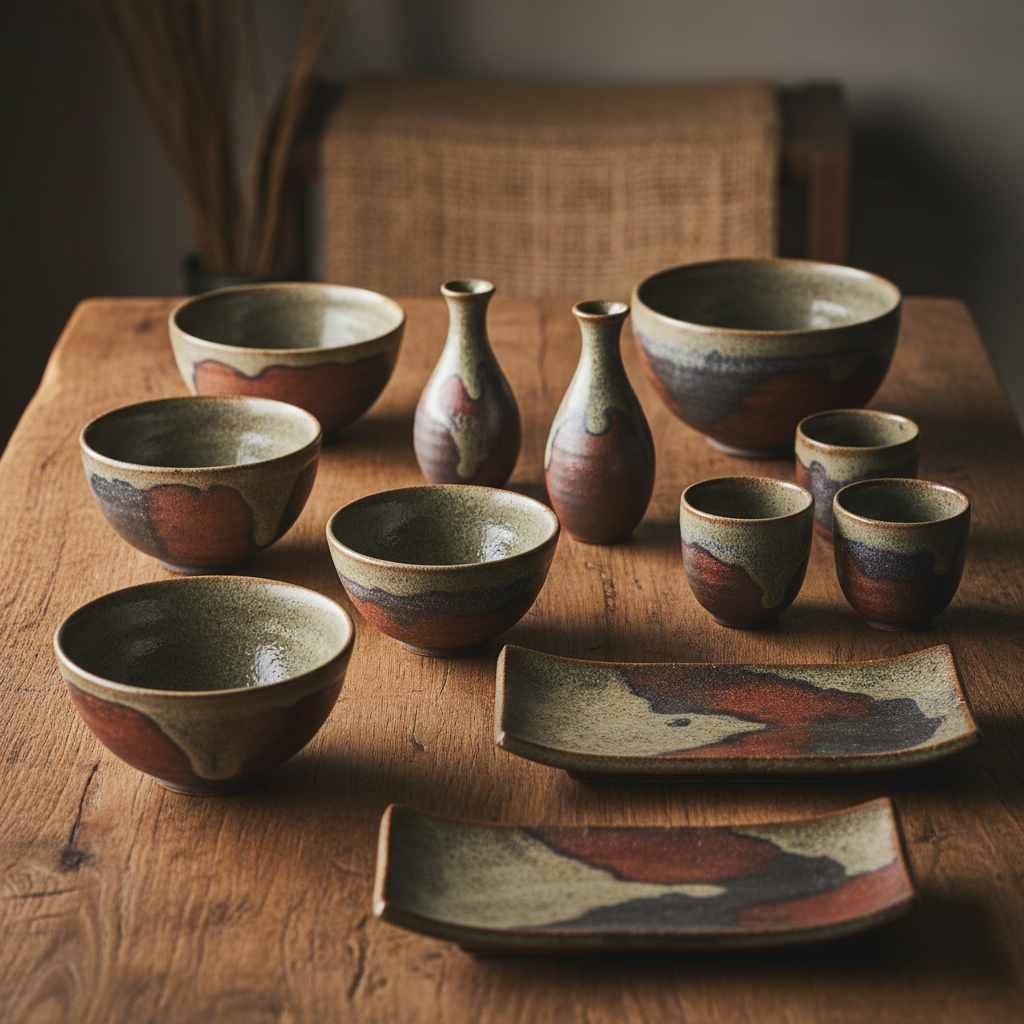
One of the most representative characteristics of Rakuzan pottery is the “brush mark” (hakeme) technique. This technique involves applying underglaze coating to the clay body with a brush, so that the brush marks appear as unique patterns.
The flowing linear expression created by the brush mark technique is never the same twice, giving each work the warmth and flavor unique to handwork. The brush marks applied to tea ceremony utensils such as tea bowls have been highly evaluated by tea ceremony practitioners and have become a major attraction of Rakuzan pottery.
The Iraho Imitation Technique
Another important characteristic of Rakuzan pottery is a technique called “Iraho imitation” (irahōtsushi). Iraho refers to a type of tea bowl that came from the Korean Peninsula, and the Iraho imitation technique mimics its unique glaze character.
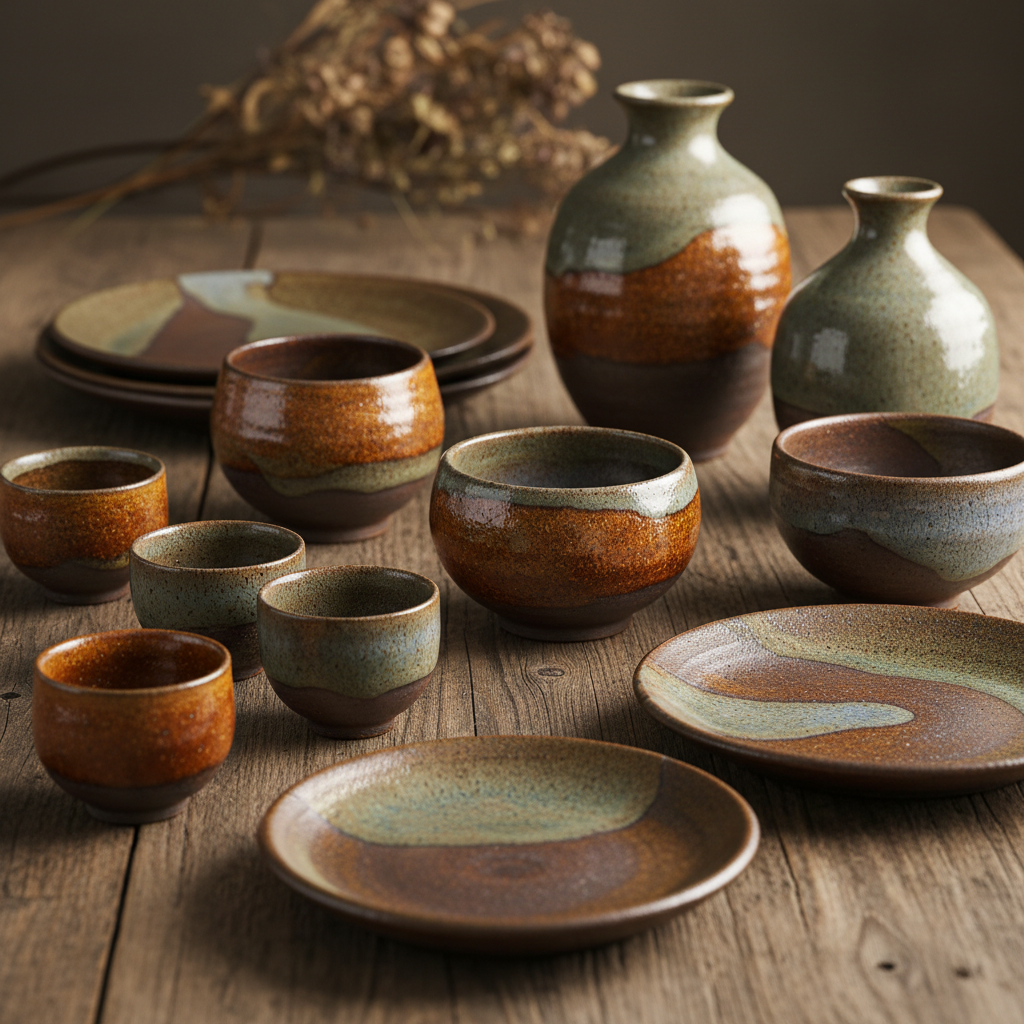
Vessels finished using a glaze of the same name exhibit a modest, light yamabuki color. This gentle hue harmonizes with the aesthetic of “wabi and sabi” in the tea ceremony world and has been loved by many tea practitioners. The subtle variations in glaze color give each work its own individuality.
Composition Centered on Tea Ceremony Utensils
Rakuzan pottery, having developed as the official kiln of the Matsue Domain lords and under the patronage of Matsudaira Fumai, a rare master of the tea ceremony, has a major characteristic of its work composition being centered on tea ceremony utensils.
Even today, the majority consists of tea ceremony utensils such as matcha bowls, water vessels (mizusashi), and incense containers (kōgō), each equipped with the form and function appropriate to tea ceremony etiquette. Having been cherished by successive Matsue Domain lords who loved tea, the high level of completion of Rakuzan pottery as tea ceremony utensils is a source of pride.
Simple Yet Dignified Sculptural Beauty
Works of Rakuzan pottery are characterized by sculptural beauty that is simple yet dignified, avoiding flashy decoration. This reflects the aesthetic of the tea ceremony that Matsudaira Fumai pursued, “Fumai’s taste.”
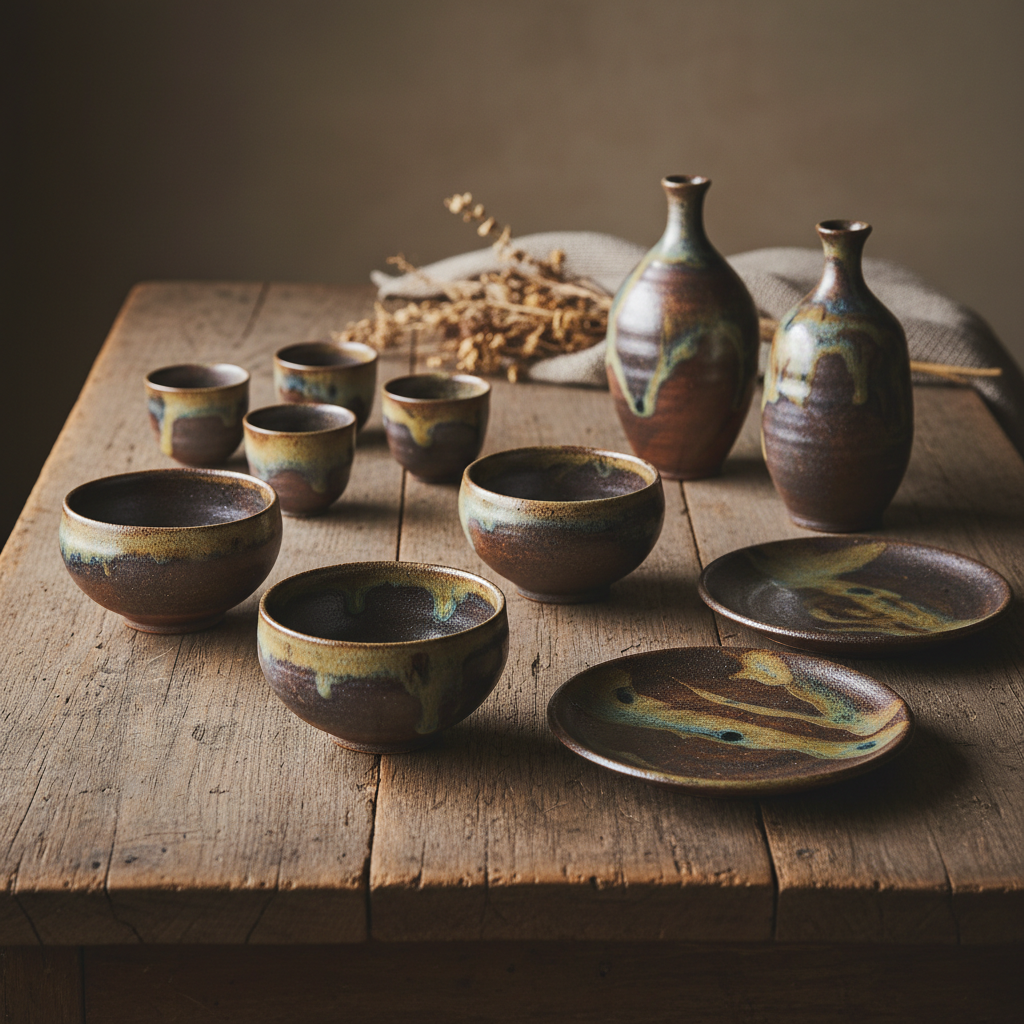
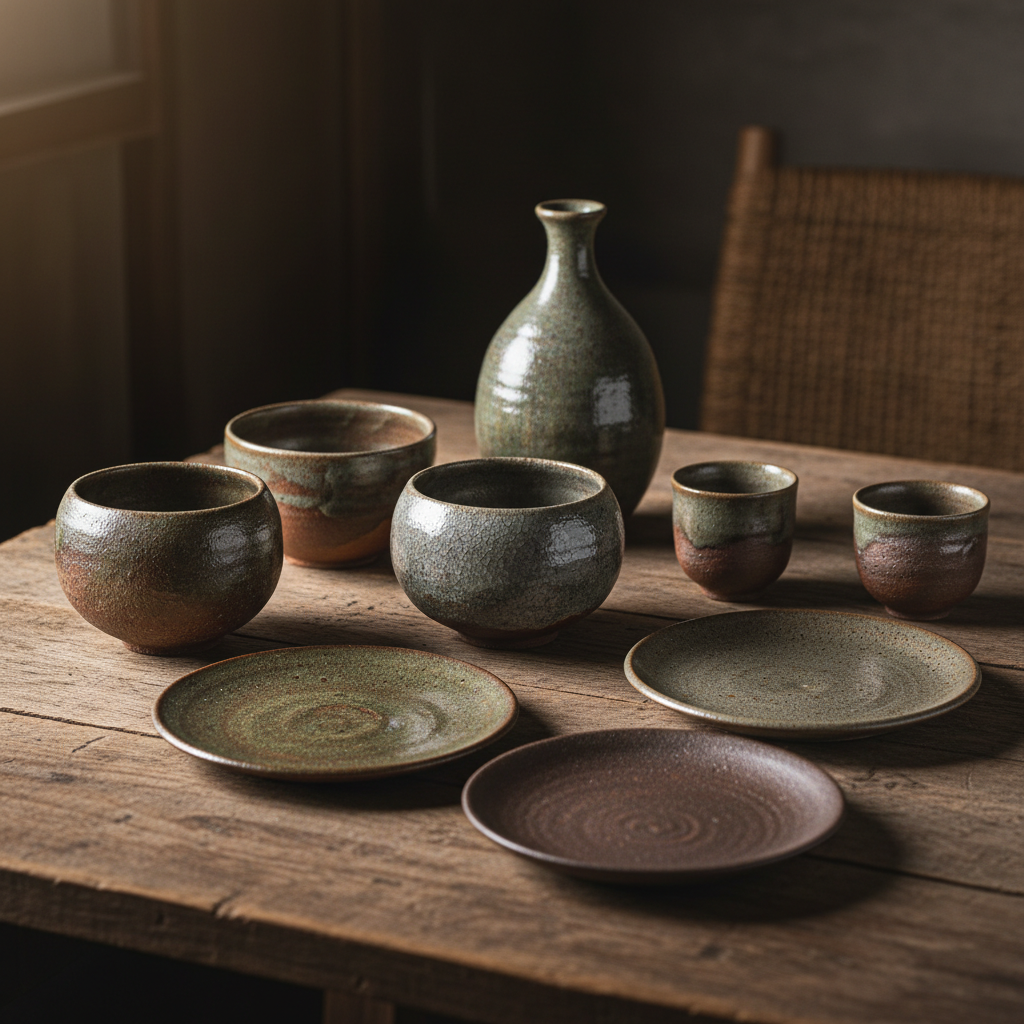
The attitude of drawing out the best qualities of the materials is evident in Rakuzan pottery’s sculptural form—the simple form rejecting excessive decoration, expressions utilizing the texture of clay, and the natural flow and color changes of glazes. This understated yet deeply flavored beauty is highly appreciated by tea practitioners and ceramic enthusiasts.
Major Products of Rakuzan Pottery
Matcha Bowls
The representative product of Rakuzan pottery is the matcha bowl. Matcha bowls utilizing the brush mark technique and Iraho imitation technique are equipped with a form that fits the hand, appropriate weight, and a pleasant feel on the lips.
A matcha bowl finished with a glaze of light yamabuki color beautifully sets off the green of matcha and possesses the dignity suitable for use at tea gatherings. Since each bowl is handmade, the subtle differences in form and glaze character become individuality, giving tea practitioners the pleasure of selecting a bowl to their taste.
Water Vessels
The water vessel, used in the tea ceremony to clean tea bowls or pour water into the kettle, is also an important product of Rakuzan pottery. The form that combines functionality and beauty maintains practical utility as a tea ceremony utensil while possessing sculptural beauty that looks attractive even displayed in an alcove.
The flowing pattern of brush marks applied to the curved surface of the water vessel creates a dynamic expression. The precise craftsmanship as a lidded vessel also demonstrates the high level of Rakuzan pottery’s technique.
Incense Containers
The incense container is a small lidded vessel used when burning incense at a tea gathering. Rakuzan pottery’s incense containers are characterized by careful craftsmanship and delicate glaze despite their small size, and are known as works with particularly high appreciation value among tea ceremony utensils.
Various forms of incense containers are made, allowing selection according to season and the theme of the tea gathering. The craftsmanship and aesthetic sensibility embodied in a small vessel that fits in the palm of one’s hand are also popular with tea ceremony utensil collectors.
The Value of Rakuzan Pottery
Historical and Cultural Value
Rakuzan pottery has a long history continuing from the early Edo period and has been deeply connected with the Matsue Domain’s official kiln and Matsudaira Fumai, an important figure in the history of tea ceremony. This historical background grants Rakuzan pottery high cultural value.
Its designation as a Shimane Prefecture Designated Intangible Cultural Property is evidence that its value as a cultural property is officially recognized. Furthermore, registered as a Shimane Prefecture Hometown Traditional Craft, it has become an important presence in inheriting regional traditional culture.
Value as Tea Ceremony Utensils
In the world of tea ceremony, Rakuzan pottery holds a special position as “Fumai’s taste” tea ceramics. As works embodying the aesthetic of tea ceremony established by Matsudaira Fumai, they are highly evaluated by tea practitioners and tea ceremony enthusiasts.
In particular, works from older periods, those created during the era of Fumai, and works by successive generations of Nagaoka Suemon are highly valued as antiques in terms of tea ceremony utensils and are treasured for use at tea gatherings and as collectibles.
Rarity and Artistic Value
Rakuzan pottery is currently still preserved by the Nagaoka family through direct transmission from master to chosen successor and is not mass-produced. Since each piece is handmade and carefully crafted, production is limited and the ceramics are of high rarity.
Works created using traditional techniques such as brush marks and Iraho imitation possess artistic value as works reflecting the craftsman’s technique and sensibility. Works by the current twelfth generation Nagaoka Suemon are also evaluated as works that preserve tradition while adding contemporary sensibility.
Rakuzan Pottery as a Ceramic Production Area of Shimane Prefecture
Shimane Prefecture’s Ceramic Culture
Beyond Rakuzan pottery, Shimane Prefecture houses diverse ceramic production areas such as Nishikiyama, Yahata, Manshouzan, Miyo, Onsentsu, and Etsu pottery. Each of these production areas possesses its own history and characteristics, forming the rich ceramic culture of Shimane Prefecture.
Among them, Rakuzan pottery is positioned as one of Shimane Prefecture’s representative ceramic production areas through the formality of its role as the official kiln of the Matsue Domain and the refined aesthetic sensibility of tea ceramics.
Relationship with Matsue’s Tea Ceremony Culture
Rakuzan pottery is closely connected with Matsue City’s tea ceremony culture. The tea ceremony culture nurtured by Matsudaira Fumai is inherited to the present day as “Fumai school,” and Matsue is known as a “tea region.”
Rakuzan pottery is an important element supporting this tea culture of Matsue and has become part of the region’s cultural identity. Within Matsue City, tea gatherings and tea ceremony classes are actively held, and through the use of Rakuzan pottery tea ceremony utensils, tradition is inherited in a living form.
Value as a Tourism Resource
The Rakuzan kiln is located in a corner of Rakuzan Park in Nishikawatsu-cho, Matsue City, and is also known as a tourist spot. By visiting the kiln, one can observe traditional ceramic techniques up close or purchase works.
In Shimane Prefecture’s tourism, Rakuzan pottery has become an important tourism resource where one can experience the region’s traditional crafts, and many tourists visit it alongside tourist destinations such as Matsue Castle and Lake Shinji.
The Present and Future of Rakuzan Pottery
Preservation of Tradition by the Twelfth Generation Nagaoka Suemon
Currently, tradition in Rakuzan pottery is preserved by the twelfth generation Nagaoka Suemon (Nagaoka Kuukyō). Having inherited technique and spirit from the eleventh generation Nagaoka Kuuken, he faithfully inherits traditional techniques such as brush marks and Iraho imitation that have continued since the Edo period while working on creating pieces that suit contemporary life and sensibility.
The technique and aesthetic sense inherited through direct transmission are transmitted to the next generation not merely as technical inheritance but also including intangible values such as the spirituality of tea ceremony and the attitude toward craftsmanship.
Harmony of Tradition and Innovation
While preserving tradition, Rakuzan pottery also incorporates changes to suit the times. While centered on tea ceremony utensils, vessels and flower containers that harmonize with modern living spaces are also created, exploring ways for traditional crafts to be utilized in contemporary life.
The flexibility of maintaining traditional techniques and aesthetic sensibility while responding to the needs of contemporary users supports the sustainability of Rakuzan pottery.
Challenges and Prospects
As a challenge common to traditional crafts in general, there are the cultivation of successors and the maintenance of demand. Rakuzan pottery is no exception, and efforts to inherit traditional techniques to the next generation are required.
However, various systems that support Rakuzan pottery exist, such as cultural property designation by Shimane Prefecture, recognition as a traditional craft, connections with regional tea ceremony culture, and utilization as a tourism resource. By making use of these, widely communicating the value of Rakuzan pottery and acquiring new fans will lead to future development.
How to Enjoy Rakuzan Pottery
Visiting the Kiln
To deeply understand Rakuzan pottery, visiting the kiln in Rakuzan Park in Nishikawatsu-cho, Matsue City is the best approach. By holding actual works in your hands, you can experience the texture, weight, and subtle color of the glaze that are difficult to convey through photographs.
At the kiln, works can be purchased, and there is the pleasure of selecting one’s own piece. Works that are one-of-a-kind through craftsman’s handwork increase in affection the more they are used.
Use at Tea Gatherings
Since Rakuzan pottery is created as tea ceremony utensils, tasting its true value is possible through actual use at tea gatherings. Various tea gatherings are held within Matsue City, and the experience of having tea in a Rakuzan pottery tea bowl is a precious opportunity to feel the fusion of tea ceremony culture and ceramic art directly.
Appreciation at Museums and Art Galleries
At art galleries and museums within Shimane Prefecture, historical works and masterpieces of Rakuzan pottery are sometimes displayed. In particular, works connected with Matsudaira Fumai and those by successive master craftsmen have high value as artworks and are worth appreciating.
At exhibitions and similar events, one can learn about the transition of Rakuzan pottery and the details of its techniques, leading to deeper understanding.
Conclusion
Rakuzan pottery is a traditional craft representing Shimane Prefecture’s Matsue City, with a history of more than approximately 340 years from the early Edo period to the present. It began as the official kiln of the Matsue Domain and was revived by Matsudaira Fumai, a rare master of the tea ceremony, inheriting his aesthetic sensibility.
The brush mark and Iraho imitation techniques unique to it, the gentle light yamabuki-colored glaze, and the refined sculptural beauty as tea ceremony utensils are major characteristics of Rakuzan pottery. Currently, tradition is preserved by the twelfth generation Nagaoka Suemon, and its cultural value is officially recognized as a Shimane Prefecture Designated Intangible Cultural Property.
Works centered on tea ceremony utensils are deeply connected with Matsue’s tea ceremony culture and have become part of the region’s cultural identity. Rakuzan pottery, continuing to create works that preserve tradition while harmonizing with contemporary life, will continue to be loved by many people as a representative of Shimane Prefecture’s ceramic culture.
When visiting Matsue, be sure to visit the kiln in Rakuzan Park and experience the world of Rakuzan pottery, which inherits the spirit of the Edo period. Each carefully crafted piece carries within it a long history, the technique of the craftsman, and the spirit of tea ceremony.