Soma Komayaki – A Ceremonial Kiln Pottery of Fukushima Prefecture – Complete Explanation of History and Characteristics
What is Soma Komayaki – The Ceramic Ware Representing the Soma Region of Fukushima Prefecture
Soma Komayaki (相馬駒焼) is pottery fired in Nakamura, Soma City, Fukushima Prefecture, and is also called Soma ware, Komayaki, or Tashiro Komayaki. Unlike Ohori Soma ware produced in the same Soma region, it has occupied a special position as the Otomegama (御留窯), an official kiln of the Soma domain.
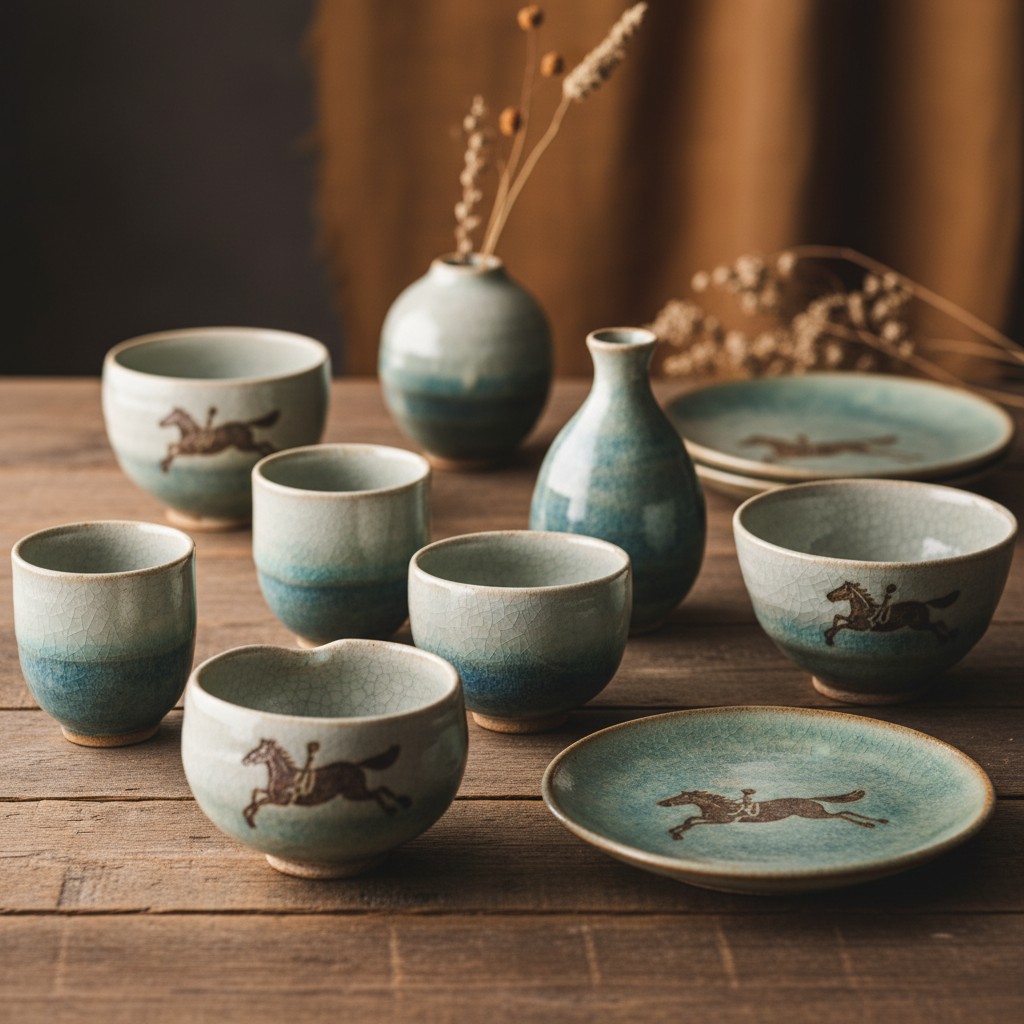
The greatest characteristic of Soma Komayaki lies in its unique crackle glaze (blue crackle) and the painted motif of galloping horses. Centered on tea utensils, it has been treasured as offerings to the Soma domain lords and as gifts to the shogunate and feudal lords. It can be said to be a precious ceramic production center that conveys the formality and tradition of an official kiln to this day in Japanese ceramic culture.
The Difference Between Soma Komayaki and Ohori Soma Ware
Two ceramic production areas exist in the Soma region of Fukushima Prefecture: Soma Komayaki and Ohori Soma ware. These two are often confused, but they have distinct differences.
Soma Komayaki was fired in the castle town of Nakamura in Soma City and, as the official kiln of the Soma domain, primarily produced high-quality tea pottery for domain lords and the samurai class. Ohori Soma ware, on the other hand, was fired in the Ohori district of Namie Town in Futaba County and developed as a folk kiln producing everyday wares for common people.
While Soma Komayaki specialized in producing high-quality fine art pottery by a limited number of kilns, Ohori Soma ware was mass-produced everyday items by numerous kilns. This difference in character remains the distinguishing feature of both to the present day.
History – The Legacy of an Official Kiln Continuing from the Edo Period
The Founding and Opening of the Kiln by Tashiro Gengobei
The history of Soma Komayaki began in 1648 (Keian 1). It is said to have originated when Tashiro Gengobei (later renamed Seiji Gengobei), who trained under Ninomaru Ninsei, a master potter from Kyoto, opened a kiln in Nakamura in Soma County (present-day Nakamura, Soma City).
Tashiro Gengobei brought the advanced techniques learned in Kyoto to the Soma region and established his kiln under the patronage of the Soma domain lord. Ninsei was one of Japan’s leading potters of the time, and works by Tashiro Gengobei, who inherited his techniques, were highly evaluated from the outset.
Development as the Official Kiln of the Soma Domain
Soma Komayaki was positioned as the official kiln of the Soma domain from its inception. An official kiln was a kiln under the exclusive management and protection of a domain, with general sales restricted in exchange for economic support and technical protection from the domain.
The Soma domain was ruled by an outside feudal lord with Nakamura Castle as its seat of power, a mid-sized domain of 60,000 koku that was enthusiastic about cultural promotion. Soma Komayaki played an important role as tea pottery used by the Soma domain lords, as offerings to the shogunate, and as gifts exchanged with other domains. Particularly in the Edo period, when tea culture was flourishing, being able to produce high-quality tea utensils within one’s own domain was an important element in enhancing the domain’s cultural prestige.
Development from the Edo Period Through the Meiji and Taisho Periods
Throughout the Edo period, Soma Komayaki was successively inherited by the Tashiro family and maintained its position as the official kiln of the Soma domain. After the Meiji Restoration, when the domain system was abolished, the official kiln system also came to an end, but Soma Komayaki survived as a private kiln.
During the Meiji and Taisho periods, with changes in tea culture and the modernization of lifestyles, Soma Komayaki, having lost its privileges as an official kiln, entered a difficult era. However, through efforts to preserve traditional techniques, its value as fine art pottery was re-evaluated.
Soma Komayaki Today
Currently, Soma Komayaki continues to be produced by kiln masters who inherit the tradition in Tamachi, Nakamura, Soma City, Fukushima Prefecture. While the scale of production has shrunk compared to the Edo period, the advanced techniques and aesthetic sensibilities inherited from the official kiln era are continuously passed down to the present day.
The 2011 Great East Japan Earthquake caused significant damage to Soma City as well, but the kiln masters of Soma Komayaki achieved reconstruction and have continued the tradition to this day. Currently, its historical value and artistry are highly appreciated among tea ceremony enthusiasts and collectors.
The Characteristics of Soma Komayaki – The Beauty Woven by Blue Crackle and Galloping Horses
The Technique of Blue Crackle (Crackle Glaze)
The most characteristic technique of Soma Komayaki is the “blue crackle” or “crackle glaze” called crazing. Crazing refers to fine cracks in the pattern created by the difference in shrinkage rates between the glaze and the body; in Soma Komayaki, this effect is intentionally produced.
Blue crackle is born from the endless fine cracks that appear on the surface of a celadon glaze. These cracks are not mere defects but aesthetic effects calculated through years of experience and technique. As the piece is used over time, tea stains and other discoloration seep into the cracks, transforming it into a landscape rich in character.
This technique is thought to be an application of the crazing technique seen in Chinese Song dynasty celadon, and is considered one of the advanced techniques that Tashiro Gengobei learned in Kyoto.
The Painted Motif of Galloping Horses
Another characteristic of Soma Komayaki is the painting of horses called “galloping horses.” Derived from the Soma clan’s family crest, the “tethered horse,” this design depicts a horse in dynamic motion.
The galloping horse is typically painted on the surface of the vessel as one or multiple horses, expressing the strength and grace of a galloping horse. This painting often uses a blue pigment called goshuin, which harmonizes with the glaze of the blue crackle to create a unique beauty.
The Soma clan was long known as ruling a horse-producing region, and the pride in fine horses of the Soma region is embodied in the galloping horse motif. The culture of the Soma region, also known for the Nommaoi, a traditional festival, is reflected in the decoration of the pottery.
Superior Functionality as Tea Ware
Soma Komayaki excels not only in aesthetic beauty but also in functionality as tea ware. In particular, tea bowls are valued for their form that fits comfortably in the hand, appropriate weight, and pleasant feel on the lips.
The glaze of the blue crackle is carefully considered for how tea appears when poured into it, bringing out the beauty of the green of matcha or the amber color of sencha. It also excels in heat retention, making it suitable for the important temperature management in tea ceremonies.
It can be said that the history of producing tea utensils as an official kiln created this functional beauty.
How Soma Komayaki is Made – The Inheritance of Traditional Techniques
Procurement of Raw Materials and Preparation of Clay
The production of Soma Komayaki begins with the selection of high-quality ceramic clay. The Soma region of Fukushima Prefecture has long been known as a source of ceramic clay, and clay suitable for Soma Komayaki has been extracted there.
The extracted ceramic clay has impurities removed and is adjusted to have appropriate plasticity. In a process called water levigation, the clay is refined, and by kneading it repeatedly, uniform clay is created. At this clay preparation stage, the quality of the final firing is greatly affected, requiring skilled technique.
Forming and Drying
In Soma Komayaki, forming is primarily done using a potter’s wheel. Tea ceremony utensils such as tea bowls, tea caddies, water jars, and incense containers are produced.
In wheel throwing, clay is shaped by lifting it up while the rotating platform turns. Attention is paid to every detail—the thickness of the vessel, the curl of the rim, the shape of the foot—and so on. In Soma Komayaki tea bowls, ease of handling is prioritized, so the form is shaped while imagining the user’s sense during the forming stage.
After forming, the piece is slowly dried. Rapid drying causes warping and cracking, so it is dried over several days to several weeks while managing humidity and temperature.
Bisque Firing and Painting
The dried vessel is first bisque fired. Bisque firing is done at a relatively low temperature of around 800 degrees, hardening the clay in preparation for the next step.
After bisque firing, painting such as galloping horses is applied. In underpainting using goshuin, the liveliness of the horse is determined by a single brush stroke, requiring advanced technique and artistic sensibility. The galloping horses in Soma Komayaki are not mere designs but artworks where the maker’s individuality is expressed in each brushstroke.
Glazing and Final Firing
After painting is complete, the glaze that produces the blue crackle is applied. The composition of the glaze is a closely guarded secret of each kiln, with subtle differences in proportions affecting the color and crazing pattern of the final product.
The glazed vessel is fired at high temperatures exceeding 1200 degrees. In this firing process, the blue crackle appears, and the goshuin of the painting develops into a beautiful indigo color. Every element—the temperature distribution in the kiln, firing time, and cooling rate—affects the final finish, making kiln firing the most carefully conducted process.
The Production Area of Soma Komayaki – Nakamura, Soma City, Fukushima Prefecture
Geographic Characteristics
Soma City, Fukushima Prefecture, where Soma Komayaki is produced, is located in the northern part of the Hamadori region of Fukushima Prefecture. With a warm climate facing the Pacific Ocean, it has flourished as a castle town of the Soma clan since ancient times.
The Nakamura district of Soma City was the center of the former Soma Nakamura domain and developed as the castle town of Nakamura Castle (Baryo Castle). Samurai residences and merchant quarters were established, making it a culturally rich region. The kilns of Soma Komayaki were located in Tamachi in this castle town and developed under the patronage of the domain lord.
Ceramic Culture of the Soma Region
The Soma region is a major ceramic production center that produced not only Soma Komayaki but also Ohori Soma ware. Pottery fired in areas centered on Soma County and Futaba County is sometimes collectively called “Ohori ware.”
The background to this region’s development as a ceramic production center lies in the existence of high-quality ceramic clay. The soil of the Soma region has high plasticity and fires firmly, making it suitable for ceramic production. Additionally, it was blessed with abundant forests that provided firewood as fuel.
The Soma domain actively protected and fostered these ceramic industries, making them one of the economic foundations of the domain. The coexistence of two production areas of different characters—the official kiln Soma Komayaki and the folk kiln Ohori Soma ware—created the richness of ceramic culture in the Soma region.
The Current Situation of the Production Area
Currently, Soma Komayaki continues to be produced by kiln masters who preserve the tradition in Tamachi, Nakamura, Soma City. In contrast to Ohori Soma ware, which is supported by numerous kilns, Soma Komayaki maintains a form where a small number of kilns produce high-quality works.
The 2011 Great East Japan Earthquake and the Fukushima Daiichi Nuclear Power Plant accident had a significant impact on the ceramic industry in the Soma region. In particular, Ohori Soma ware was affected as Namie Town, where the production area is located, was designated as an evacuation zone, forcing many kilns to relocate. Soma City, where Soma Komayaki is produced, also suffered tsunami damage, but the kiln masters achieved reconstruction and continue production to this day.
After the earthquake, the ceramic industry of the Soma region drew attention as a symbol of reconstruction, and support and encouragement were offered from throughout Japan. In response to such support, efforts to introduce Soma’s ceramic culture to more people have been actively undertaken.
The Position of Soma Komayaki in Japanese Ceramic Culture
Historical Value as an Official Kiln
Official kilns of feudal domains that developed ceramic production centers exist in various parts of Japan. The Arita ware Nabeshima domain kiln and the Hagi ware Mouri domain official kiln are famous examples, and Soma Komayaki occupies an important position among them.
Official kilns were required to produce high-quality works with the prestige of the domain at stake. Therefore, they needed to maintain high standards both technically and artistically. While Soma Komayaki was the official kiln of a mid-sized domain, it established its own techniques and aesthetic sense and has continued to transmit its tradition to the present day.
This history is a valuable case study demonstrating the cultural policies of local domains and the development of crafts in Japanese ceramic culture.
Evaluation as Tea Ware
Soma Komayaki has been highly evaluated as tea utensils. The unique landscape of the blue crackle and the motif of galloping horses have an appeal to the aesthetic sensibilities of tea practitioners and have been treasured in tea ceremonies.
Tea bowls in particular possess, at a high level, the elements demanded of tea bowls: the beauty of the landscape seen in the interior, ease of handling, and the softness of the rim to the lips. The characteristic of the blue crackle that increases in beauty with use resonates with the aesthetic of “wabi-sabi” in tea ceremony.
In modern times, tea bowls by Soma Komayaki continue to be beloved by those who practice tea ceremony and maintain their position as traditional tea ware.
Efforts in Protection and Transmission
Various efforts are being made to transmit the tradition of Soma Komayaki to the next generation. Kiln masters focus on nurturing successors, and while transmitting traditional techniques, they are also advancing the creation of works incorporating modern sensibilities.
Fukushima Prefecture and Soma City also support Soma Komayaki as a traditional craft of the region. Multiple protective and promotional measures are implemented, including holding exhibitions, participating in PR events, and utilizing it as a tourism resource.
Additionally, research into the history and techniques of Soma Komayaki is advancing, and its reevaluation as a cultural property is taking place. Works are held in collections at various museums and art museums throughout Japan, including the Aichi Prefectural Ceramic Museum, and its position in the history of Japanese ceramics is becoming clearer.
Soma Komayaki and Ohori Soma Ware Today – The Present of the Soma Region’s Ceramic Production Areas
Development Making Use of Their Individual Characteristics
Soma Komayaki and Ohori Soma ware, born in the same Soma region, have taken different paths. Currently, each is achieving independent development while making use of its distinctive characteristics.
Soma Komayaki preserves the tradition of an official kiln and continues to create high-quality works as fine art pottery and tea ware. Works carefully created one by one by a small number of elite kilns receive high evaluation from collectors and tea ceremony enthusiasts.
Meanwhile, Ohori Soma ware has developed as a production area where more numerous kilns produce diverse works. It has expanded to products ranging from traditional everyday wares to contemporary design pieces. Designated as a nationally recognized traditional craft, it is known throughout the country as a representative craft of Fukushima Prefecture.
Reconstruction from the Disaster and New Challenges
The 2011 Great East Japan Earthquake had a serious impact on the ceramic industry in the Soma region. In particular, Ohori Soma ware was severely affected as Namie Town, the production area, became an evacuation zone due to the nuclear accident, and many kilns were forced to relocate within and outside the prefecture.
However, each kiln rebuilt their kilns at their new locations and resumed production. Establishing new bases in various locations within the prefecture such as Nihonmatsu City and Fukushima City, and even outside the prefecture, they have continued to preserve the name of “Ohori Soma ware.” The bond of the production area was strengthened as they overcame this hardship.
Soma Komayaki also suffered impacts such as tsunami damage but has continued production in Soma City and has played a role as a symbol of reconstruction. After the earthquake, with support and encouragement offered from throughout the nation, efforts to make more people aware of the ceramic culture of Soma have been actively pursued.
The Fusion of Tradition and Innovation
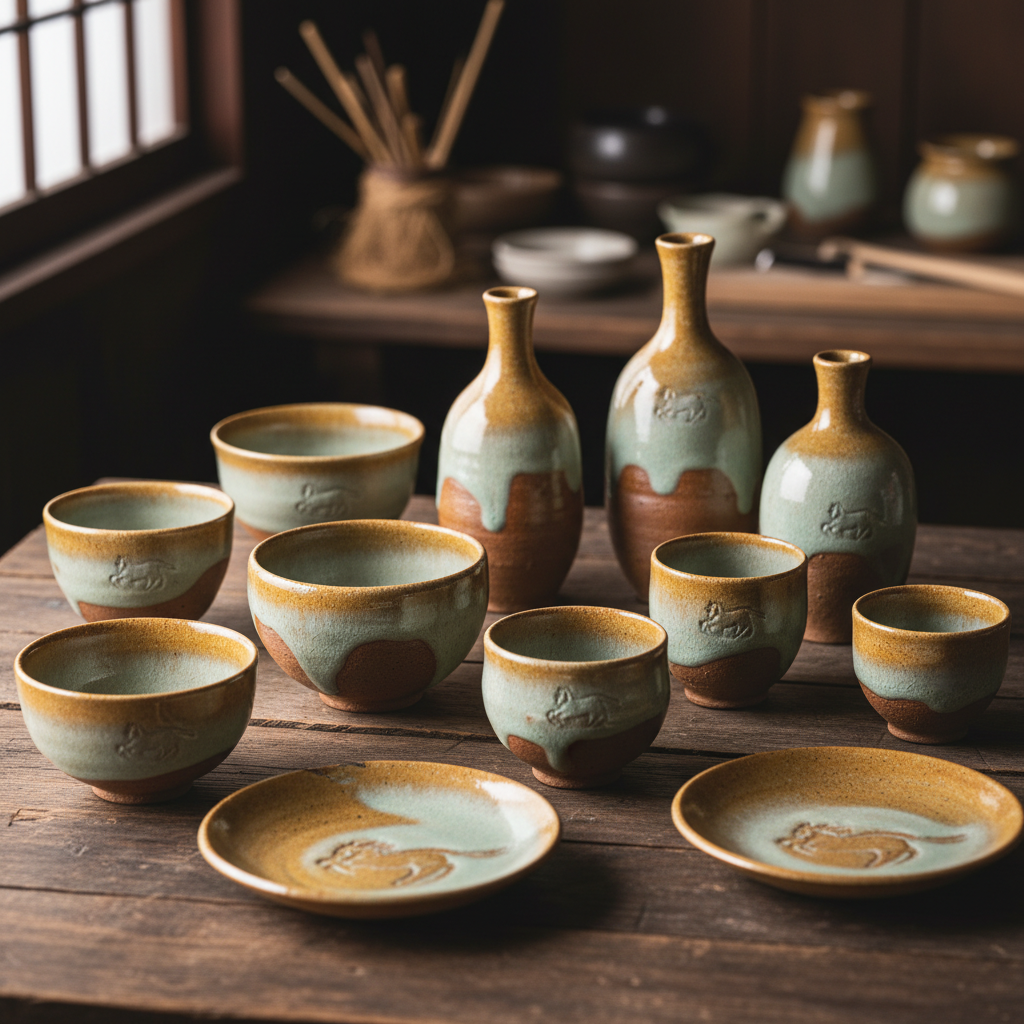
Current Soma Komayaki, while preserving traditional techniques, is also taking on the challenge of creating new works responding to contemporary needs. In addition to traditional tea ceremony utensils, everyday-use coffee cups, sake vessels, and flower vases are also being produced.
Works that incorporate contemporary forms and sizes while making use of the traditional motifs of blue crackle and galloping horses are drawing attention from younger generations. By broadening the culture of “using” traditional crafts, efforts continue to open the future of Soma Komayaki.
Information dissemination and sales through the Internet are also being conducted, creating more opportunities for people throughout the country to encounter Soma Komayaki works. Efforts are being made to accept kiln visits and pottery experience opportunities, and endeavors continue to directly convey the appeal of the production area.
Conclusion – The Appeal and Future of Soma Komayaki
Soma Komayaki is a ceramic production area in Nakamura, Soma City, Fukushima Prefecture, with a history of approximately 370 years. It developed as the official kiln of the Soma domain and established a unique beauty in blue crackle and galloping horses. In contrast to Ohori Soma ware, which was enjoyed as everyday ware for common people, Soma Komayaki walked a different path, producing high-quality tea pottery as an official kiln.
Since Tashiro Gengobei brought the techniques he learned under Ninsei of Kyoto to the Soma region, the traditional techniques inherited through generations are carefully preserved to this day. The glaze of the blue crackle and the painted galloping horses are the identity of Soma Komayaki and have established its unique position in Japanese ceramic culture.
Soma Komayaki, which has overcome the difficulties of the Great East Japan Earthquake and continues to be produced in Nakamura, Soma City, is opening up a new era with flexibility to preserve tradition while also responding to contemporary needs.
As a pillar of the rich ceramic culture of the Soma region, Soma Komayaki is a precious legacy in the history of Japanese crafts and will continue to be loved by many people. When visiting Fukushima Prefecture, be sure to experience the beauty and history of Soma Komayaki.