What is Utsutsuagawa Ware? The History and Path to Revitalization of Nagasaki Prefecture’s Phantom Ceramic Production Center
Overview and Basic Information on Utsutsuagawa Ware
Utsutsuagawa ware (うつつがわやき) is pottery fired in Utsutsuagawa Town, Nagasaki City, Nagasaki Prefecture. Despite being produced for only a brief period of approximately 60 years, from around 1691 (Genroku 4) to 1748 (Kannen 1), it is known as phantom ceramic ware praised as the “Raku ware of the West” and “the pinnacle of brush-marked patterns” due to its outstanding technical skill and artistry.
Utsutsuagawa ware is also known by the alternative name “Yagami ware,” and developed as a production center in Yagami Village, Kanegori District, Hizen Province (present-day Utsutsuagawa Town, Nagasaki City). It stands out as a unique presence among Nagasaki Prefecture’s ceramic production centers, and its distinctive aesthetic sensibility and techniques occupy an important position in the history of Japanese ceramics.
Characteristics of Utsutsuagawa Ware
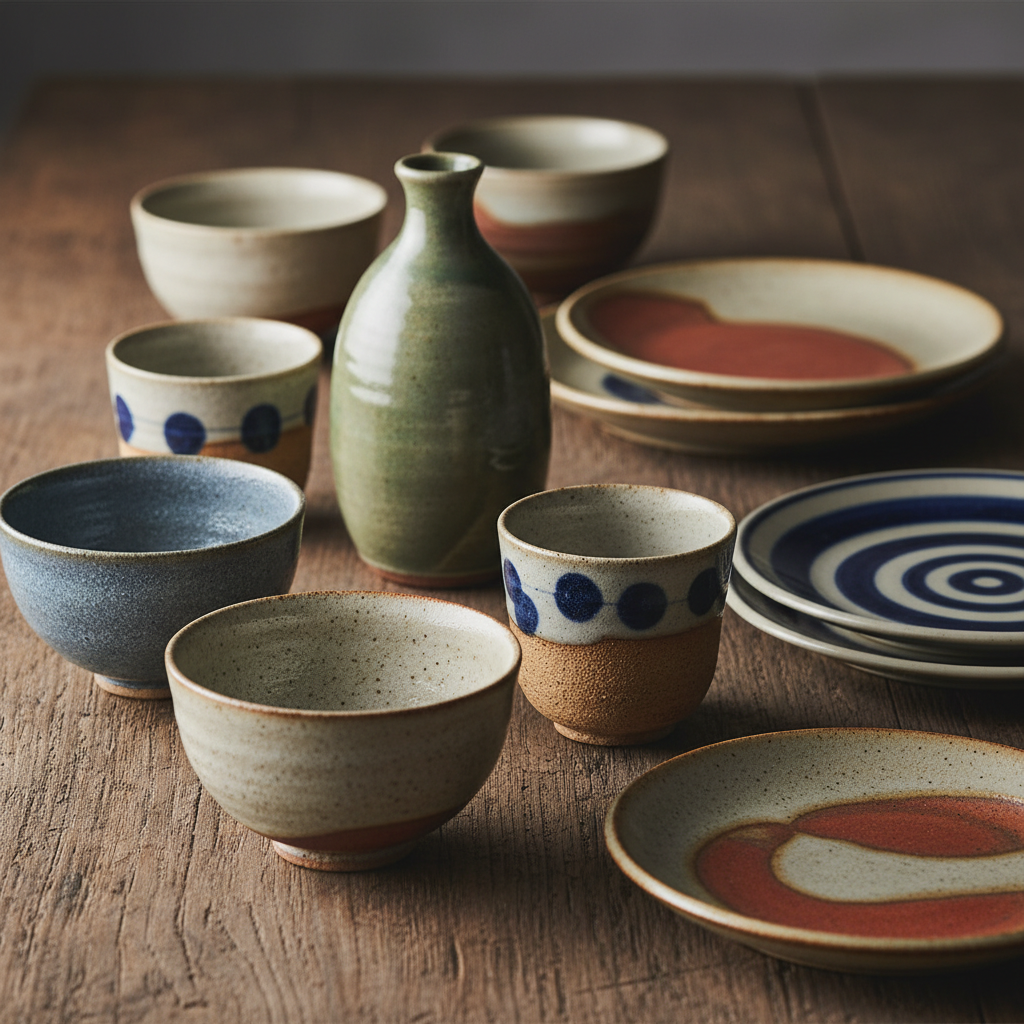
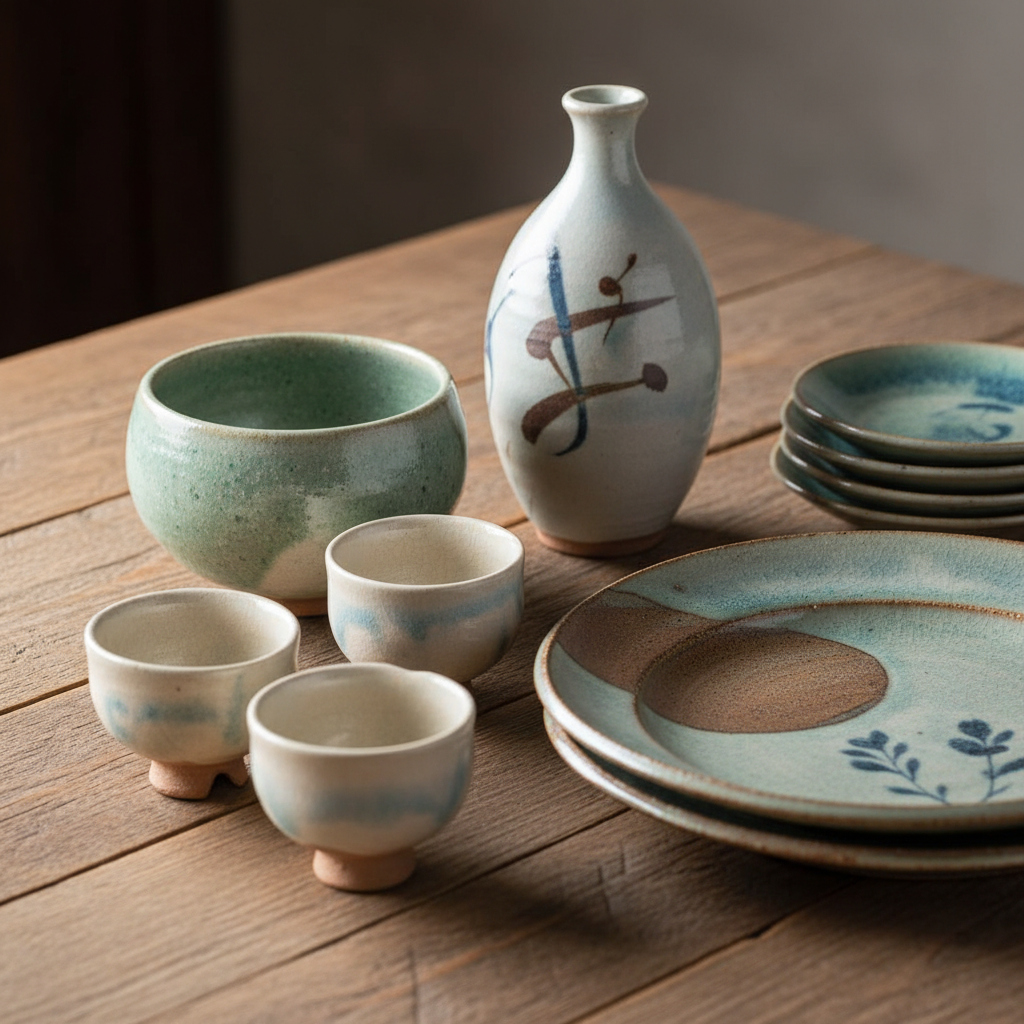
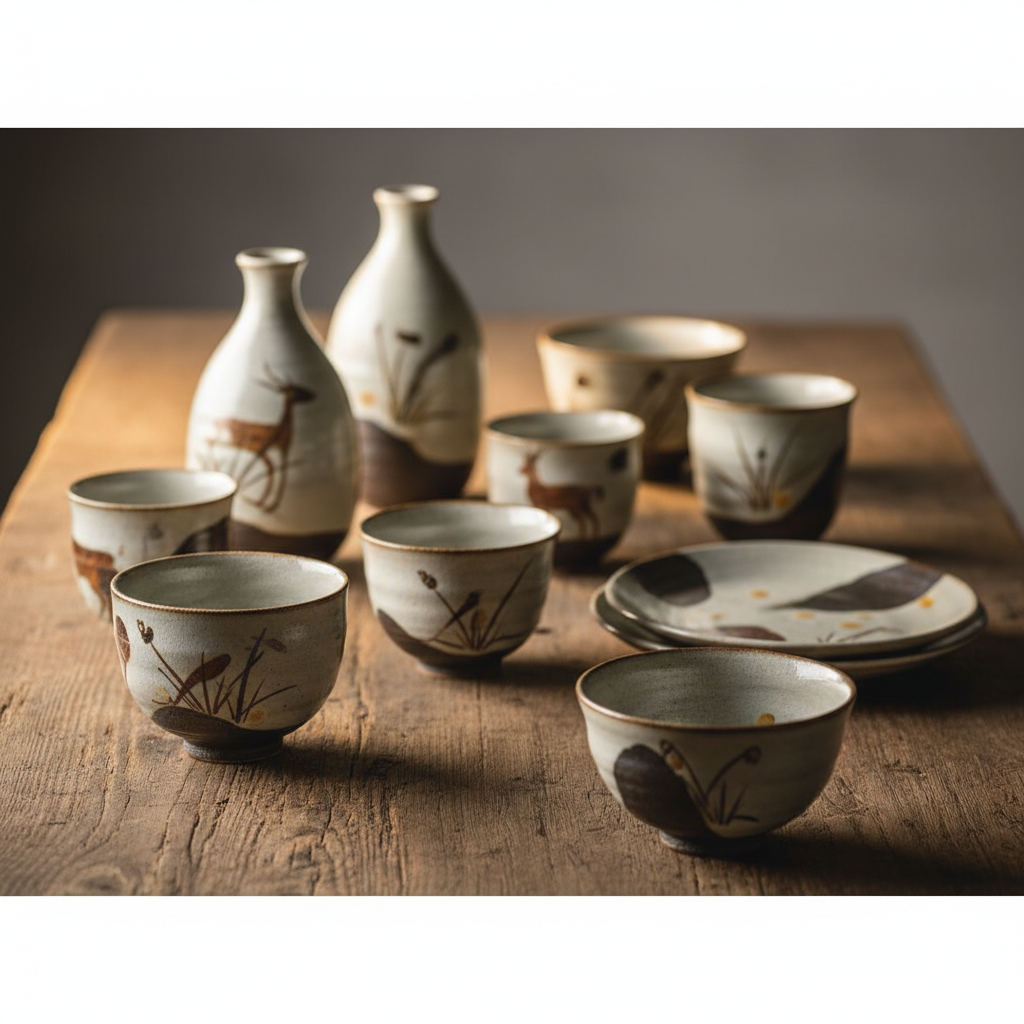
The greatest characteristic of Utsutsuagawa ware is the diverse brush-marking technique applied to a tea-brown clay body containing high iron content. Techniques such as lotus petal brushwork, crepe brushwork, small wave brushwork, firefly hand, flowing painting, and map painting are employed, each creating uniquely beautiful patterns.
The vessel forms are also distinctive, featuring bold designs such as boat shapes and corner-cut forms, establishing an original style that fused Karatsu ware and Kyoto ware aesthetics. The seasonal natural designs, skillfully executed brush-marking techniques, and characteristic vessel forms harmonize beautifully to realize an exquisite beauty worthy of the name “Raku ware of Kyushu,” retaining the elegant refinement of Kyoto.
History of Utsutsuagawa Ware
Establishment and Founder
According to the record of the Isahaya clan known as the “Nisshinjiki,” in 1691 (Genroku 4), Tanaka Keibusaemon (also known as Chu Keibusaemon), a retainer of the Isahaya clan, retired from his position and established a kiln in Yagami Village accompanied by his second son Jinnai. According to one account, Tanaka Souetsu is said to have established the kiln, but in any case, it is certain that it was started by highly skilled artisans under the patronage of the Isahaya clan.
At the time of the kiln’s establishment, Nagasaki flourished as a hub of overseas trade through Dejima, and was an international city where cultures from China, Korea, and even Europe flowed in. This cultural background is thought to have influenced the formation of Utsutsuagawa ware’s refined aesthetic sensibility.
Prosperity in the Golden Age
From the Genroku through the Kyoho periods, Utsutsuagawa ware reached its peak. Pottery made from clay rich in iron content and employing various types of decorated brush-marking techniques surprised the world with its rare expressive power and presence. Praised as the “Raku ware of the West” for its graceful style reminiscent of the works of Ninsei, the renowned craftsman of Kyoto, it gained outstanding evaluation not only throughout Nagasaki Prefecture but also among ceramic production centers across Kyushu.
Utsutsuagawa ware products ranged widely—tea bowls, plates, bowls, and vessels—with especially high evaluation as tea ceremony implements. While protected by the Isahaya clan, the continuous production of high-quality works during a limited period became a factor in enhancing its rarity value for posterity.
Sudden Closure
Around 1748 (Kannen 1), Utsutsuagawa ware suddenly disappeared. There are various theories about why closure occurred within such a short 60-year period, but no clear records remain. Economic reasons, depletion of raw materials, and succession problems are variously speculated, but the mysterious allure of a “phantom antique ceramic” was conferred upon Utsutsuagawa ware by its history of appearing like a comet and vanishing without warning.
Technique and Artistry of Utsutsuagawa Ware
Diversity of Brush-Marking Technique
The most distinctive element characterizing Utsutsuagawa ware is its diverse brush-marking technique. While the technique of applying white slip to pottery surfaces with a brush is seen in other production centers, ceramics possessing such diverse brush-mark variations as Utsutsuagawa ware are rare.
Lotus petal brushwork is a technique that creates elegant curves reminiscent of lotus petals, imparting soft movement to the vessel surface. Crepe brushwork is characterized by finely rippling patterns suggesting fabric crepe, expressing subtle refinement. Small wave brushwork creates regular small wave patterns, producing a rhythmic decorative effect.
Firefly hand is a technique that opens small holes in the clay body to allow light to pass through; the name comes from the fantastical light leaking like fireflies when a lamp is lit. Flowing painting applies white slip in a flowing manner, enabling unique expression where chance and necessity intersect. Map painting is a technique where abstract patterns appear like maps, imparting avant-garde sensibility akin to contemporary art.
Clay Body and Firing
The clay body of Utsutsuagawa ware uses clay containing high iron content. This iron-rich soil exhibits a tea-brown color after firing, creating beautiful contrast with the white of the slip and the colors of glazes. The color of the clay body becomes a crucial element determining the overall atmosphere of the work, requiring high-level knowledge and experience in soil selection and blending.
The firing temperature falls within the pottery range, not as high as porcelain, but requires careful temperature management so that the clay body and glaze meld appropriately. The kilns of the time were primarily climbing kilns using firewood as fuel, with temperature adjustment performed manually. Through long experience, craftsmen discerned the color of flames and the state of smoke to achieve optimal firing.
Originality of Vessel Forms
Utsutsuagawa ware vessel forms often display creative originality combining practicality and artistry. Boat-shaped plates and bowls literally model boats, bringing playfulness and elegance to the dining table. Corner-cut rectangular plates, with the corners of square vessels slanted off, create an impressively simple yet modern appearance.
These vessel forms are not mere decoration but carefully designed with consideration for the beauty of food presentation and usability. They exemplify the functional beauty pursuing the Japanese culinary concept that “the vessel is the kimono of the dish.”
Positioning as a Ceramic Production Center in Nagasaki Prefecture
Major Ceramic Production Centers in Nagasaki Prefecture
Besides Utsutsuagawa ware, Nagasaki Prefecture contains other important ceramic production centers. The most famous is Hasami ware, located near Hasami Town in the central-northern part of Nagasaki Prefecture, boasting over 400 years of history and currently commanding approximately 16% of the daily tableware market share. The beauty of white porcelain and delicate underglaze blue decoration technique are characteristic, with a history of mass-producing practical vessels for commoners, typified by “kurawanka bowls.”
Mikawachi ware (みかわちやき), fired in Sasebo City, Nagasaki Prefecture, is porcelain also called Hirado ware. During the Edo period, it served as the official kiln of the Hirado clan, producing carefully crafted vessels as tribute offerings for the clan lords. Openwork carving and delicate decoration are characteristic, featuring sophisticated works requiring advanced techniques.
Uniqueness of Utsutsuagawa Ware
Whereas Hasami ware and Mikawachi ware are centered on porcelain, Utsutsuagawa ware differs significantly by being primarily stoneware (earthenware). While porcelain is white, hard, and translucent, earthenware possesses the warmth of soil and soft texture, with water absorption as a characteristic feature.
Utsutsuagawa ware established a unique aesthetic sensibility combining the simplicity of Karatsu ware and the refinement of Kyoto ware. The fusion of the robust earthiness of Karatsu ware with the refined ornamentation pursued by Kyoto ware opened an original realm unseen in other production centers. This cultural fusion is inseparable from Nagasaki’s character as an international trading port with great diversity.
Revitalization of Utsutsuagawa Ware
Exploration of Lost Techniques
For approximately 250 years, the techniques of Utsutsuagawa ware remained lost. However, works of old Utsutsuagawa ware remained in antique markets and art museums, their beauty continuing to fascinate ceramic artists and researchers. The diversity and precision of brush-marking techniques in particular were recognized by contemporary ceramic artists as advanced techniques difficult to reproduce.
Research on antique ceramics proceeded through multifaceted approaches including observation of actual works, literature research, and scientific analysis. Composition analysis of clay bodies, research into glaze composition, estimation of firing temperatures—modern technology was employed to elucidate lost techniques.
Reproduction by Yokoishi Gagyu
The authentic revitalization of Utsutsuagawa ware was realized by the twelfth-generation Yokoishi Gagyu (よこいしがぎゅう). After years of research and repeated trials, Gagyu succeeded in reproducing the techniques and style of Genroku-period Utsutsuagawa ware, receiving designation as a Nagasaki Prefecture Intangible Cultural Property for this achievement.
Gagyu-kiln, located at Kihara Sarayama in Sasebo City, continues producing pottery taking Genroku Utsutsuagawa ware as its model. While cherishing the spirit of Japanese tradition flowing through stoneware from the Jomon period, the kiln has resurrected the refined expression of Utsutsuagawa ware in the present day. Works from Gagyu-kiln faithfully reproduce classical brush-marking techniques while also possessing practicality as vessels harmonizing with contemporary life.
Contemporary Successors
Currently, only two craftspeople work with revitalized Utsutsuagawa ware. Gagyu-kiln at Kihara Sarayama in Sasebo City and Toryuu-kiln (Mukai Yasuhiro) in Utsutsuagawa Town, Nagasaki City, continue guarding this precious tradition.
Mukai Yasuhiro of Toryuu-kiln conducts creative activities in Utsutsuagawa Town, the birthplace of Utsutsuagawa ware, fulfilling the role of conveying regional history and tradition to the next generation. Both kilns aim at fusion of classical technique inheritance and contemporary sensibility, exploring new possibilities for Utsutsuagawa ware.
Utsutsuagawa Ware Kiln Ruins and Value as Cultural Property
Kiln Ruins as Historic Sites
In Utsutsuagawa Town, Nagasaki City, Utsutsuagawa ware kiln ruins are preserved as historic sites. These ruins are from one of the pottery kilns operated for approximately 60 years, from around 1691 (Genroku 4) to 1748 (Kannen 1). Excavation surveys have clarified kiln structure, manufacturing processes, and tools used from that period, becoming valuable materials for understanding Utsutsuagawa ware’s techniques and production systems.
From the kiln sites, not only finished works but also failed pieces and kiln tools were unearthed, allowing glimpses of craftsmen’s trial and error. These excavated items became important clues for reproducing Utsutsuagawa ware techniques, greatly contributing to research by contemporary ceramic artists.
Evaluation as Artwork
Works of Utsutsuagawa ware receive high evaluation among Japanese antique ceramics. The praises “Raku ware of the West” and “the pinnacle of brush-marked patterns” speak to their high artistry. Ninsei of Kyoto ware is renowned as a master craftsman, gaining absolute support from tea enthusiasts and nobility through his magnificent style employing colored enamel and gold decoration. The evaluation of Utsutsuagawa ware as comparable to this Ninsei is an exceptional high assessment for a provincial kiln in Kyushu.
In the antique market, Utsutsuagawa ware works are often traded at premium prices due to rarity, with collection activities by collectors and art museums continuing. The limited number of existing works, owing to production during only 60 years, serves as a factor elevating its value.
Comparison of Utsutsuagawa Ware with Other Nagasaki Prefecture Ceramics
Differences from Hasami Ware
Hasami ware is centered on porcelain and developed as a production center for mass-produced practical daily tableware for common people. Transparent white porcelain decorated with underglaze blue is characteristic, with simple, easy-to-use designs remaining popular today. In recent years, modern design vessels under the “HASAMI” brand have also appeared, gaining support from younger generations.
By contrast, Utsutsuagawa ware is earthenware with a strong character as small-scale production craft. The warmth of iron-containing soil and hand-work where each brush-marked expression differs individually are characteristic. Where Hasami ware is “everyday-use vessels,” Utsutsuagawa ware can be positioned as “decorative and functional fine craft art.”
Differences from Mikawachi Ware (Hirado Ware)
Mikawachi ware, as the official kiln of the Hirado clan, produced high-quality porcelain for tribute offerings and gifts. Openwork carving, fine painting, and delicate molding, pursuing craftsman techniques to the limit, are characteristic. Known for white porcelain beauty and elaborate ornamentation, traditional technique inheritance and production continue today.
While Utsutsuagawa ware also boasts high technical standards, it differs in specializing in brush-marking—a planar decorative technique—rather than openwork carving or three-dimensional ornamentation like Mikawachi ware. The material difference between porcelain and earthenware also creates different aesthetic sensibilities. Where Mikawachi ware pursued “intricate decorative beauty,” Utsutsuagawa ware explored “the harmonious beauty of soil and brushwork.”
Appreciation Points for Utsutsuagawa Ware
Reading Brush-Mark Expression
When appreciating Utsutsuagawa ware, the most notable aspect is brush-mark expression. Even with identical techniques, the brush direction, force, and slip thickness create uniquely different expressions. The elegant curves of lotus petal brushwork, the delicate rhythm of crepe brushwork, the regulated beauty of small wave brushwork—each technique produces distinctive expression to enjoy.
Brush-marking is not mere decoration but determines the vessel’s overall composition. Harmony with vessel form, treatment of empty space, pattern placement—comprehensive balance viewing allows one to perceive the creator’s aesthetic sensibility and skill.
Soil Texture and Color
The color of clay body rich in iron content also constitutes a major appeal of Utsutsuagawa ware. The tea-brown earth tone displays varied expressions depending on firing conditions and glaze application. The texture of exposed clay areas, beautiful boundaries between slip and clay, glaze flowing traces—there is enjoyment in discovering the accidental beauty woven by soil and fire.
The warm tactile quality distinctive to earthenware is also an appreciation point. Unlike porcelain’s cold, hard sensation, the soft texture suggesting earthenware imparts a sense of security and familiarity to the user.
Vessel Form Individuality
Note Utsutsuagawa ware’s distinctive vessel forms such as boat shape and corner-cut design. These forms are not mere affectation but calculated designs combining practicality and beauty. How food looks when arranged, ease of handling, stability—consideration for the user is evident throughout.
The way the foot (base ring) is carved, mouth rim treatment, overall balance—craftsman’s skill and consideration extend to every detail. It is in such details that the creator’s technique and aesthetic sensibility are truly expressed.
Contemporary Significance of Utsutsuagawa Ware
Challenges in Tradition Craft Inheritance
The revitalization of Utsutsuagawa ware holds important significance in Japanese craft history as restoration of lost traditional techniques. However, the current reality of only two craftspeople inheriting this suggests the danger of this precious technique being lost again.
Tradition craft inheritance involves not only technique acquisition but many challenges including economic foundation, successor cultivation, and market development. Such rare craft as Utsutsuagawa ware becomes expensive due to its high artistry, making widespread adoption as everyday-use vessels difficult—a paradox it carries.
Value of Pottery in Contemporary Life
In an era of mass-produced tableware dominance, the value of hand-crafted pottery is being re-examined. Each vessel’s unique expression creates dialogue with the user, enriching meal times. Traditional pottery such as Utsutsuagawa ware poses an antithesis to modern society emphasizing efficiency and uniformity, questioning the value of human-centered living.
Additionally, ceramic work using natural soil material and fired with primitive fire energy is attracting attention from sustainability perspective. The stoneware tradition continuing from the Jomon period forms the foundation of Japanese people’s nature-view and aesthetic sensibility; Utsutsuagawa ware is an important cultural heritage in this lineage.
Significance as Regional Culture
Utsutsuagawa ware is an important element of regional identity for Nagasaki Prefecture, particularly Utsutsuagawa Town, Nagasaki City. As a symbol of local history and culture, utilization as tourism resource and educational material is anticipated. Kiln ruin preservation and display, experience class offerings—increasing opportunities for residents to encounter Utsutsuagawa ware can cultivate pride and affection for one’s hometown.
The existence of Utsutsuagawa ware is important for demonstrating ceramic culture diversity among Nagasaki Prefecture’s production centers. With Hasami ware and Mikawachi ware as centers of different characteristics, adding Utsutsuagawa ware allows Japan and the world to understand Nagasaki Prefecture’s ceramic culture’s richness and profundity.
Acquisition and Appreciation Opportunities for Utsutsuagawa Ware
Purchase from Kilns
The most reliable way to acquire Utsutsuagawa ware is to directly visit kilns such as Gagyu-kiln or Toryuu-kiln. Gagyu-kiln is located at Kihara Sarayama in Sasebo City, and Toryuu-kiln in Utsutsuagawa Town, Nagasaki City; both conduct exhibition sales. At kilns, one can hear direct explanations from craftspeople and learn about production processes and techniques.
Some kilns operate online shops enabling purchase from distant locations. However, since hand-crafted works are often one-of-a-kind, kiln visits allowing physical selection are recommended.
Appreciation at Museums
Old Utsutsuagawa ware works can be appreciated at museums including the Nagasaki History and Culture Museum. Beyond permanent exhibitions, special and planned exhibitions featuring Utsutsuagawa ware provide valuable opportunities to see numerous works at once.
Museum appreciation offers the advantage of understanding historical background and artistic value through professional explanation. Comparison with ceramics from other periods and production centers allows clearer recognition of Utsutsuagawa ware’s uniqueness.
Antique Markets and Authentication
Old Utsutsuagawa ware works are also traded in antique markets. However, authentic determination requires specialized knowledge, making casual approach dangerous for beginners. Consultation with trustworthy antique dealers or authenticators is important.
Specialist businesses exist for Utsutsuagawa ware authentication and sales consultation. Should one inherit Utsutsuagawa ware works, consulting specialists for authentication is recommended first.
Conclusion: Future of Utsutsuagawa Ware
Utsutsuagawa ware, appearing like a comet in the Genroku era and vanishing within a mere 60 years, is yet praised as the “Raku ware of the West” and “the pinnacle of brush-marked patterns,” standing as the crown jewel among Nagasaki Prefecture’s ceramic production centers. The diverse brush-marking technique applied to clay body rich in iron content, creative vessel forms such as boat shapes and corner-cuts, and unique aesthetic sensibility fusing Karatsu and Kyoto ware styles project a significance worthy of special note in Japanese ceramic history.
After passing through approximately 250 years of time, revitalized through efforts of Yokoishi Gagyu and others, Utsutsuagawa ware is currently inherited by merely two craftspeople. The continuing creation of new works by two kilns—Gagyu-kiln and Toryuu-kiln—resurrecting lost techniques in the contemporary age represents a beacon of hope demonstrating possibilities for Japanese traditional crafts.
Compared to renowned production centers such as Hasami ware and Mikawachi ware, Utsutsuagawa ware may rank lower in recognition among Nagasaki Prefecture ceramic centers. However, its rarity and high artistry actually elevate Utsutsuagawa ware’s value. The warm earthiness of stoneware, the unique expression of hand-crafted one-of-a-kind pieces, and the cultural significance of classical technique inheritance are values demanding reconsideration in contemporary mass-production and mass-consumption society.
Utsutsuagawa ware’s future faces many challenges including technique inheritance, successor cultivation, and market development. Yet its distinctive beauty and historical value are Japanese cultural heritage that must be passed to the next generation. We look forward to new chapters in Utsutsuagawa ware’s story being written from both Utsutsuagawa Town, its birthplace in Nagasaki Prefecture, and Kihara Sarayama in Sasebo City, where its revival took place.
Those interested in Utsutsuagawa ware are encouraged to visit kilns and touch the craftspeople’s skill and spirit. An encounter with a single vessel may become the catalyst deepening understanding of Japanese traditional crafts and nurturing a richer cultural life.