
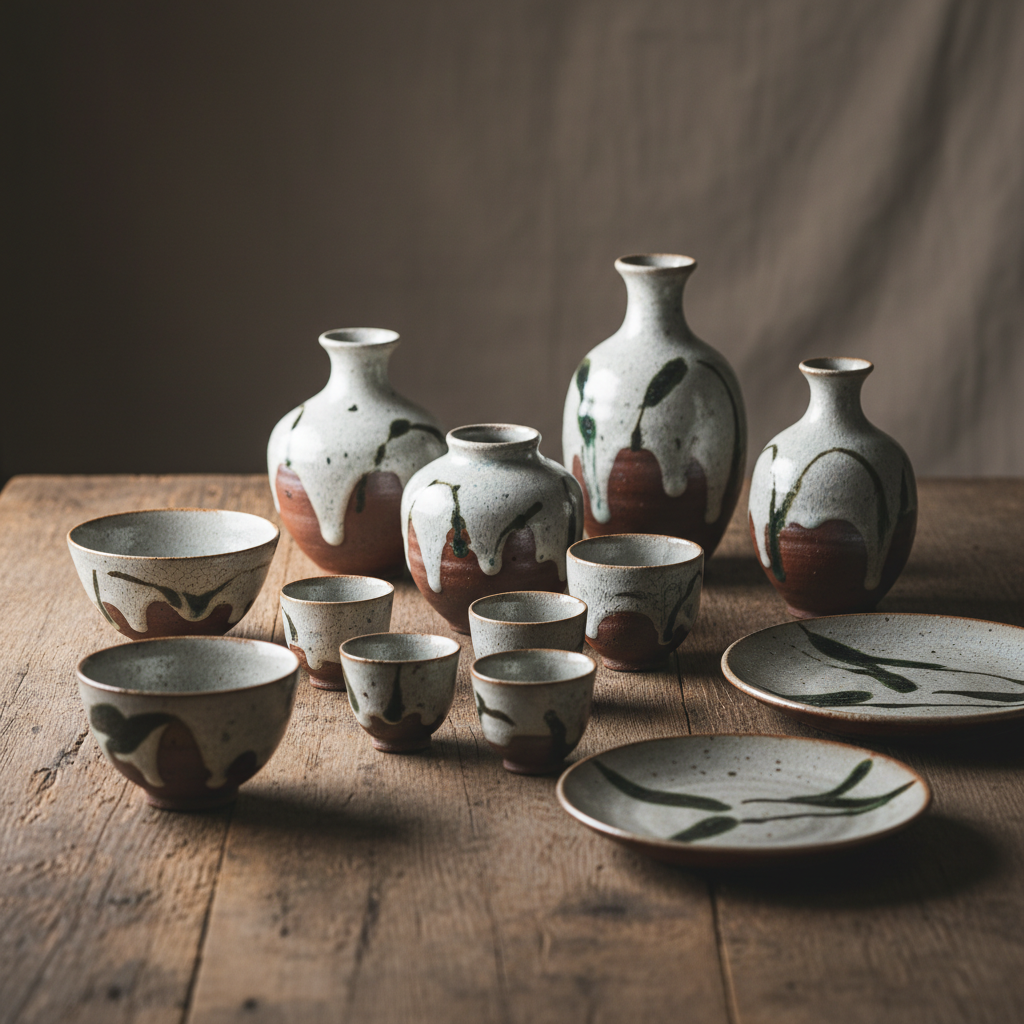
What is Tsuboya Ware? A Thorough Explanation of the History, Characteristics, and Techniques of Okinawa’s Representative Ceramic Production Area
Tsuboya Ware – Okinawa’s Representative Ceramic Production Area
Tsuboya ware (Tsuboya-yaki) is a general term for pottery centered in the Tsuboya district of Naha City, Okinawa Prefecture, and the town of Yomitan Village, representing Okinawa. With a history of over 300 years, it was designated as a traditional craft by the national government in 1976.
In the Okinawan dialect, pottery is called “yamuchin,” and Tsuboya ware, as a ceramic ware deeply connected to Okinawa’s living culture, continues to be loved by many people today. The Tsuboya district of Naha City is home to high-quality clay layers, and this environment rich in ceramic clay became the foundation for the formation of the production area.
The greatest appeal of Tsuboya ware lies in its simplicity and strength. Vessels with solid, weighty impressions possess both warmth and dignity, naturally instilling a sense of security in those who see and use them. These are the unique beauty created by techniques cultivated through long tradition and by soil and fire.
The History of Tsuboya Ware – From the Ryukyu Kingdom to the Present
The Beginning of Ryukyuan Pottery (Around the 15th Century)
The history of pottery-making in Okinawa dates back to around the 15th century. At that time, the Ryukyu Kingdom engaged in active trade with China and Southeast Asia, and ceramics were imported from China. While influenced by these imports, a unique Ryukyuan pottery culture was formed.
In early Ryukyu, kilns were scattered throughout various locations, including the Chihana kiln in Misato Village, the Takaiguchi kiln in Shuri, and the Yukida kiln in Naha. These kilns produced vessels and containers necessary for daily life, each with distinctive characteristics by region.
Integration of Kilns to Tsuboya (1682)
The formal beginning of Tsuboya as a pottery production area dates back to 1682 (Tenna 2). King Shō Tei of the Ryukyu Kingdom consolidated and integrated three kilns—the Chihana kiln, Takaiguchi kiln, and Yukida kiln—that had been scattered throughout the Makishi Village area (present-day Tsuboya, Naha).
This kiln integration had a clear purpose. By concentrating pottery production in one location, the kingdom aimed to improve techniques, stabilize quality, and enhance production efficiency. The royal government also sought to strengthen management and control, thereby promoting the pottery industry throughout the entire Ryukyu Kingdom.
Relations with Satsuma and Technical Exchange
After the Satsuma invasion of 1609, Ryukyu came under the rule of the Satsuma clan. During this period, in the era of King Shō Nei, potters from Satsuma were invited, and technical exchanges took place. Satsuma ware techniques influenced Ryukyuan pottery-making, with significant advances particularly in glaze techniques and firing methods.
On the other hand, potters from Ryukyu were also taken to Satsuma, and bidirectional technical exchanges occurred. Through this exchange, Tsuboya ware developed its own distinctive style while also establishing connections with pottery culture of mainland Japan.
Development in Modern Times
Even after the Meiji Restoration and the Ryukyu Disposition (establishment of Okinawa Prefecture), Tsuboya ware continued as a major industry in Okinawa. However, the Tsuboya district suffered significant damage during World War II, and many kilns were lost.
After the war, the potters of Tsuboya devoted themselves to reconstruction, preserving traditional techniques while advancing ceramic production adapted to the new era. Following Okinawa’s reversion in 1972, Tsuboya ware was designated as a traditional craft in 1976, and its value was recognized anew.
Currently, kiln operators carrying on the tradition of Tsuboya ware are active not only in the Tsuboya district of Naha City but throughout Okinawa Prefecture, including Yomitan Village. While primarily using traditional climbing kilns, they also employ kerosene, gas, and electric kilns to convey traditional techniques and methods to the present day.
Characteristics and Techniques of Tsuboya Ware
Characteristic 1: Jōyachi and Arayachi – Two Firing Methods
The greatest characteristic of Tsuboya ware is that it is divided into two distinct techniques: “jōyachi” (upper ware) and “arayachi” (rough ware).
Jōyachi (upper ware) is pottery glazed and fired at high temperatures of approximately 1200 degrees. Bowls, plates, basins, kara-kara (a distinctly Okinawan sake vessel), pots, and other daily-use items are produced in abundance, forming the mainstream of Tsuboya ware. By applying glaze, the surface becomes vitrified, preventing water leakage and creating a beautiful luster.
Various decorative techniques are employed in jōyachi. Line-carved designs, red-painted overglaze decoration, and colored glaze work allow for diverse expressions. In particular, sea creatures such as fish and shrimp, arabesque patterns, and geometric designs have been used as traditional motifs.
Arayachi (rough ware), also called Nanbanyaki, is a technique fired at around 1120 degrees without glaze. Products are primarily large containers such as sake jars, water jars, and miso jars. Because glaze is not used, the texture and color of the clay itself are highlighted, creating a simple and powerful impression.
Arayachi is porous and suitable for aging alcoholic beverages such as awamori. For this reason, it has become essential to Okinawan sake production. Large jars are formed with thick walls, characterized by a solid, weighty presence.
Characteristic 2: Ceramic Clay – The Appeal of Okinawan Earth
The ceramic clay used in Tsuboya ware is collected from various locations throughout Okinawa Prefecture. The presence of high-quality clay layers in the areas surrounding the Tsuboya district of Naha City became an important factor in the formation of the production area.
Jōyachi uses relatively fine-grained clay. Clay with iron content, primarily red-clay type, is the main component, and after firing exhibits a warm color tone. Clay collected from various locations throughout Okinawa Prefecture, such as Yomitan Village, is blended according to its use.
Arayachi uses coarser clay and may contain sand and small stones. This coarse clay creates the unique texture and strength characteristic of arayachi. When creating large containers, careful formulation accounting for the clay’s plasticity and drying shrinkage rate is essential.
Clay blending is considered a trade secret at each kiln, conducted based on years of experience and knowledge. Assessing the clay’s properties and adjusting water content according to season and humidity requires skilled technique.
Characteristic 3: Glazes – Unique Colors and Textures
The glazes used in Tsuboya ware’s jōyachi create distinctive Okinawan colors. Representative glazes include the following:
Amber glaze is a glaze containing iron that, after firing, exhibits a deep tea-brown color. One of the glazes representing Tsuboya ware, it is characterized by a warm color tone.
Green glaze is a glaze with copper as its main component, developing a beautiful green color. Its vivid hue, reminiscent of Okinawa’s ocean and nature, is highly appealing.
White glaze produces a clean, white finish. It is often used as a base upon which red-painted decoration and other ornamentation are applied, playing an important role.
Black glaze, containing iron or manganese, exhibits a deep black color. It conveys a powerful impression and is also used in contemporary wares.
These glazes are not only used individually but also in combination. Unique expressions emerge through techniques such as glaze sectioning and flow-glaze application.
Characteristic 4: Molding – Traditional Techniques
Tsuboya ware molding primarily employs wheel-throwing and hand-building.
Wheel-throwing is used when creating circular vessels such as bowls and plates. Expert potters, rotating the wheel, create evenly-thick vessels using hand sensation alone. Many jōyachi daily-use items are efficiently produced through wheel-throwing.
Hand-building includes the “coil method,” in which clay coils are stacked, and the “slab method,” in which flat clay pieces are joined. Large rough-ware jars are created using these hand-building techniques.
When creating large rough-ware containers, highly advanced technique is required. As clay builds from the bottom, careful judgment of drying degree is necessary to prevent collapse from self-weight, with molding proceeding gradually. Creating a single large jar can require several weeks to several months.
After molding, the piece is thoroughly dried. Rapid drying causes cracking, so slow drying with controlled humidity is essential.
Characteristic 5: Glazing and Decoration – Ornamental Techniques
Various decorative techniques are applied to Tsuboya ware’s jōyachi.
Line carving is a technique where designs are carved into semi-dry clay using tools such as bamboo spatulas. Fish, arabesque, and geometric patterns serve as traditional motifs. The depth of carving and the width of lines create various expressions.
Itchin is a technique where clay slip is placed in a tube and designs are drawn with fine lines. The raised lines create a three-dimensional decorative effect.
Red painting is a technique where designs are painted on the fired vessel with overglaze paint and refired at low temperature. Characterized by vivid colors such as red, green, and yellow, it creates an elaborate impression. Influenced by Chinese ceramics, it is one of Tsuboya ware’s important decorative techniques.
Sgraffito involves coating the entire surface with slip, then scraping away design areas to reveal the underlying clay body. The color contrast creates a beautiful effect.
These decorative techniques are sometimes used individually and sometimes in combination. The individuality and creativity of the potter give each work its own unique appeal.
Representative Products of Tsuboya Ware
Tsuboya Ware as Daily-Use Items
Tsuboya ware has developed as daily-use items closely integrated with the lives of Okinawan people.
Bowls, plates, and basins are fundamental vessels used at the dining table. Most are made as jōyachi, available in various sizes and shapes. Deep bowls suitable for Okinawan cuisine and large plates for serving chanpuru are typical examples.
Kara-kara is an Okinawan sake vessel, used to hold awamori. Characterized by its distinctive shape with pouring spout and handle, it is one of Tsuboya ware’s representative products. A set of kara-kara and small sake cup is an indispensable part of Okinawan drinking culture.
Dabichin is a portable sake vessel, characterized by its flat shape. Used when carrying to field work, it combines practicality with decorative appeal.
Large Containers – The World of Rough Ware
Large containers created in rough ware form an important product category of Tsuboya ware.
Sake jars are containers for aging awamori. The porosity of rough ware is ideal for awamori aging, and they are indispensable for aged sake production. Sizes vary greatly, from several liters to several hundred liters.
Water jars are containers for storing domestic water. Once placed in every household, some large ones exceed one meter in height, commanding overwhelming presence.
Miso jars are containers for preserving miso and pickles. The porosity of rough ware is ideal for storing fermented foods.
These large containers serve today not only as functional items but are also popular as interior decoration and garden ornaments.
Shisa – Symbol of Okinawa
Among Tsuboya ware’s representative products, shisa cannot be overlooked. Shisa are lion-like figures considered guardian deities of Okinawa, placed at home gates and roofs to ward off evil spirits.
Tsuboya ware shisa are characterized by simple, powerful expressions. Both glazed jōyachi shisa and unglazed rough ware shisa highlighting the clay’s texture exist. Sizes range from palm-sized to large scale.
Today, beyond traditional forms, many creative shisa reflecting potters’ individuality are produced. Popular as souvenirs, shisa have become symbols of Okinawan culture.
Tsuboya Ware Production Areas – Naha’s Tsuboya District and Yomitan Village
Naha’s Tsuboya District – Town of Ceramics
The Tsuboya district of Naha City is the birthplace of Tsuboya ware and currently home to many kiln operators, forming a ceramics town. Stone-paved streets lined with kiln galleries and sales shops create a distinctive atmosphere.
The Tsuboya district features “Tsuboya Yachimun Street,” a roughly 400-meter pedestrian street that serves as a popular tourist spot. Remains of traditional climbing kilns still stand along the street, allowing visitors to feel Tsuboya ware’s history.
The Naha Municipal Tsuboya Pottery Museum displays Tsuboya ware’s history, techniques, and representative works. Visitors can view tools actually used in production and kiln structures, gaining deep understanding of Tsuboya ware.
Yomitan Village – New Production Area
Yomitan Village developed as a new Tsuboya ware production area after World War II, with many potters relocating there. As kiln use became restricted in Naha’s Tsuboya district, many potters moved to Yomitan Village.
“Yachimun no Sato,” a pottery village in Yomitan, houses multiple kiln operators. In a natural, peaceful environment, potters challenge new work creation while preserving tradition.
Some Yomitan kilns have revived traditional climbing kilns, conducting firings with wood. The natural firing colors and flame expressions unique to wood kilns give works distinctive appeal.
Other Production Areas
Beyond Naha’s Tsuboya district and Yomitan Village, kiln operators throughout Okinawa Prefecture continue Tsuboya ware traditions. In cities such as Uruma, Nanjo, and Onna, unique works are created in their respective regions.
While preserving traditional techniques, these kiln operators also pursue new designs suited to contemporary lifestyles. Increasing numbers of younger potters are opening new possibilities for Tsuboya ware.
Chronology of Ryukyu and Okinawa Centered on Tsuboya Ware
- Around 15th century: Pottery-making begins in Ryukyu Kingdom. Kilns scattered throughout regions.
- 1609: Satsuma invasion. Technical exchange with Satsuma begins.
- 1616: Era of King Shō Nei; potters invited from Satsuma.
- 1682: King Shō Tei consolidates Chihana, Takaiguchi, and Yukida kilns to Tsuboya. Tsuboya ware production area formed.
- Late 17th to 18th century: Tsuboya ware develops as Ryukyu’s foremost kiln site. Products used for domestic consumption and trade.
- 1879: Ryukyu Disposition establishes Okinawa Prefecture. Tsuboya ware continues as major Okinawa industry.
- 1945: Okinawan battle damages Tsuboya district. Postwar reconstruction begins.
- 1950s: Kiln use in Naha’s Tsuboya becomes restricted; many potters relocate to Yomitan and elsewhere.
- 1972: Okinawa reversion.
- 1976: Tsuboya ware designated as national traditional craft.
- Present: Centered in Naha’s Tsuboya and Yomitan Village, traditional work continues while new creations proceed.
Rare Okinawan Ceramics – Pottery Besides Tsuboya Ware
Okinawa has several pottery production areas besides Tsuboya ware.
Chihana ware was produced in the Chihana district of Uruma City. Before integration into Tsuboya, it thrived as an independent kiln site, though production has ceased. Historical works are housed in museums.
Yukida ware was also produced in Naha’s Yukida district before Tsuboya integration. Though no longer produced, its techniques were inherited by Tsuboya ware.
Kinjo ware is produced in Naha’s Kinjo district, a relatively new production area. While following Tsuboya ware traditions, it pursues its own artistic direction.
These ceramics, together with Tsuboya ware, shaped Okinawa’s pottery culture. Understanding each’s distinctive characteristics reveals the diversity of Okinawan ceramic culture.
Tsuboya Ware’s Present and Future
Value as Traditional Craft
Since its 1976 designation as a traditional craft, Tsuboya ware’s value as cultural property has been widely recognized. Government and prefectural support has been provided, with efforts to preserve and transmit techniques advancing.
Centered on the Tsuboya Pottery Business Cooperative, potter cultivation, technical training, and exhibition hosting proceed. Emphasis on young potter training continues efforts to transmit traditional techniques to future generations.
Adaptation to Contemporary Life
While preserving tradition, Tsuboya ware also pursues products suited to contemporary lifestyles. Microwave-safe and dishwasher-compatible wares, modern-design tableware, and interior decorative items address new demands.
Among younger potters, increasing numbers produce works incorporating contemporary art elements while grounding themselves in traditional techniques. Through these efforts, Tsuboya ware gains new appeal, gaining support from broad demographics.
Coordination with Tourism Industry
As Okinawa tourism develops, Tsuboya ware’s importance as a tourism resource increases. Many visitors approach Naha’s Tsuboya district and Yomitan’s Yachimun no Sato as tourist destinations.
Many kiln operators offer pottery experience programs, allowing tourists to actually throw on the wheel or paint shisa. Through these experiences, visitors directly feel Tsuboya ware’s appeal.
As souvenirs, demand remains high for small shisa, chopstick rests, and small plates. Combining practicality and decoration, Tsuboya ware is selected by many as reminders of Okinawan visits.
Environmental Consideration
In contemporary Tsuboya ware production, environmental responsibility represents an important theme. Traditional climbing kilns consume large quantities of firewood and produce smoke, making use in urban areas difficult.
Therefore, many kiln operators have introduced kerosene, gas, and electric kilns. These kilns offer easier temperature management and reduced environmental impact. However, many potters seek the unique firing colors and expressions only wood kilns provide, with some kilns in suburban Yomitan maintaining climbing kilns.
Securing raw materials presents another challenge. As high-quality ceramic clay mining sites decrease, sustainable material procurement is increasingly demanded. Some kiln operators are advancing recycling-conscious material usage and environmentally-considerate manufacturing processes.
International Recognition
Tsuboya ware gains increasing recognition beyond Japan’s borders. Its simple yet powerful forming, distinctive glaze colors, and hand-crafted warmth attract international art market attention.
Through overseas exhibitions and participation in international pottery festivals, Tsuboya ware’s appeal reaches worldwide audiences. Foreign potters visiting Okinawa to study Tsuboya ware techniques are increasing, making it a site of international cultural exchange.
Purchasing and Experiencing Tsuboya Ware
Purchase Methods
Several methods exist for purchasing Tsuboya ware.
Direct kiln purchase: At kiln sites in Naha’s Tsuboya and Yomitan Village, works can be purchased directly. Speaking with potters while selecting and receiving advice on work background and usage methods is possible.
Specialty shops: Ceramic specialty shops throughout Naha and Okinawa allow comparing multiple kiln operators’ works. Many specialty shops line Tsuboya Yachimun Street.
Online shops: Recently, many kiln operators and specialty shops have opened online shops, allowing nationwide purchasing. However, inability to view actual items in person makes confirming size and color important.
Exhibitions and events: Works can be purchased at craft exhibitions and pottery markets held throughout and outside Okinawa. Opportunities to speak with artists directly often arise.
Pottery Experience
Tsuboya ware pottery experience ranks among Okinawa tourism’s popular activities.
Wheel-throwing experience: Using an electric wheel to form bowls, plates, and similar vessels. Beginners can, with potter guidance, create personal unique wares.
Hand-building experience: Hand-forming clay into freely-shaped creations. With shisa or small containers allowing creative expression.
Painting experience: Adding designs to unglazed vessels or shisa. Completing relatively quickly, it suits even young children.
Works created during experiences are typically dried, fired, and shipped afterward, becoming particularly meaningful souvenirs.
Conclusion
Tsuboya ware is Okinawa Prefecture’s representative ceramic production area with over 300 years of history. Created through 1682 kiln consolidation, Tsuboya ware has remained deeply connected to Okinawan life culture from the Ryukyu Kingdom through the present.
Through two distinct techniques of jōyachi and arayachi, Okinawa’s unique ceramic clay and glazes, and traditional decorative methods, simple yet powerful works are created. From everyday tableware to large sake jars and shisa, diverse products have been produced, enriching people’s lives.
Centered in Naha’s Tsuboya district and Yomitan Village, while preserving tradition, new work creation suited to contemporary life is advancing. With increasing participation of younger potters, Tsuboya ware continuously acquires fresh appeal.
As a national traditional craft and important Okinawan cultural heritage, Tsuboya ware will continue beloved by many. When visiting Okinawa, please visit Tsuboya Yachimun Street or Yomitan Village’s Yachimun no Sato and directly experience Tsuboya ware’s appeal.
