The Charm and History of Fujina Ware | A Complete Overview of Shimane Prefecture’s Representative Traditional Ceramic Production Area
Fujina ware (fujinayaki) fired in Tamayucho, Matsue City, Shimane Prefecture is a historic ceramic production area that has continued since the middle of the Edo period. It is deeply connected to the tea culture of Lord Matsudaira Fumai and is known for its distinctive yellow glaze colored painting and techniques influenced by the mingei (folk craft) movement. This article comprehensively explains the history, characteristics, representative kilns, and positioning of Fujina ware as a ceramic production area in Shimane Prefecture.
Fujina Ware | Shimane Prefecture’s Representative Ceramic Production Area
Fujina ware is traditional pottery produced in the Fujina district of Tamayucho, Matsue City, Shimane Prefecture. Located on the south bank of Lake Shinji, this region has developed as a ceramic production area due to its abundant supply of high-quality clay and Kimachi stone (kimachi-ishi) and tuff that serve as raw materials for glazes.
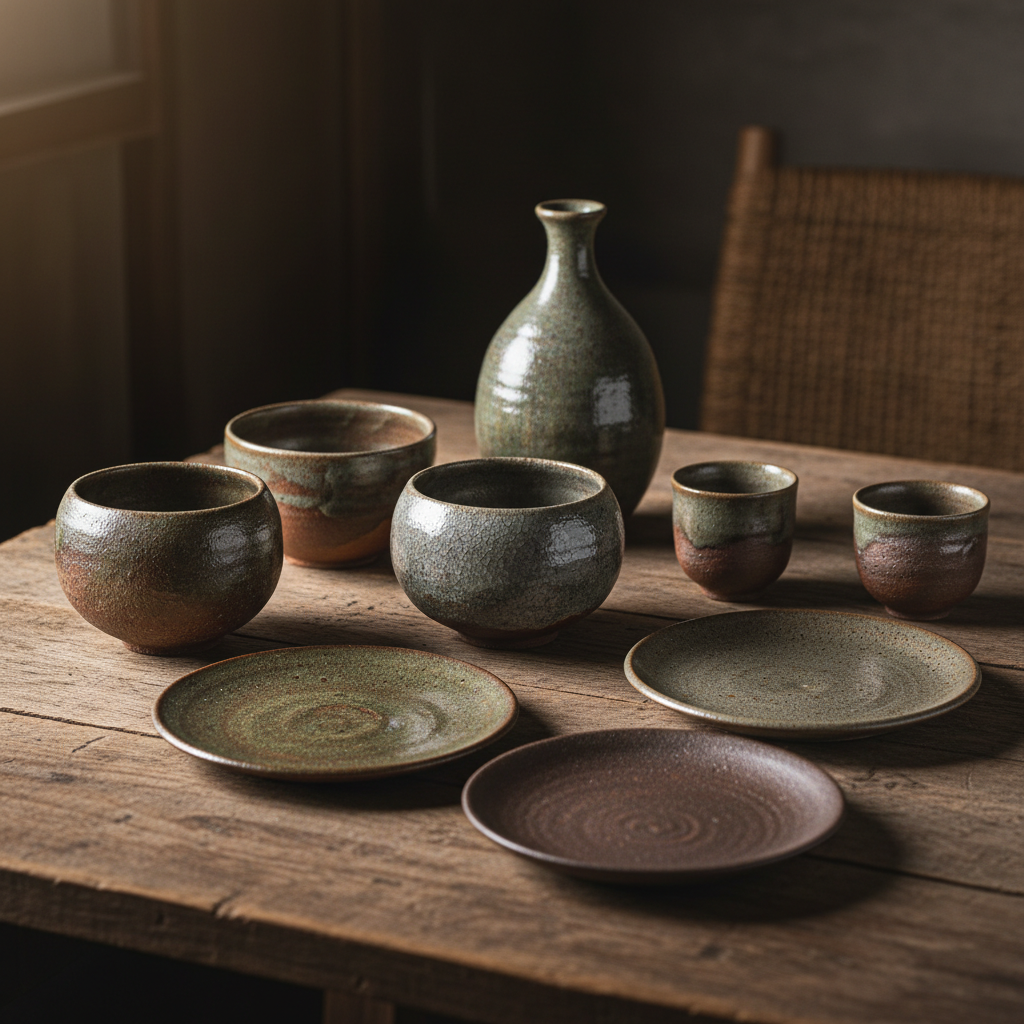
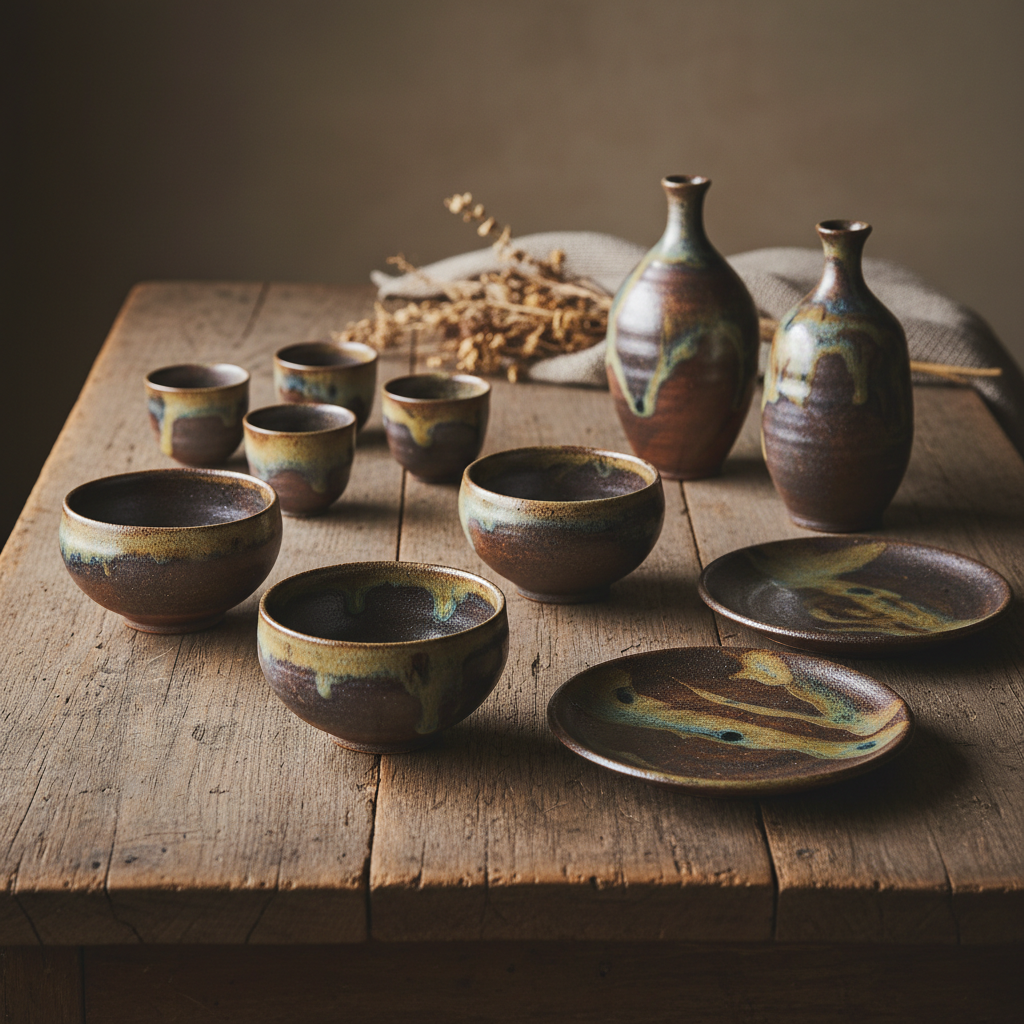
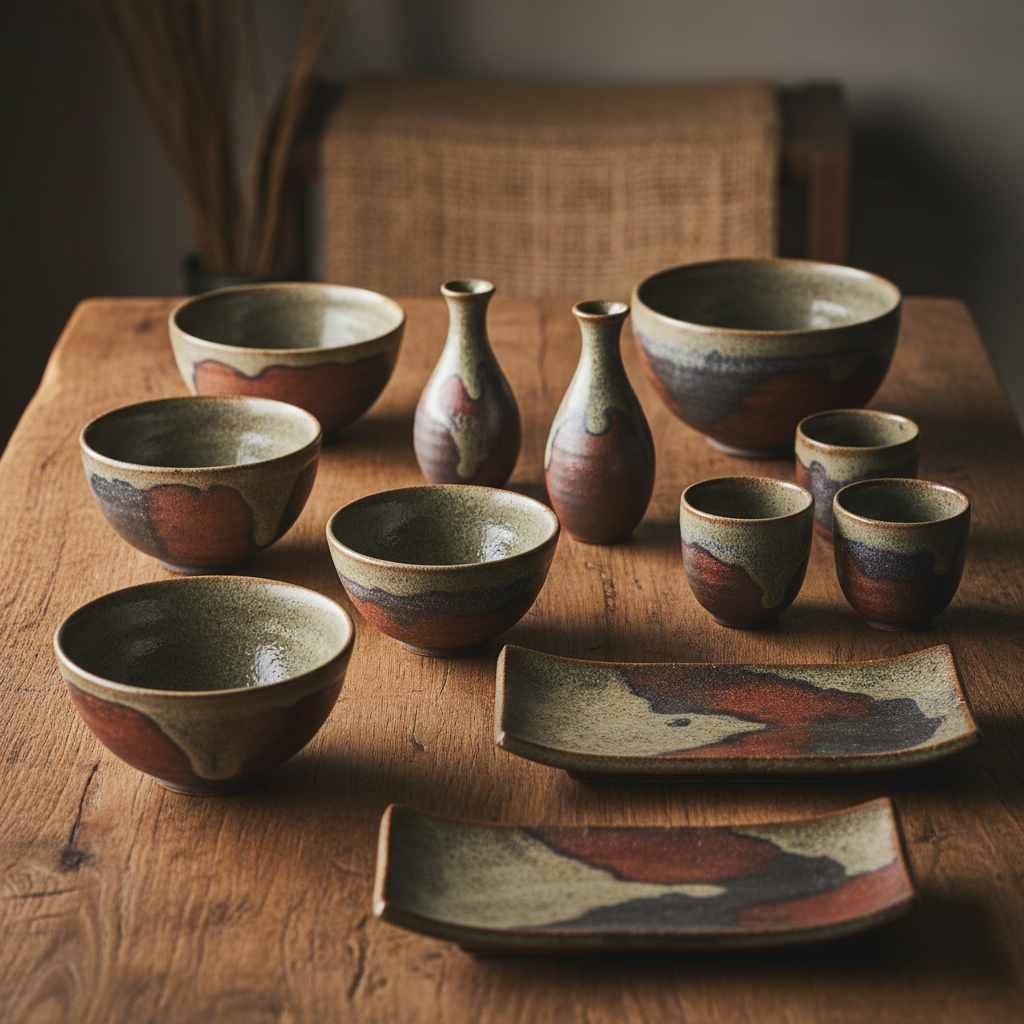
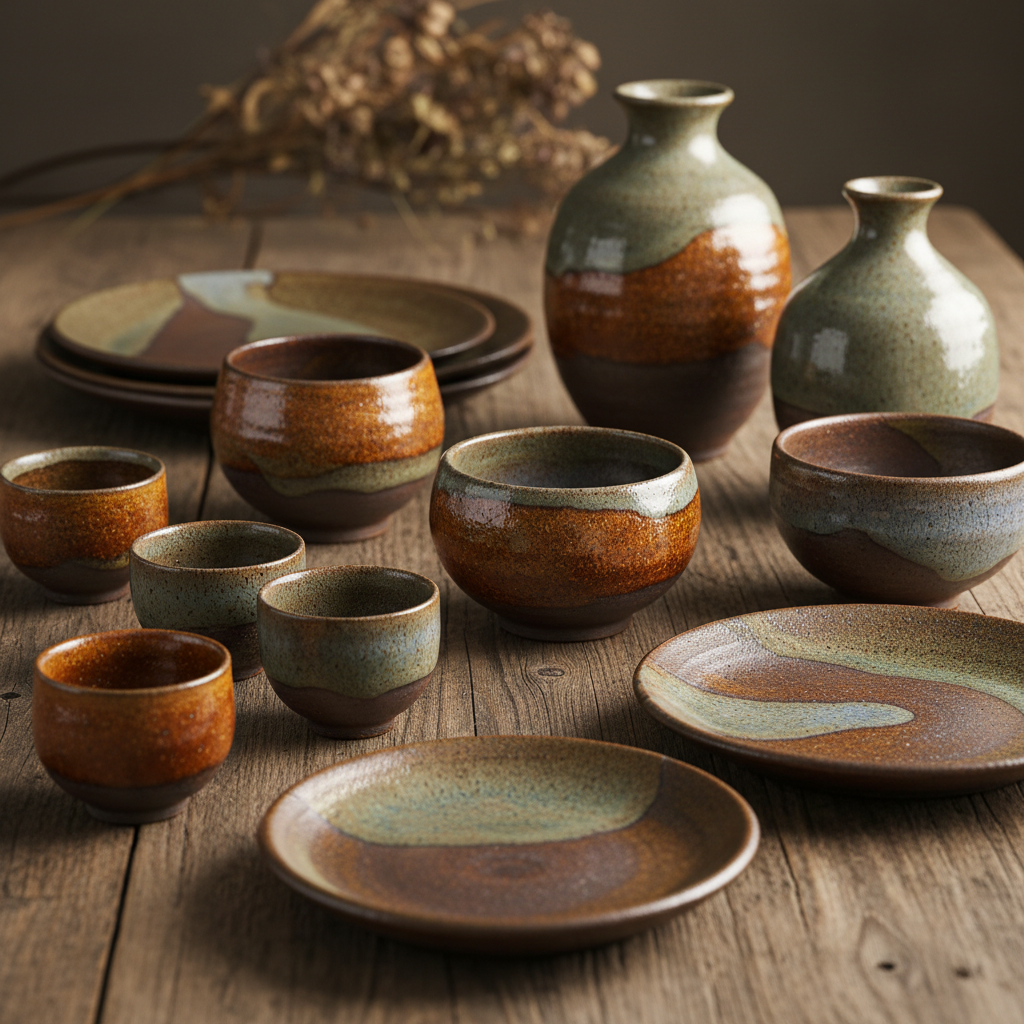
The main products are daily ceramics such as tea bowls, sake vessels, flower vases, and plates, ranging from traditional yellow glaze colored painting to modern design works. It is designated as a traditional craft of Shimane Prefecture and is recognized and evaluated as a ceramic ware known throughout the country as well as locally.
The Origin of the Place Name Fujina and Its Geographic Characteristics
The place name Fujina appears in old literature, indicating that this area has been a place where people have lived since ancient times. Its location on the shores of Lake Shinji provided convenient water transportation, which was advantageous for procuring raw materials and distributing products.
Particularly important is the Kimachi stone obtained nearby. This stone has excellent properties as a glaze raw material and is an element that creates the distinctive color of Fujina ware. Additionally, since ceramic clay can be mined locally, it was an inevitable course that ceramic arts arose in this area.
The History of Fujina Ware | From the Edo Period to the Present
While there are various theories about the history of Fujina ware, the Edo period middle years is what remains as a definite record. Its development is deeply related to the cultural policies of the Matsue Domain.
Founding and Early Development (Middle Edo Period)
Regarding the origins of Fujina ware, there are two theories: the founding by Kada Hanroku in 1658 (Manju 1) and the kiln opening by Funaki Yojibei Muramasa in 1764 (Meiwa 1). Currently, the latter theory of kiln opening by Funaki Yojibei Muramasa is considered more appropriate.
After Funaki Yojibei Muramasa opened the kiln, Tsuchiya Zenshiro moved from Rakuzan kiln at the command of the Matsue Domain. Tsuchiya Zenshiro is said to have learned techniques from Kurasaki Gonbei, and under his guidance, the quality of Fujina ware improved dramatically. This technical guidance became the foundation for Fujina ware to be recognized as a domain kiln.
Lord Matsudaira Fumai and the Prosperity of Fujina Ware
The person who had the greatest influence on the development of Fujina ware was the 7th lord of Matsue Domain, Matsudaira Fumai (Haruhira), a cultured person who possessed deep knowledge of tea ceremony and established his own unique tea tradition called the “Fumai School.”
Under Fumai’s guidance, a system was established where the domain kilns of the Tsuchiya and Nagahara families and the private kilns of the Funaki family descendants coexisted and prospered together. A division of labor was established where domain kilns produced high-quality products centered on tea ceremony utensils and private kilns produced daily goods, bringing Fujina ware to its peak in both technique and production scale.
Fumai’s passion for tea ceremony not only provided protection to Fujina ware but also deeply involved him in the quality and aesthetic sense of the works. The techniques and aesthetics established during this period have been passed down to modern Fujina ware.
The Golden Age of the Meiji Period and Overseas Expansion
With the entry into the Meiji period, Fujina ware showed new developments. The distinctive yellow glaze colored painting unique to Fujina reached its peak, and its beauty and practicality were highly evaluated.
During this period, Fujina ware expanded its sales channels not only to the domestic market but also overseas. In conjunction with the Meiji government’s policies of encouraging industry and commerce, it became an important position as an export ceramic. The overseas evaluation proved the high technical level of Fujina ware.
The Encounter with the Folk Craft Movement in the Showa Period
Entering the Showa period, Fujina ware faced a new turning point: the encounter with the mingei (folk craft) movement led by Soetsu Yanagi, Kanjiro Kawai, and Shoji Hamada.
Particularly important was the influence of Bernard Leach, a British ceramicist. Leach had a deep interest in Japanese folk crafts and had exchanges with Fujina ware kiln masters when visiting Shimane Prefecture. Leach’s techniques and aesthetics had a significant influence on Fujina ware artists.
Influenced by Leach, Fujina ware began to use yellow glazes and amber glazes similar to Britain’s galena glaze (lead sulfide). Additionally, the English slip ware technique was introduced, expanding the technical range of Fujina ware.
Modern Fujina Ware
Present-day Fujina ware continues to create works that preserve tradition while adapting to modern lifestyles. Each kiln produces products that utilize their individual characteristics, creating diverse works ranging from traditional tea ceremony utensils to everyday tableware.
It is designated as a traditional craft of Shimane Prefecture and is protected and promoted as an important cultural resource of the region. Experience classes and exhibition facilities for tourists have been established, and efforts to widely communicate the charm of Fujina ware continue.
The Characteristics and Techniques of Fujina Ware
Fujina ware has distinctive characteristics and techniques cultivated over its long history.
The Tradition of Yellow Glaze Colored Painting
The technique that represents Fujina ware is yellow glaze colored painting. The glaze made from Kimachi stone as a raw material takes on a distinctive warm yellowish color when fired. By applying colored painting on top of this, works are created that are gorgeous yet have a calm atmosphere.
The color of the yellow glaze is unique to Fujina ware and not found in other production areas. By using locally sourced Kimachi stone as a raw material, the individuality unique to the region is expressed.
The Technique of Slip Ware
Slip ware, introduced through the influence of Bernard Leach, is an important technique that characterizes modern Fujina ware.
Slip ware is a technique in which slip (muddy colored clay) or underglaze pigments are applied to the body with flowing or tube drawing, dried without bisque firing, then coated with galena glaze and fired. Because bisque firing is not performed, the slip and body become integrated, creating a distinctive soft expression.
In this technique, the randomness of flowing drawing also becomes part of the work’s charm. Even with the same design, each piece shows subtly different expressions, and the warmth of handwork can be felt.
Types of Glazes Used
Besides yellow glaze, various glazes are used in Fujina ware. Amber glaze exhibits a deep brownish color and is used for works with a calm atmosphere. Additionally, contemporary kiln masters have developed glazes in new colors such as cobalt blue and mint green.
Kimachi stone and tuff, which are raw materials for the glazes used, are mined locally. This regional character gives Fujina ware’s colors a distinctive individuality.
Characteristics of the Production Process
The production process of Fujina ware has inherited traditional methods. From soil selection through forming, drying, glaze coating, and firing, craftsmen’s skills and experience are utilized at each stage.
Particularly in the case of slip ware, since bisque firing is omitted, management during the drying stage becomes crucial. If moisture is not removed evenly, cracks or distortions may occur during firing, requiring skilled technique.
The firing temperature and kiln atmosphere also greatly affect the finish of the work. Even with the same glaze, color development changes depending on firing conditions, so unique firing techniques have been accumulated at each kiln.
Representative Kiln Masters and Artists
Currently, multiple kilns operate in the Fujina district, each producing works in their own distinctive style.
Yucho Kiln
Yucho Kiln is known as a kiln strongly influenced by the folk craft movement. It has the history of receiving direct guidance from Bernard Leach and continues to pass down the slip ware technique to the present day.
A representative product of Yucho Kiln is the egg baker. This is a vessel used for cooking eggs, combining practicality and design. It is characterized by the warm colors using yellow or amber glaze and hand-drawn patterns.
It mainly produces daily ceramics, valuing the creation of vessels that can be used at the everyday table. Many works embody the folk craft philosophy of “beauty in utility,” maintaining an attitude that pursues beauty while emphasizing practicality.
Uzenyoshi Kiln
Uzenyoshi Kiln is a historically significant kiln that began as an official kiln of the Matsue Domain in the Edo period. While inheriting the tradition of the domain kiln, it also produces works with contemporary designs.
It is characterized by bright colored daily ceramics centered on cobalt blue and mint green. While preserving traditional techniques, it pursues colors and designs that harmonize with contemporary living spaces.
It handles a wide range of products from tea ceremony utensils to everyday vessels, and is evaluated for its approach to craftwork that values the balance between tradition and innovation.
Other Kiln Masters and Artists
Several other distinctive kilns and artists are active in the Fujina district. Kilns operated by descendants of the Funaki family continue to preserve the tradition since the kiln’s opening. New artists who have moved to the area are also creating unique works using Fujina soil and glazes.
Each kiln master and artist expressing their individuality increases the diversity and charm of Fujina ware as a whole. The coexistence of traditional-preserving kilns and artists challenging new expressions maintains the vitality of the production area.
The Positioning of Ceramic Production Areas in Shimane Prefecture
Shimane Prefecture has multiple ceramic production areas besides Fujina ware. Each has its own unique history and characteristics, enriching Shimane’s ceramic culture.
The Relationship with Shussai Ware
Shussai ware (shussaiyaki) is another ceramic representing Shimane Prefecture alongside Fujina ware. Shussai ware is pottery fired in the Shussai district of Hii-kawa Town, Izumo City, Shimane Prefecture and was founded in 1947 (Showa 22) by five young men.
Shussai ware was also strongly influenced by the folk craft movement and has a history of receiving guidance from Soetsu Yanagi, Kanjiro Kawai, and Bernard Leach. In this point, it shares much in common with Fujina ware, and the two production areas have developed while mutually influencing each other.
The characteristics of Shussai ware are the calm colors created by using blue and black glazes and the simple, functional design. The operation form of a shared kiln is also distinctive, with multiple artists cooperating to produce works.
While Fujina ware is characterized by warm colors centered on yellow glaze, Shussai ware has a calm atmosphere based on blue and black. While the two have different personalities, they share the spirit of folk crafts and support Shimane’s ceramic culture.
Other Ceramic Production Areas in Shimane Prefecture
Besides Fujina ware and Shussai ware, Shimane Prefecture has many other ceramic production areas.
Sodeshi Ware is pottery fired in Matsue City and is mainly produced centered on tea ceremony utensils. It has a tradition dating back to the time of Lord Matsudaira Fumai, and is characterized by its subtle style favored by tea enthusiasts.
Rakuzan Ware is a former domain kiln that flourished in Matsue Domain and was also the kiln that laid the technical foundations for Fujina ware. The two production areas have deep connections through Tsuchiya Zenshiro’s move from Rakuzan to Fujina.
Yunotsu Ware is pottery fired in Yunotsu Town in the Ishami region. It is characterized by reddish-brown body and unique glazes and is a production area that was reevaluated in the folk craft movement.
Mori Ware, Kinzan Ware, and Yawata Ware are small-scale but distinctive kilns scattered about, demonstrating the diversity of Shimane’s ceramic culture.
The coexistence of these production areas forms a rich ceramic culture throughout Shimane Prefecture. Each production area, while preserving its own traditions and techniques, exists in a relationship of mutual stimulation.
Appreciating and Purchasing Fujina Ware
There are various opportunities to appreciate Fujina ware firsthand and make purchases.
Purchasing at Kilns
The most reliable method is to visit kilns in the Fujina district directly. Many kilns display and sell works in galleries or sales spaces built into their workshops.
The advantage of visiting a kiln is being able to speak directly with artists or craftspeople. By hearing explanations about the work’s background and techniques, you can understand Fujina ware more deeply. In some cases, you can also observe the production process, learning how ceramics are made.
It is recommended to contact the kiln beforehand. Some kilns may require reservations or may not be available during production work hours.
Exhibitions and Events
Fujina ware can be seen at craft exhibitions and ceramic markets held throughout Shimane Prefecture and nationwide. Being able to compare works from multiple kilns at once makes it easier to find a style that matches your preferences.
Exhibitions showcasing local crafts are held regularly in Matsue City. Additionally, Tamayucho holds events that promote Fujina ware’s charm by combining it with its tourism resources as a hot spring destination.
Online Purchasing
In recent years, it has become possible to purchase Fujina ware through the internet. It is handled on kiln official websites and online shops dealing with crafts.
While online purchasing has the disadvantage of not being able to handle actual items, it has the advantage of allowing people living far away to easily obtain Fujina ware. It is important to carefully check photographs and descriptions and understand size and color before making purchases.
Fujina ware is also traded on free market apps like Mercari, but since it can be difficult to confirm authenticity and condition, purchasing from trustworthy sellers is recommended.
Points for Appreciation
Focusing on certain points when appreciating Fujina ware allows for deeper enjoyment.
First, pay attention to the glaze color and texture. The warm yellow glaze and the flow of slip show different expressions in each work. Since impressions change depending on how light is applied, try observing from various angles.
Next, pay attention to shape and balance. For tea bowls, consider the weight and feel when held; for plates, consider how dishes look when served. The design reflects practical considerations as well.
Finally, pay attention to the artist’s individuality. Even though it is Fujina ware, the style differs depending on the kiln or artist. By comparing multiple works, each characteristic becomes visible.
Using and Caring for Fujina Ware
Proper usage and care are important for long-term enjoyment of Fujina ware.
Preparation Before First Use
Before using new Fujina ware for the first time, seasoning the surface is recommended. Seasoning refers to a treatment that seals the fine pores of the ceramic, preventing dirt and stains from adhering.
A common method is simmering the vessel in rice-rinsing water or water mixed with flour. This creates a thin coating on the ceramic’s surface, making it less likely for stains to soak in during use.
Daily Usage Methods
Fujina ware is made as daily tableware and is suitable for everyday use. However, there are several precautions to observe.
Avoid sudden temperature changes. Do not serve hot dishes immediately after removing from the refrigerator, or wash a hot vessel with cold water, as this can cause cracking.
Whether the piece is microwave-safe varies by kiln or work. It is recommended to check when purchasing. Generally, works with gold or silver decoration are not microwave-safe.
Dishwasher use also varies by work. Hand-washing better preserves the vessel, but increasingly more everyday pieces are dishwasher-safe.
Washing and Storage Methods
Washing as soon as possible after use is key to preventing stains and odors from adhering. Wash gently with a soft sponge and neutral detergent, and rinse thoroughly.
After washing, wipe away water thoroughly and allow to dry completely before storing. Storing with residual moisture can cause mold or odor.
When not using for extended periods, wrap in newspaper and store in a place with low humidity. Airing periodically prevents mold growth.
Enjoying Changes Over Time
Ceramics show tasteful changes through use. This is sometimes expressed as “nurturing” the piece.
Particularly with simple ceramics like Fujina ware, the color deepens through use, or crazing in the glaze develops a unique pattern as tea stains seep in. These changes are part of the unique charm of handmade ceramics.
However, if concerned about it as staining, pieces can be soaked in diluted bleach solution. Since frequent bleaching can damage the glaze, keep it to the minimum necessary.
The Experience and Tourism of Fujina Ware
To understand Fujina ware more deeply, visiting the production area and experiencing it firsthand is optimal.
Pottery Experience
Many kilns offer pottery experience programs. Various menus are available, including forming experience with a potter’s wheel and decoration experience.
Beginners can enjoy it with instruction, experiencing the joy and difficulty of pottery-making. Vessels made can be fired afterwards and sent by mail in most cases, making them suitable as trip souvenirs.
If interested in experiencing pottery, advance reservation is necessary. Check the kiln’s website or call for details.
Tamayucho’s Tourism Resources
Tamayucho, the production area of Fujina ware, is also home to Tamatsukuri Hot Spring, a famous hot spring destination. Tourism combining hot springs and ceramic arts can be enjoyed.
Tamatsukuri Hot Spring is known as a hot spring for beautiful skin since ancient times and is even mentioned in the “Izumo no Kuni Fudoki.” The hot spring area has many inns and hotels, allowing visitors to stay and slowly visit Fujina ware kilns.
Additionally, there are historic sites transmitting ancient jade-making culture, such as Tamasakuyu Shrine and Izumo Tamasakuji Historic Park. As a region where two traditional crafts—ceramics and jade-making—coexist, it has abundant cultural charm.
Related Facilities in Matsue City
Matsue City has facilities that introduce Fujina ware and other local crafts.
The Matsue History Museum allows comprehensive learning about Matsue’s history and culture, with exhibits about Lord Matsudaira Fumai and tea culture. This is helpful in understanding Fujina ware’s role in tea culture.
Additionally, the Shimane Prefectural Art Museum regularly holds exhibitions of local artists’ works, providing opportunities to view contemporary Fujina ware artists’ pieces.
Access Information
The nearest station to Tamayucho is JR Sanin Main Line Tamatsukuri Hot Spring Station. From the station, you can travel to kilns by local bus or taxi.
By car, it is about 10 minutes from the Matsue Tamatsukuri IC of the Sanin Expressway. Parking varies by kiln, so checking in advance is reassuring.
It is about 20 minutes by car from the center of Matsue City and about 30 minutes from Izumo Airport, making it easy to visit as part of Shimane sightseeing.
The Future and Challenges of Fujina Ware
As a traditional craft with a long history, Fujina ware faces various challenges in the contemporary era.
Cultivating Successors
Like many traditional crafts, securing successors is a challenge for Fujina ware. A long apprenticeship period is required before establishing oneself as a ceramicist, and the path to economic stability is not easy.
However, in recent years, more people interested in ceramics are moving to the area or from younger generations, and examples of new artists beginning their activities in Fujina are appearing. The emergence of young artists who learn traditions while incorporating contemporary sensibilities brings new vitality to the production area.
Balancing Tradition and Innovation
Balancing the preservation of traditional crafts with evolving to meet the times is a constant challenge. While preserving traditional techniques and forms is important, products that don’t suit modern lifestyles lose competitive advantage in the market.
Fujina ware kilns produce both traditional tea ceremony utensils and colored painting while also creating vessels with designs suited to contemporary tables and works using new colors of glaze. This flexible approach enhances the production area’s sustainability.
Coordination with Regional Development
Efforts are underway to utilize Fujina ware as a regional tourism resource. In coordination with Tamatsukuri Hot Spring, plans combining hot spring tourism with pottery experience are being offered.
Additionally, restaurants that serve dishes made with local ingredients on Fujina ware vessels are increasing, with attempts to promote regional charm through both the vessels and the cuisine.
Building a system to support and nurture Fujina ware as a community will become increasingly important going forward.
Adapting to the Digital Age
With the spread of the internet and social media, methods of information dissemination and sales have changed. Many kilns have established websites and social media accounts to communicate about their works and production processes.
Expansion of online sales has made Fujina ware purchasable from anywhere in the country. While this is an opportunity to expand distribution channels, it also presents challenges of purchasing without seeing actual items.
Efforts to effectively use photographs and videos to convey the charm of works online are required. Additionally, virtual workshop tours using new technology are expected in the future.
Conclusion
Fujina ware is a traditional ceramic production area that has continued from the middle of the Edo period in Fujina, Tamayucho, Matsue City, Shimane Prefecture. It developed through the opening of the kiln by Funaki Yojibei Muramasa, technical guidance by Tsuchiya Zenshiro, and its connection to tea culture of Lord Matsudaira Fumai, showing prosperity in the Meiji period with distribution channels extending overseas.
In the Showa period, through encounters with the folk craft movement and Bernard Leach, it introduced new techniques such as slip ware and has continued innovation while preserving tradition. It is characterized by warm works using yellow glaze colored painting and amber glaze, with a wide range of products from tea ceremony utensils to daily ceramics being produced.
Currently, multiple kilns including Yucho Kiln and Uzenyoshi Kiln continue their activities, each creating individual works. Together with Shussai ware and other Shimane prefectural ceramic production areas, they form a rich ceramic culture.
Regional development efforts combining with Tamatsukuri Hot Spring and new developments through participation of young artists, efforts to connect tradition to the future are advancing. Fujina ware, while valuing its history and tradition, will continue to be loved by many people as a vessel close to contemporary life.