What is Ohori Soma Ware? A Thorough Explanation of Fukushima Prefecture’s Treasured Traditional Crafts—Their Origins and Characteristics
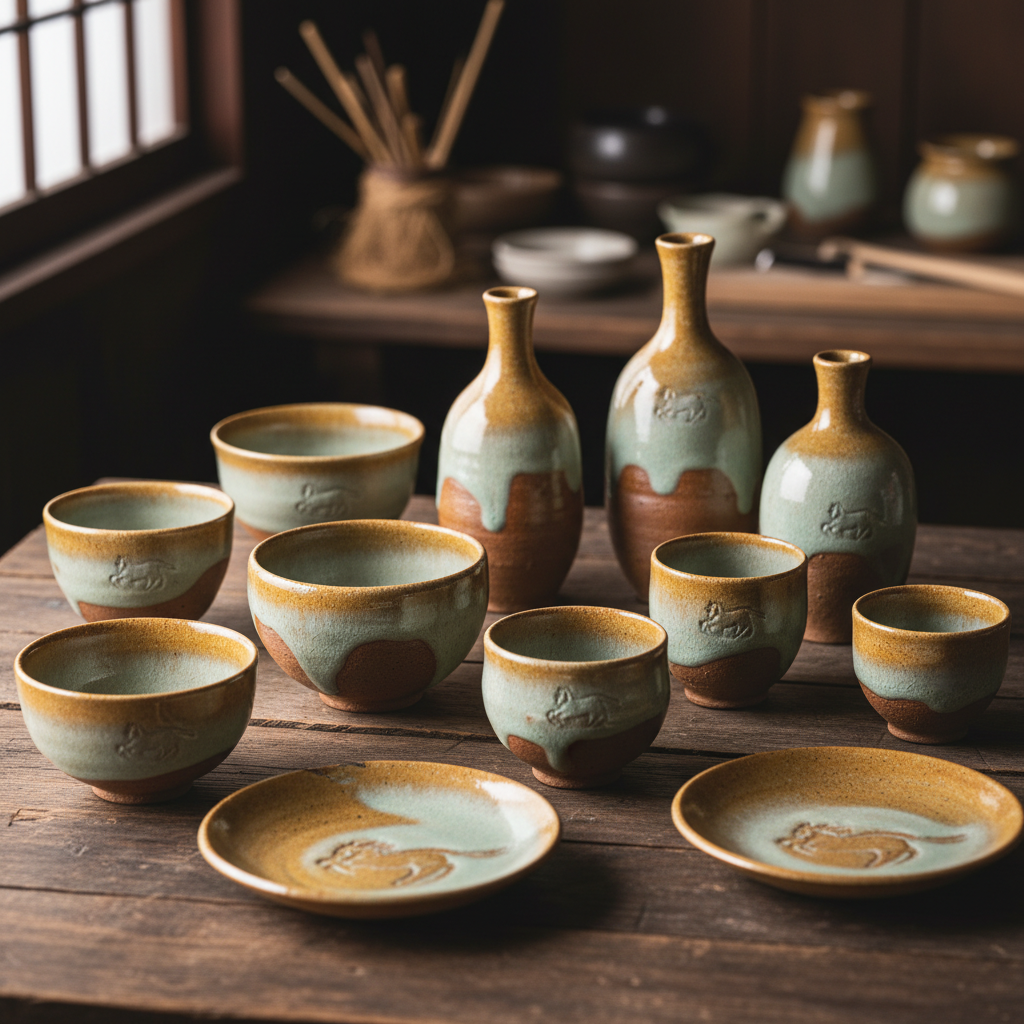
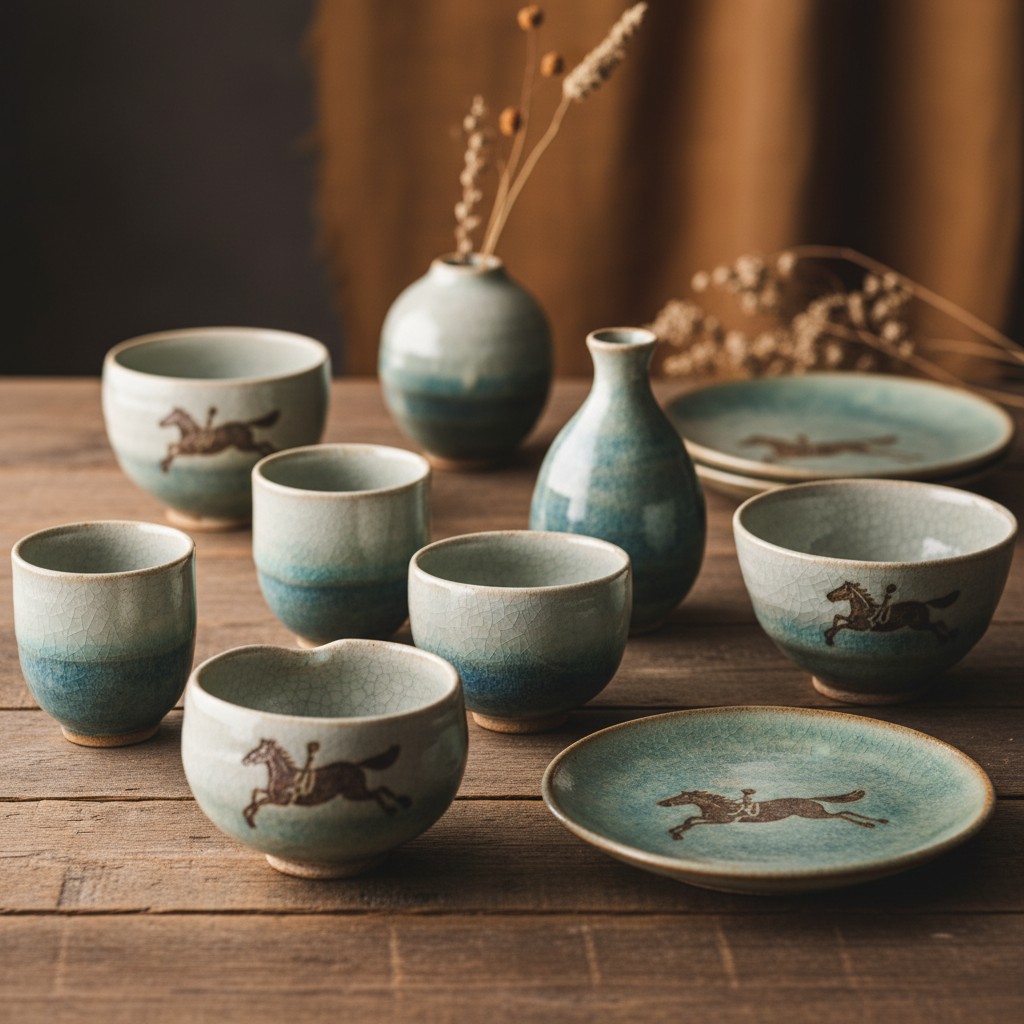
Ohori Soma Ware (Ohori Soma Yaki), centered in Namie Town, Fukushima Prefecture, with over 300 years of history, is a ceramic ware designated as a traditional Japanese craft by the nation. It is known as the representative pottery of the Tohoku region, distinguished by three major characteristics: beautiful crackle patterns created by celadon glaze, a unique double-walled structure, and spirited painted depictions of galloping horses.
This article provides a comprehensive explanation of the allure of this traditional craft, covering the history of Ohori Soma Ware, changes in production sites, distinctive manufacturing techniques, and the path to recovery following the Great East Japan Earthquake.
The History of Ohori Soma Ware: Weaving 300 Years of Tradition
The Opening of Kilns in the Edo Period and Protection by the Soma Domain
The history of Ohori Soma Ware dates back to the third year of Genroku (1690). It is said to have begun when local potters in the Ohori district of present-day Namie Town, Futaba County, Fukushima Prefecture, opened kilns by utilizing high-quality clay and abundant timber for fuel.
Throughout the Edo period, Ohori Soma Ware developed under the protective care of the Soma Domain. Under the domain’s patronage, technological advancement and expansion of production scale progressed, and it grew into an important pottery production center in the Tohoku region. By encouraging craftsmen’s technical improvement and supporting the expansion of sales routes within and outside the domain, the Soma Domain established the foundation for Ohori Soma Ware.
Development During the Meiji, Taisho, and Early Showa Periods
With the advent of the Meiji period, though domain protection ceased, Ohori Soma Ware was inherited and continued by private kiln operators. During this period, production focused mainly on everyday dishware and tea utensils, and it became established as pottery deeply rooted in the region’s living culture.
From the Taisho period through the early Showa period, it experienced its golden age, and more than 30 kiln operators are said to have existed in the Ohori district. While each operator incorporated their own innovations, they collectively preserved the traditional characteristics of Ohori Soma Ware.
In 1978 (Showa 53), its historical and cultural value was recognized, and it received designation as a nationally designated traditional craft. Through this designation, Ohori Soma Ware gained nationwide recognition and established itself as a representative craft of Fukushima Prefecture.
The Great East Japan Earthquake and the Relocation of Production Sites
The Great East Japan Earthquake that occurred on March 11, 2011, and the subsequent accident at the Fukushima Daiichi Nuclear Power Plant dealt a devastating blow to Ohori Soma Ware. The Ohori district of Namie Town was designated as an evacuation zone, forcing all kiln operators to abandon their hometown.
Access to kilns, equipment, and most importantly, to the local clay that served as raw material, was lost, and the tradition that had continued for over 300 years faced the threat of extinction. However, rather than surrendering, each kiln operator chose to continue their craft while relocating to various areas within and outside Fukushima Prefecture.
Today, kiln operators have dispersed to various locations throughout Fukushima Prefecture, such as Nihonmatsu City, Koriyama City, and Aizumisato Town, as well as to areas outside the prefecture, continuing to preserve the tradition of Ohori Soma Ware in their new locations. While the approximately 30 kilns that existed before the disaster have decreased in number, the strong resolve of the remaining craftspeople ensures that the tradition is being carried on today.
Ohori Soma Ware Production Sites in Fukushima Prefecture
The Birthplace: The Ohori District of Namie Town
The Ohori district of Namie Town, which gave its name to Ohori Soma Ware, is located on the Pacific side of Fukushima Prefecture, in the Soso region. This area possessed conditions ideal for pottery making.
First, there was an abundant supply of high-quality clay. In particular, the fact that a mineral called toyama stone (or cham stone), which serves as the raw material for the celadon glaze unique to Ohori Soma Ware, could be extracted from this region was key to producing its distinctive coloration.
Additionally, the abundant firewood obtained from the surrounding mountains was essential fuel for firing in climbing kilns. Furthermore, the climate and natural conditions of the Soma region were well-suited to the drying and firing of ceramics.
Current Production Sites: Dispersal Throughout Fukushima Prefecture
Following the disaster, Ohori Soma Ware production sites have been dispersed across multiple areas in Fukushima Prefecture. The main relocation destinations include the following regions:
Nihonmatsu City: Multiple kiln operators have relocated and established new workshops. Nihonmatsu City has also undertaken initiatives to support Ohori Soma Ware craftspeople.
Koriyama City: Several kiln operators have relocated to Koriyama, the prefecture’s largest city, using it as a base for expanding sales channels.
Aizumisato Town: A region where traditional crafts flourish, some kiln operators have established new production activities here.
In these regions, craftspeople continue to preserve the traditional techniques of Ohori Soma Ware by using local clay or procuring raw materials from other production areas. While production sites have been dispersed, the techniques and spirit of the craftspeople remain unchanged.
Positioning in Fukushima Prefecture’s Ceramics Industry
In addition to Ohori Soma Ware, Fukushima Prefecture is home to Aizu Hongo Ware, another traditional ceramic production site. Aizu Hongo Ware, found in the Aizu region with a history exceeding 400 years, is known as a comprehensive pottery production center producing both porcelain and ceramic ware.
Ohori Soma Ware represents the pottery of the Pacific side (Hamadori region) of Fukushima Prefecture, and has cultivated unique characteristics and culture distinct from Aizu Hongo Ware. Together, these two production sites represent the east and west of the prefecture and support its craft culture.
The Three Major Characteristics of Ohori Soma Ware
Ohori Soma Ware possesses unique characteristics unlike other pottery. In particular, the three elements of “blue crackle,” “double-walling,” and “galloping horse,” are widely recognized as characteristics symbolic of Ohori Soma Ware.
Blue Crackle: Beautiful Crackle Patterns
The most striking feature of Ohori Soma Ware is the blue crackle (aohihi), a type of crazing (kannyuu). This consists of fine crackle patterns across the entire vessel, which, combined with the beautiful blue-green of the celadon glaze, creates a distinctive atmosphere.
These cracks are not a defect but rather an intentionally created decorative technique. During the cooling process of firing, the difference in shrinkage rates between the glaze and the clay body is utilized to create fine cracks. As the crackled patterns are used over time, tea stains and other marks seep into them, and the vessel develops a deeper, more refined appearance.
The celadon glaze that produces the blue crackle is made primarily from toyama stone found locally. The iron contained in this mineral develops a blue-green color when fired in a reducing flame. This unique coloration is distinctive to Ohori Soma Ware.
Double-Walling: A Unique Heat-Retaining Structure
Another major characteristic of Ohori Soma Ware is the double-walling (nijuu yaki) technique. This technique, seen in tea cups and teapots, creates a double-walled structure with an air layer between the main body and outer wall of the vessel.
This structure offers practical advantages. The air layer acts as insulation, so even when holding a vessel containing hot liquid, the outside does not become hot, making it comfortable to handle. It also excels in heat retention, keeping beverages warm longer.
Manufacturing double-walled vessels requires advanced skill. The inner and outer walls are formed separately, joined together when partially dried, and then fired. This delicate process is emblematic of Ohori Soma Ware’s tradition of pursuing practical utility for everyday use.
Galloping Horse: Expressing Soma Pride
Ohori Soma Ware vessels often feature a depiction called the galloping horse (hashiri goma). This derives from the horse crest of the Soma clan, known as the “tethered horse,” and represents an important motif expressing the history and culture of the Soma region.
The Soma region has long been known as a horse-producing area, and is also famous for “Soma Nomaoi (Soma Wild Horse Chase),” a traditional event with over a thousand years of history. The galloping horse imagery expresses pride in the region’s horse culture and recounts the history of Ohori Soma Ware’s development under Soma Domain patronage.
The galloping horse is carefully painted by hand by skilled craftspeople. The dynamic, spirited depiction of the horse has become a symbol of Ohori Soma Ware beloved by many.
The Creation of Ohori Soma Ware: Traditional Manufacturing Techniques
Sourcing Materials and Clay Preparation
Traditionally, Ohori Soma Ware used clay sourced locally. However, following the post-disaster relocation of production sites, individual kiln operators now procure clay from their new regions or other production areas.
After extraction, the clay is cleaned of impurities and mixed with appropriate amounts of water. This “clay wedging (tsuchi neri)” is an important process that removes air from the clay and creates a uniform consistency. Well-wedged clay improves workability during forming and prevents problems such as cracking during firing.
Forming: Wheel Throwing and Handwork
The forming of Ohori Soma Ware is primarily done through wheel throwing. With clay placed on a rotating potter’s wheel, the form is shaped using only the hands’ sensitivity to touch.
A variety of shapes, from everyday items such as tea cups and bowls to flower vases and figurines, are created on the wheel. The forming of double-walled vessels in particular requires exceptional skill—the inner and outer walls are thrown separately and joined together while the clay is leather-hard.
After forming, the vessel is allowed to dry gradually. Rapid drying causes cracks, so drying is controlled carefully, paying attention to temperature and humidity.
Decoration and Painting
Once the vessel has dried, decorative elements such as galloping horses are painted on. The painting is done by directly brushing the vessel with a blue pigment called gohsu. Through the experienced skill of the craftsperson, the horse is rendered with life and vigor.
In addition to painting, carving and scraffito techniques may be employed for decoration. These decorative elements are applied while the vessel is in the leather-hard state, before glazing.
Glazing: The Appeal of Celadon Glaze
After decoration, glaze is applied to the vessel. The celadon glaze that characterizes Ohori Soma Ware and creates the blue crackle effect is applied at this stage.
Traditionally, locally sourced toyama stone was crushed and mixed with ash and feldspar to create the glaze. Even today, the glaze is formulated following this traditional composition.
The glaze is applied evenly across the entire vessel. The thickness of the glaze coating and the balance of its components affect the fired color and the extent of crazing, making the experience and intuition of the craftsperson crucial.
Firing: From Climbing Kilns to Gas Kilns
Traditionally, Ohori Soma Ware was fired in climbing kilns. These are multi-chambered kilns built along a slope, using firewood as fuel to achieve high temperatures.
The firing temperature reaches approximately 1,200 to 1,300 degrees Celsius. At this high temperature, the clay and glaze fuse together to create durable and beautiful vessels. The state of the flame and temperature control during firing are critical factors determining the quality of the finished piece.
Today, many kiln operators use gas kilns or electric kilns. These modern kilns allow for easier temperature control and more consistent product quality. However, some kiln operators continue to use traditional wood-fired kilns, producing vessels with a distinctive depth of character that only wood firing can achieve.
After firing, the vessels cool slowly within the kiln. During this cooling process, the characteristic crazing of the celadon glaze develops. Fine cracks form due to the different shrinkage rates of the glaze and clay body, completing the beautiful blue crackle pattern.
Types and Uses of Ohori Soma Ware
Everyday Tableware
Ohori Soma Ware has long been cherished as everyday ware. Its principal products include tea cups, bowls, plates, and dishes used in daily life.
Tea cups, in particular, are appreciated by many due to the practical advantages of the double-walled structure—providing superior heat retention while remaining comfortable to hold. Additionally, the beautiful blue crackle pattern deepens in appearance with use, creating an object of enduring affection.
Tea Ceremony Utensils
Bowls, teapots, and other tea ceremony implements are also highly valued. The simple, unadorned character and beautiful celadon color align with the spirit of the tea ceremony.
Tea bowls in particular are prized by tea practitioners for their form that feels natural in the hand, their appropriate weight, and the refined beauty of the blue crackle pattern.
Flower Vessels and Decorative Objects
Flower vases and flower containers are important products in the Ohori Soma Ware line. The subdued celadon color highlights flowers and brings a serene atmosphere to any space.
Decorative objects such as figurines based on the galloping horse motif, and figurines representing zodiac animals, are also produced and are popular as gifts.
Modern Design Products
In recent years, while preserving traditional techniques, new products designed for contemporary lifestyles have emerged. Items such as coffee cups, wine glasses, and accessories are being developed to appeal to younger generations.
These endeavors showcase new possibilities for traditional crafts while opening a path toward the future of Ohori Soma Ware.
Recovery from the Disaster and Current Efforts
The Path of Evacuation and Renewal
Following the Great East Japan Earthquake, all kiln operators in the Ohori district of Namie Town were forced to evacuate. Craftspeople who had lost their workshops, equipment, and the clay sources they had relied on for years faced an existential crisis for the tradition.
However, driven by the conviction that “300 years of tradition must not be allowed to perish,” many craftspeople resolved to resume production. They established new workshops in their places of evacuation, sought out new sources for raw materials, and reconstructed their production environments from scratch—a difficult journey indeed.
Support and Collaboration from Various Regions
The recovery of Ohori Soma Ware benefited from substantial support from throughout Fukushima Prefecture and beyond. Local governments at relocation sites provided workshop facilities, subsidies for equipment installation, and assistance in developing sales channels.
Additionally, collaboration with other ceramic production regions has progressed. Cooperation in sourcing materials, technical exchange, and joint exhibitions have established a collaborative framework between production sites.
Succession of Tradition and Training of Talent
Though the earthquake reduced the number of Ohori Soma Ware practitioners, the remaining craftspeople have focused their efforts on passing down their techniques. The training of younger craftspeople and securing successors have become pressing issues.
Some kiln operators accept apprentices and offer experiential workshops as a means of transmitting techniques to the next generation. Partnerships with art universities and craft schools are also advancing efforts to discover new practitioners.
New Challenges: Design and Sales Channel Expansion
The fresh start following the disaster has prompted Ohori Soma Ware to embrace new challenges. While maintaining traditional techniques, efforts include contemporary design in product development, the opening of online shops for expanded sales channels, and other initiatives suited to modern times.
Participation in exhibitions in the Tokyo metropolitan area and internationally, as well as organizing special sales events at department stores, demonstrate the commitment to raising awareness of Ohori Soma Ware and developing new customer bases.
Places to Purchase and Experience Ohori Soma Ware
Facilities in Fukushima Prefecture
Throughout Fukushima Prefecture, the following facilities offer opportunities to purchase Ohori Soma Ware or participate in creation experiences.
Namie Michi-no-Eki (Namie Roadside Station): This roadside station in Namie Town displays and sells Ohori Soma Ware. As a facility symbolizing post-disaster recovery, it attracts many visitors.
Individual Kiln Workshops: Kiln operators who have relocated to Nihonmatsu City, Koriyama City, and other locations welcome direct visits to purchase works. With advance reservation, some workshops offer creation experiences or studio tours.
Fukushima Prefectural Products Hall: Product halls in Fukushima City and Koriyama City sell Ohori Soma Ware alongside other traditional Fukushima crafts.
Major Cities Including Tokyo
Opportunities to purchase Ohori Soma Ware exist in major cities as well.
Traditional Crafts Specialty Stores: Some specialty shops in areas such as Nihombashi and Ginza that carry traditional crafts feature permanent displays of Ohori Soma Ware.
Department Store Events: Ohori Soma Ware is sometimes sold at regularly held “Tohoku Products Exhibitions” and “Traditional Crafts Exhibitions.”
Online Shops: Online purchases are available through individual kiln operators’ websites and craft product e-commerce sites. Those living at a distance can acquire Ohori Soma Ware through these channels.
The Charm of Ohori Soma Ware and Its Future
Vessels That Deepen in Beauty with Use
The greatest appeal of Ohori Soma Ware lies in how its character becomes richer and more refined with prolonged use. The crackle in the blue glaze absorbs tea stains and other marks over time, developing a distinctive appearance. This change over time is referred to as “scenery,” and is appreciated as the vessel’s individual character.
As one continues to use a single vessel over many years, a special bond forms between the object and its owner. This is a charm unique to handmade crafted ware, unavailable in mass-produced items.
Aesthetic Sensibilities Nurtured by the Tohoku Landscape
The simple and warm character of Ohori Soma Ware has been fostered within the rich nature of the Tohoku region and the daily lives of its people. Though lacking ostentation, Ohori Soma Ware carries a quiet presence and profound depth of character, expressing one form of Japanese aesthetic appreciation.
The subdued celadon color, the delicate beauty of the crazing, and the vigorous painted galloping horse—these elements in harmony express the essence of Ohori Soma Ware, soothing the viewer’s heart and bringing tranquility to those who use it.
A Symbol of Recovery from Disaster
Ohori Soma Ware is also a symbol of recovery from the Great East Japan Earthquake. The image of craftspeople who, having lost their homeland and all they possessed, continue to uphold tradition, has given courage and hope to many.
More than ten years after the earthquake, Ohori Soma Ware craftspeople continue their craft in their new locations. Each of their creations carries within it the history of overcoming hardship and hope for the future.
The Harmony of Tradition and Innovation
The future of Ohori Soma Ware depends on balancing the preservation of tradition with new challenges. It is necessary to maintain the techniques and aesthetic sensibilities passed down for over 300 years while also developing products that meet contemporary needs and exploring new forms of expression.
Among younger craftspeople, there is a movement toward learning traditional techniques while creating vessels of original design and novel purposes. These endeavors will breathe new life into Ohori Soma Ware and forge a path forward for generations to come.
Conclusion: The Continuation of Fukushima’s Treasured Ceramic Culture
Ohori Soma Ware originated in Namie Town, Fukushima Prefecture, and possesses a tradition spanning over 300 years. Distinguished by three major characteristics—blue crackle, double-walling, and galloping horse imagery—it has been beloved both as everyday ware and as a work of art by many people.
The Great East Japan Earthquake dealt a serious blow to the production sites, yet through the efforts of craftspeople and substantial support from many quarters, the tradition continues to be carried forward today. Kiln operators dispersed throughout Fukushima Prefecture are writing new chapters in the history of Ohori Soma Ware while continuing to share its appeal.
Holding an Ohori Soma Ware vessel in hand and using it in daily life constitutes support for Fukushima’s traditional culture. We hope that many will experience the beauty of the celadon color and the charm of the blue crackle that deepens with use.
Receiving a 300-year tradition while advancing into a new era, Ohori Soma Ware’s future will become ever more assured as more of us take interest in traditional crafts and continue to use them in our daily lives.